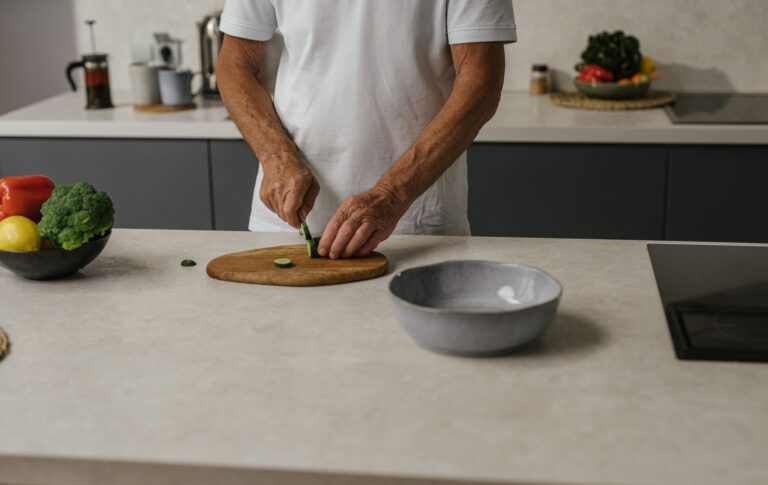
You can build a realistic dementia-prevention routine with limited mobility by pairing Mediterranean-style eating with seated and supported movement through the week. The Mediterranean diet is an eating pattern centered on vegetables, fruits, legumes, nuts, whole grains, fish and olive oil as the main fat. The Alzheimer's Association describes this pattern as low in meat, sweets and processed foods. Research links high adherence to lower dementia risk, but diet alone does not prevent dementia.
Medical information disclaimer: This article is for general educational purposes only and does not provide medical advice, diagnosis, or treatment. Always consult a physician or other qualified health professional about symptoms, medications, tests, or treatment decisions.
Table of Contents
- What does the research show — and what are its limits?
- What does Mediterranean eating look like day to day?
- How do you add movement with limited mobility?
- How do you make food and movement stick together?
What does the research show — and what are its limits?
Adults with the highest Mediterranean-diet adherence had up to 23 percent lower dementia risk than low-adherence adults. The finding comes from a 60,298-person UK Biobank cohort followed for nearly a decade, and Newcastle University researchers found the link held regardless of genetic risk, as reported in the BMC Medicine study. People with two copies of the APOE4 Alzheimer-risk gene saw a larger signal.
Those who followed the diet closely had about 35 percent lower dementia risk and slower cognitive decline, according to Harvard researchers described by Harvard Health Publishing. These are observational links, not proof of cause. The National Institute on Aging notes that Mediterranean and MIND diets are tied to lower Alzheimer's risk and slower decline, but a recent clinical trial did not confirm protection, as explained in the NIA evidence review.
What does Mediterranean eating look like day to day?
Build plates around plants, beans, fish and olive oil. Use olive oil as the primary fat, choose whole grains over refined grains, and keep red meat, sweets and processed foods occasional.
Small swaps make the pattern workable on low energy. Practical starting points include: Shop once for repeating meals rather than new recipes. A salmon-and-white-bean salad, vegetable-lentil soup and oatmeal with walnuts can rotate across the week.
- cook with olive oil instead of butter or lard
- add lentils, chickpeas or white beans to soup twice weekly
- keep frozen vegetables, canned sardines, nuts and brown rice on hand
- choose fruit plus unsalted nuts for dessert or snacks
How do you add movement with limited mobility?
Aim for function first, then minutes. The Centers for Disease Control and Prevention advises adults 65 and older to get at least 150 minutes weekly of moderate aerobic activity plus muscle-strengthening on two days and balance activities, adapted to ability, as described in the CDC activity guidance for older adults. Split that target into short seated or supported bouts.
The National Institute on Aging advises older adults to combine aerobic, strength and balance exercise and to use a sturdy chair, wall or person for support. A workable weekly mix is seated marching or arm raises for aerobic minutes, chair stands or wall push-ups for 8 to 12 repetitions, and supported heel-to-toe or single-leg holds for balance. Start with 5 to 10 minutes daily and add one session per week. Stop and get medical advice for chest pain, dizziness, new joint swelling or a fall.
How do you make food and movement stick together?
Tie eating and activity to blood pressure, weight, smoking and medication routines. The World Health Organization 2019 dementia-risk guidelines recommend regular activity, Mediterranean-like eating, blood-pressure and weight control, not smoking, and advise against vitamin B, vitamin E or fish-oil supplements for prevention. Use one weekly check rather than daily tracking.
Review what you ate most days, how many movement sessions you completed, blood-pressure readings if advised, and any barriers such as pain, fatigue or food access. Ask your clinician or pharmacist before changing salt, alcohol, supplements or exercise after a cardiac event, stroke, diabetes diagnosis or fall. Bring your food list, movement plan and support needs to that visit.