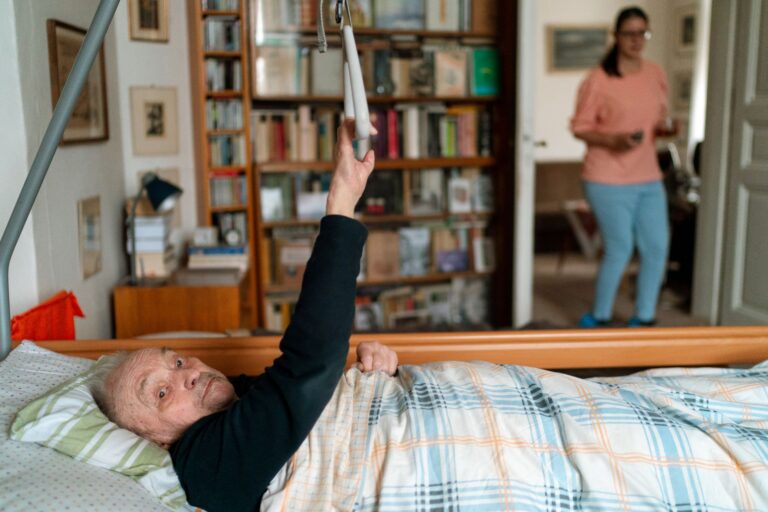
Caregivers can set up picture boards for aphasia communication by grouping labeled photos and symbols for daily needs, feelings and common phrases, then keeping the board within easy pointing reach for daily practice. Aphasia is an acquired language disorder, most often after stroke or brain injury, that impairs speaking, understanding, reading and writing while leaving intellect intact, according to the National Institute on Deafness and Other Communication Disorders in its overview of aphasia.
A picture board is a low-tech communication aid the person points to or gazes at. It supports language access during real routines like meals, bathing, visits and medical care. A simple start works best, with updates as needs change.
Medical information disclaimer: This article is for general educational purposes only and does not provide medical advice, diagnosis, or treatment. Always consult a physician or other qualified health professional about symptoms, medications, tests, or treatment decisions.
Table of Contents
- What should go on the first board?
- How does personalization help?
- How can you keep the board easy to see and point to?
- How should you practice the board together?
What should go on the first board?
Start with daily-life categories that cover basic wants, needs, feelings and safety. According to Lingraphica, useful groups include food and drink, bathroom and toileting, pain and body parts, comfort, people, activities, yes and no, and emergency help in its collection of communication boards. Add hospital or ICU phrases when relevant, such as suction, reposition, cold, hot, scared and call family. Keep emergency help on every page or on a fixed corner.
Limited choices per page prevent overwhelm and speed responses. Include common social phrases too, like hello, thank you, tired, happy and I need a break. That balance supports both care tasks and dignity. Review the board after a few days and replace unused items.
How does personalization help?
Personal photos make choices faster and clearer than generic symbols alone. Add pictures of the person's actual bed, toothbrush, cup, chair, family members and favorite foods. Organize them into sections like Bathroom, Clothing, Family Members and Food. Use a current photo for each person, with a printed first name underneath.
For foods, show the exact item served at home, not a similar product. For activities, show the real television remote, walker, book or garden chair. Update pictures when routines, caregivers, foods or living arrangements change. Remove items that cause confusion or distress. Ask close family which photos the person recognizes most quickly.
How can you keep the board easy to see and point to?
Make each card show one clear concept with a large, high-contrast picture and a printed label, as recommended by the National Aphasia Association in its guide to communication supports. Use plain backgrounds and simple images. Keep text large and short.
Check lighting, glare, distance and angle before each use. For vision limits, enlarge pictures and increase contrast. Secure loose pages so they do not slip during pointing.
- Place one idea per card with plenty of white space.
- Limit choices to a few cards per page.
- Include a pain scale with faces and numbers.
- Laminate pages and keep the board within pointing reach.
How should you practice the board together?
Speak slowly in short sentences during use. Ask one yes or no question at a time, point to the matching picture, allow extra response time, and accept any attempt to communicate, including gestures, drawing or pointing, as advised by the National Aphasia Association in its guide for care partners. Practice daily in real routines, keep the board visible, and involve close family so partners respond consistently. Model use yourself by pointing as you speak.
Praise effort, not just correct answers. Picture boards supplement but do not replace individualized speech-language therapy. People with severe global aphasia, major comprehension loss or cognitive and vision limits may need professional evaluation and different tools. Keep the board visible between sessions and update pictures as needs change.