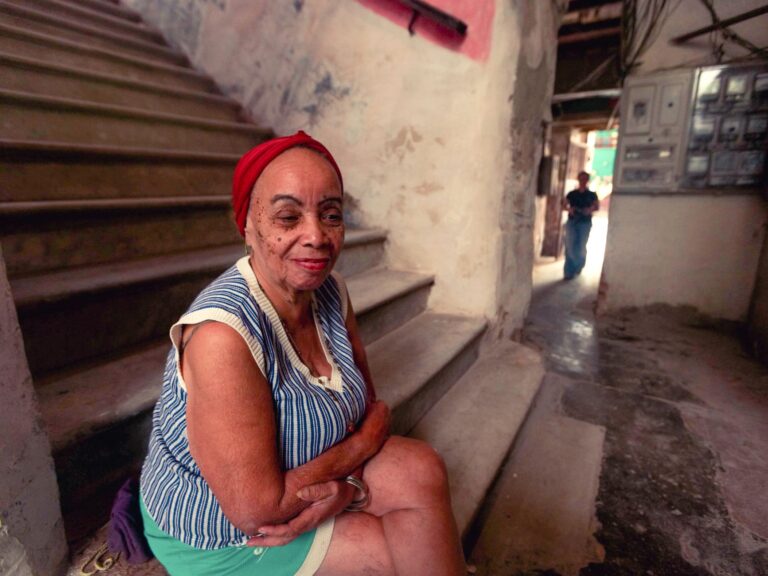
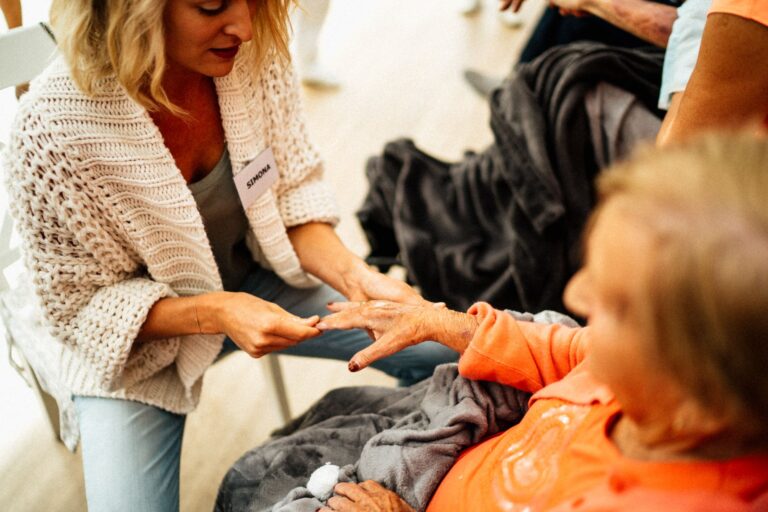
The National Health and Aging Trends Study (NHATS) and the National Study of Caregiving (NSOC) study Medicare beneficiaries age 65 and older, with deliberate oversampling of Black beneficiaries and adults 90 and older, but they exclude anyone under 65 or outside Medicare. For a reader tracking memory concerns in a family member, that boundary determines whether the most-cited dementia research in the country actually covers that person. NHATS is a federally funded panel study of older Americans' health and function; NSOC is its companion study of the family members who care for them. Together they produce much of the national data on dementia prevalence, caregiving hours, and racial disparities in cognitive risk — but only for the population their sampling design reaches.
Medical information disclaimer: This article is for general educational purposes only and does not provide medical advice, diagnosis, or treatment. Always consult a physician or other qualified health professional about symptoms, medications, tests, or treatment decisions.
Table of Contents
- Who NHATS Actually Samples
- Why Nursing Home Residents Are Undercounted
- What the 2026 Findings Show About Racial Disparities
- Who Falls Outside the Data Entirely
- How the Caregiving Data Has Expanded
- Frequently Asked Questions
Who NHATS Actually Samples
NHATS draws its participants from Medicare enrollment records, selecting beneficiaries who are 65 or older, according to NIH NIA's funding announcement. The design oversamples two groups on purpose: Black beneficiaries and the "oldest-old," meaning adults 90 and above, the same source confirms. That oversampling matters because both groups carry disproportionate dementia burden, and a sample sized only to their share of the general population would produce too few cases to study reliably.
The study also spans three living settings — community residences, residential care facilities, and nursing homes — rather than just people living independently, per the same NIA announcement. Round 1 began in 2011 with 12,411 Medicare beneficiaries drawn from 95 county groups and 655 ZIP codes, of whom 8,245 completed the baseline interview, according to ICPSR's study documentation. Round 5, fielded in 2015, added a fresh sample of 65-and-older beneficiaries to keep the panel representative as earlier participants aged or left the study, the same ICPSR record shows.
Why Nursing Home Residents Are Undercounted
NHATS was built to study aging broadly, but it treats institutionalized residents differently than everyone else. Beneficiaries living in nursing homes don't receive the full sample-person interview — the instrument that assesses individual memory and function — according to the CDC's data documentation.
Instead, a facility fills out a facility-level questionnaire on their behalf. That distinction limits what the data can say about dementia inside nursing homes specifically, since the detailed cognitive assessment used elsewhere in the study simply isn't administered to this group. A reader whose relative lives in a nursing home should treat NHATS-derived prevalence figures as weaker evidence for that setting than for community-dwelling or residential-care populations, where the full interview is used.
What the 2026 Findings Show About Racial Disparities
A 2026 analysis by Lee and colleagues examined 7,574 adults from the 2023 NHATS wave, sorting them into probable, possible, or no-dementia categories, according to the Journal of Prevention of Alzheimer's Disease. Hispanic older adults had the highest probable-dementia prevalence of any racial or ethnic group studied, the same analysis found.
The same study uncovered risk factors that behaved inconsistently across groups. Hearing aid use was associated with higher dementia odds among Hispanic participants — the opposite of what's typically expected — while chewing problems and depression were stronger risk signals in minority subgroups than among non-Hispanic white participants, according to a separate report on the same research. Researchers draw a practical conclusion from this: universal dementia-prevention guidance may not work equally well across racial and ethnic groups, since a protective factor in one population didn't behave the same way in another, per the original study.
- Hispanic older adults: highest probable-dementia prevalence among groups studied
- Hearing aid use: linked to higher dementia odds in Hispanic participants specifically
- Chewing problems and depression: stronger risk signals in minority subgroups than in non-Hispanic white participants
Who Falls Outside the Data Entirely
Because NHATS and NSOC sample only Medicare enrollees 65 and older, two groups are structurally absent from this research. Adults under 65 with younger-onset dementia aren't sampled at all, and anyone not enrolled in Medicare — including most undocumented immigrants — falls outside the sampling frame, according to the NIA funding announcement.
For a reader whose concern involves a younger relative showing memory symptoms, or a family member without Medicare coverage, prevalence figures and risk-factor findings drawn from NHATS and NSOC don't describe their situation. The findings on racial disparities, hearing aids, or caregiver burden described above apply to the 65-and-older Medicare population the studies actually sampled — not to younger-onset cases or the uninsured.
How the Caregiving Data Has Expanded
NSOC studies family caregivers of NHATS participants, and it has gone through several expansions. The "Enhancing NSOC" project, led by Judith Kasper and Vicki Freedman with Jennifer Wolff as co-investigator, re-interviewed caregivers from the 2015 NSOC wave and added caregivers of 2017 NHATS participants, introducing a health-system-involvement module and two time-diary interviews not present in earlier rounds, according to Johns Hopkins Bloomberg School of Public Health.
NSOC IV, led by Freedman and Wolff, then interviewed family caregivers of NHATS participants annually from 2020 through 2023, extending the existing caregiver panel rather than recruiting a new population, per the University of Michigan Institute for Social Research. That expanded panel has already produced a significant finding: a linked NHATS-NSOC analysis published in Health Affairs found the number of family caregivers to older adults grew from 18.2 million in 2011 to 24.1 million in 2022 — roughly a one-third increase over eleven years, according to the study's supplementary appendix. That growth reflects caregiving demand for the Medicare-age population these studies track, not caregiving for younger-onset dementia patients outside that frame.
Frequently Asked Questions
Does NHATS include people with early-onset or younger-onset dementia?
No. The sampling frame draws only from Medicare beneficiaries 65 and older, so anyone diagnosed before 65 falls outside the study entirely, per the NIA funding announcement.
Can NHATS tell me much about dementia specifically inside nursing homes?
Less than for other settings. Nursing home residents get only a facility-level questionnaire, not the individual memory and function interview used elsewhere in the study, according to the CDC.
Why does the 2026 study's hearing aid finding matter for caregivers?
It shows that a factor often framed as universally protective against dementia didn't behave that way for Hispanic participants, which researchers say argues against one-size-fits-all prevention guidance, per the Journal of Prevention of Alzheimer's Disease.
You Might Also Like
- NHATS and NSOC Dementia Care Data Priorities in 2026: How Adults With Memory Concerns Can Avoid Overreading the Headline
- Can PSEN1 Genetic Test Change Dementia Care Decisions For Younger Adults With Memory Problems?
- CMS GUIDE Dementia Care Payment Changes in 2026: Care-Planning Implications for Family Caregivers