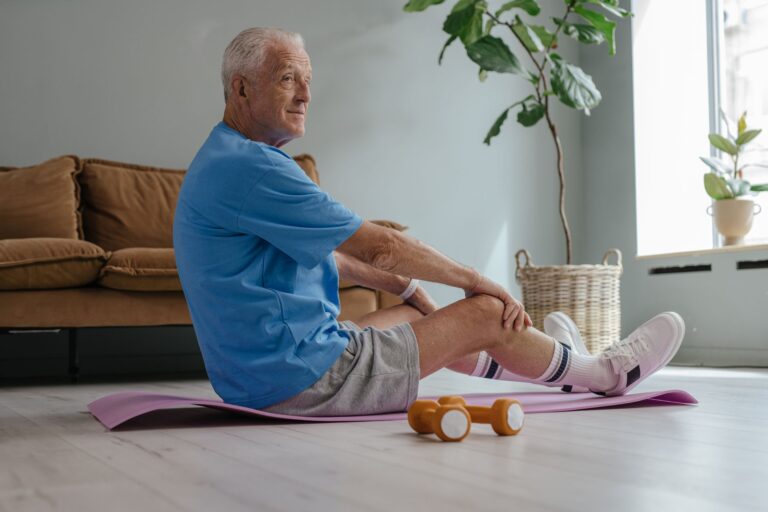
WHO's 2026 dementia prevention guideline treats physical activity as strong, well-supported advice for healthy adults, but only conditional, lower-certainty advice for people who already have mild cognitive impairment. That split, and the guideline's insistence that exercise works best alongside other health changes, is where it diverges most sharply from the simpler claims circulating online. The World Health Organization published the second edition of "Risk Reduction of Cognitive Decline and Dementia" on 15 July 2026, replacing its 2019 first edition. WHO's announcement states that up to 45% of dementia risk traces to modifiable factors, including physical inactivity alongside smoking, alcohol use, social isolation, air pollution, hypertension, and diabetes.
Medical information disclaimer: This article is for general educational purposes only and does not provide medical advice, diagnosis, or treatment. Always consult a physician or other qualified health professional about symptoms, medications, tests, or treatment decisions.
Official resources:
- Read the official guidance from NIH — Use this primary source to verify the official guidance.
- Read the official guidance from Who — Use this primary source to verify the official guidance.
Table of Contents
- What the guideline actually recommends for healthy adults
- Why the advice changes once someone has mild cognitive impairment
- Why WHO frames exercise as one piece of a larger plan
- What the widely shared step-count study does and doesn't show
- What WHO says about supplements, and what to check before starting an activity plan
What the guideline actually recommends for healthy adults
For adults with normal cognition, WHO gives physical activity a strong recommendation to reduce the risk of cognitive decline, based on moderate-certainty evidence, according to the WHO/NCBI guideline text. A strong recommendation means WHO expects the benefits to outweigh the downsides for nearly everyone in that group, which is as firm a endorsement as the guideline gives any single behavior.
That recommendation does not point to one workout style. WHO's broader physical activity guidance, summarized by the Alzheimer's Drug Discovery Foundation, calls for regular activity for people of all ages and abilities — a mix of aerobic movement, muscle-strengthening work, and less time spent sitting. It does not single out walking, running, or any other single exercise as sufficient on its own.
Why the advice changes once someone has mild cognitive impairment
The guideline treats mild cognitive impairment (MCI) differently. MCI is a measurable decline in memory or thinking that is noticeable but does not yet interfere with daily independence the way dementia does. For this group, WHO downgrades physical activity to a conditional recommendation, citing low-to-moderate certainty evidence and generally small observed cognitive benefits, per the WHO/IRIS guideline text.
A conditional recommendation signals that the right choice depends on the person — their preferences, other health conditions, and what else is available to them. It is not a reversal of the evidence for healthy adults; it reflects that once cognitive decline has already started, exercise alone produces a smaller, less certain effect. Online summaries of the guideline rarely draw this distinction, often presenting physical activity as uniformly protective regardless of where someone stands cognitively.
Why WHO frames exercise as one piece of a larger plan
WHO positions physical activity as one component of individualized, multidomain interventions — combinations that target at least three risk factors at once, such as activity paired with diet changes, cognitive training, and managing vascular conditions like high blood pressure, according to the ADDF summary of the WHO guidance. This framing contrasts with the common online shorthand that exercise alone "prevents" dementia. For a reader managing their own risk or a family member's, this means a walking program is reasonable to start, but it works better as part of a broader plan that also addresses blood pressure, blood sugar, diet, and social engagement rather than as a standalone fix.
What the widely shared step-count study does and doesn't show
Much of the "exercise prevents dementia" messaging online traces back to a 2023 JAMA Neurology study of about 78,000 adults aged 40 to 79. It found brisk walking, defined as more than 40 steps per minute, associated with a 57% lower dementia risk, and very brisk walking — 112 steps per minute for 30 minutes daily — associated with a 62% reduction, as reported by Harvard Health.
Those numbers are frequently repeated as if walking faster directly causes lower dementia risk. The study was observational, not a controlled trial, and followed participants for a relatively short average of about seven years. Harvard Health's coverage notes that this design cannot establish that brisk walking alone prevents dementia — it shows an association, which may also reflect that people who walk briskly tend to be healthier in other ways the study did not fully account for.
What WHO says about supplements, and what to check before starting an activity plan
WHO's 2026 guideline also recommends against routine use of vitamin B, vitamin E, omega-3, or multivitamin supplements for dementia prevention in people who do not have a diagnosed deficiency, according to coverage via Epocrates. This directly counters another common online claim — that specific supplements can substitute for or boost the protective effect of lifestyle changes. Before starting or increasing physical activity, especially for someone with MCI or existing heart or mobility conditions, it helps to work through a short checklist with a clinician:.
- Confirm there's no undiagnosed vitamin deficiency before adding supplements instead of relying on them preemptively
- Ask whether vascular conditions like hypertension or diabetes are being managed alongside any new activity plan
- Treat a single exercise habit as one part of a broader plan, not a replacement for addressing other risk factors
- Expect smaller, less certain benefits from exercise once MCI is already present, rather than the dramatic risk reductions cited in observational step-count studies