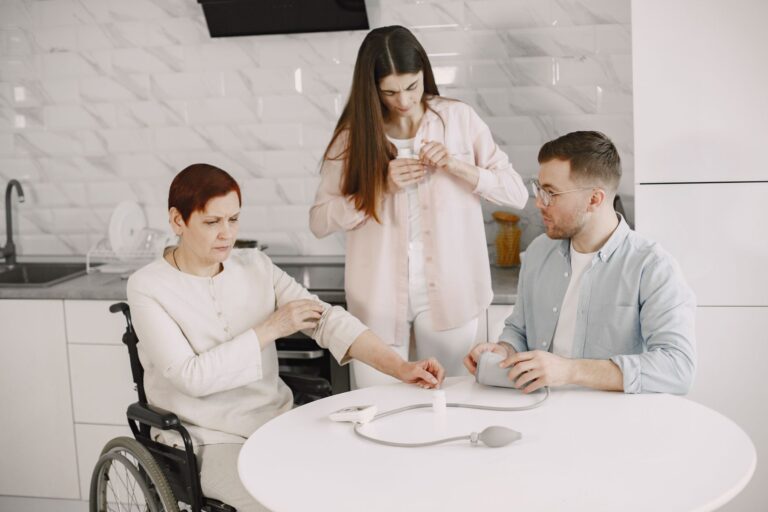
The LiBBY trial found that a combination of THC and CBD significantly reduced agitation in hospice-eligible adults with advanced Alzheimer's disease or related dementia. Researchers presented the Phase 2 results in July 2026, but the findings still need to clear peer review and a larger Phase 3 study before the treatment could become a standard option. The trial targeted a problem that currently has no approved drug solution: agitation in late-stage dementia, which has no FDA-approved medication designed specifically for it, according to Pennington Biomedical Research Center's study background. For families and caregivers watching a loved one experience distress with few treatment options, the results offer an early but unproven signal of a path forward.
Medical information disclaimer: This article is for general educational purposes only and does not provide medical advice, diagnosis, or treatment. Always consult a physician or other qualified health professional about symptoms, medications, tests, or treatment decisions.
Table of Contents
- What the LiBBY trial actually tested
- How much did agitation improve, and did it last?
- What were the safety findings?
- Why these results are not yet a treatment recommendation
- What this means for caregivers right now
- Frequently Asked Questions
What the LiBBY trial actually tested
LiBBY was a Phase 2 randomized, double-blind, placebo-controlled trial involving 120 hospice-eligible adults with advanced Alzheimer's disease or related dementia who were experiencing clinically significant agitation. The study ran across roughly ten U.S. medical centers, led by USC's Keck School of Medicine and funded by the National Institute on Aging, according to stratcann's coverage. Participants received an oral THC/CBD formulation called T2:C100, supplied by sponsor MediPharm Labs.
Dosing started conservatively: a half dose of 2 mg THC and 100 mg CBD twice daily during the first week. Starting at week 2, the dose increased to 4 mg THC and 200 mg CBD twice daily through week 12, compared against a matched placebo group, as reported by NeurologyLive. The trial measured agitation using the Cohen-Mansfield Agitation Inventory (CMAI), a standard clinical tool for scoring agitated behaviors in dementia patients. The primary endpoint was the change in CMAI score at two weeks, with sustained reduction at 12 weeks and overall clinical change tracked as key secondary measures, according to the AAIC 2026 trial results.
How much did agitation improve, and did it last?
Participants who received the THC/CBD treatment showed a statistically significant 6.27-point greater reduction in CMAI scores than the placebo group at the two-week mark. The benefit did not fade quickly: across the full 12 weeks, the treatment group's advantage held, with an area-under-the-curve contrast of -8.23 (95% CI -11.6 to -4.86, P<.0001), according to NeurologyLive.
MediPharm Labs confirmed in its own release that the trial met its primary endpoint, describing the agitation reduction in advanced Alzheimer's and dementia patients as significant, while noting the company was still reviewing the complete dataset, per the MediPharm Labs press release. The sustained effect through week 12 matters because agitation in late-stage dementia often fluctuates, so a treatment that only works briefly would offer little practical value to caregivers managing day-to-day care.
What were the safety findings?
Serious adverse events occurred more often in the treatment group than in the placebo group: 23.3% versus 11.9%, respectively. Investigators stated that none of these serious events were judged to be related to the study drug, according to NeurologyLive.
This population consists of hospice-eligible adults with advanced disease, a group already prone to medical complications unrelated to any study medication. Still, the gap between the two groups is large enough that families considering similar treatments should ask their care team directly about what caused the serious events in the trial and how that risk was assessed.
Why these results are not yet a treatment recommendation
As of the July 2026 presentation at the Alzheimer's Association International Conference in London, LiBBY's results are topline conference data. No journal publication has been identified, and no Phase 3 trial had been announced at that time, meaning the findings have not gone through peer review, according to Being Patient.
An independent geriatrician cited in coverage of the trial cautioned that, despite the positive signal, LiBBY remains a small study. More evidence is needed before THC/CBD becomes a standard option for dementia-related agitation, according to reporting tied to Pennington Biomedical Research Center. A 120-person trial, even with a strong statistical result, cannot answer questions a larger, longer study would need to settle: how the treatment performs across more diverse patients, whether the safety signal changes with more data, and how it compares to other approaches to agitation management.
What this means for caregivers right now
Nothing in the LiBBY results changes what is available today. No FDA-approved medication exists specifically for agitation in late-stage dementia, so caregivers and clinicians still work with off-label approaches and non-drug strategies while this evidence develops, per Pennington Biomedical Research Center. For a caregiver trying to track whether this research might eventually apply to their situation, a few concrete markers are worth watching:.
- A peer-reviewed publication of the full LiBBY dataset, which had not appeared as of the July 2026 conference presentation.
- Any announcement of a Phase 3 trial, which would be the next required step before regulatory consideration.
- Updated safety data clarifying the cause of the serious adverse events seen in 23.3% of the treatment group.
- Guidance from a patient's own hospice or dementia care team, since current treatment decisions should rest on approved options and individual clinical judgment rather than Phase 2 conference data.
Frequently Asked Questions
Is the LiBBY trial's THC/CBD treatment available to patients now?
No. The results are topline Phase 2 conference data with no journal publication or announced Phase 3 trial as of July 2026, so the treatment is not an approved or standard option.
Who ran the LiBBY trial and who paid for it?
USC's Keck School of Medicine led the study across roughly ten U.S. medical centers, funded by the National Institute on Aging, with the THC/CBD formulation supplied by sponsor MediPharm Labs.
Were the serious adverse events caused by the study drug?
Investigators reported that none of the serious adverse events, which occurred in 23.3% of the treatment group versus 11.9% of the placebo group, were judged related to the drug.
You Might Also Like
- p-tau217 Findings a Decade Before Alzheimer’s Symptoms in 2026: What Researchers Still Need to Learn for Adults With Memory Concerns
- AAIC 2026 p-tau217 Alzheimer’s Risk Prediction Research: What Researchers Still Need to Learn for Adults With Memory Concerns
- Tauklarify Tau PET vs Alzheimer’s Blood Tests in 2026: What Is Established and What Remains Uncertain for Adults With New Memory Symptoms