Nature walks support engagement in dementia care by giving a person something real to notice, do, and share outside. Engagement here means active involvement, such as looking, listening, moving, and responding to people and nature. Swedish dementia care staff reported walks improved well-being, meaning, social interaction and nature and community connection, with value for staff and relatives, according to BMC Nursing.
A useful walk can be brief and close to home. A garden loop, courtyard sit, or slow street with benches can offer enough sights and sounds. The aim is shared attention, not distance.
Medical information disclaimer: This article is for general educational purposes only and does not provide medical advice, diagnosis, or treatment. Always consult a physician or other qualified health professional about symptoms, medications, tests, or treatment decisions.
Table of Contents
- What does engagement look like outdoors?
- How can walks support calm?
- How do you match the walk to ability?
- How can families and staff make walks work?
What does engagement look like outdoors?
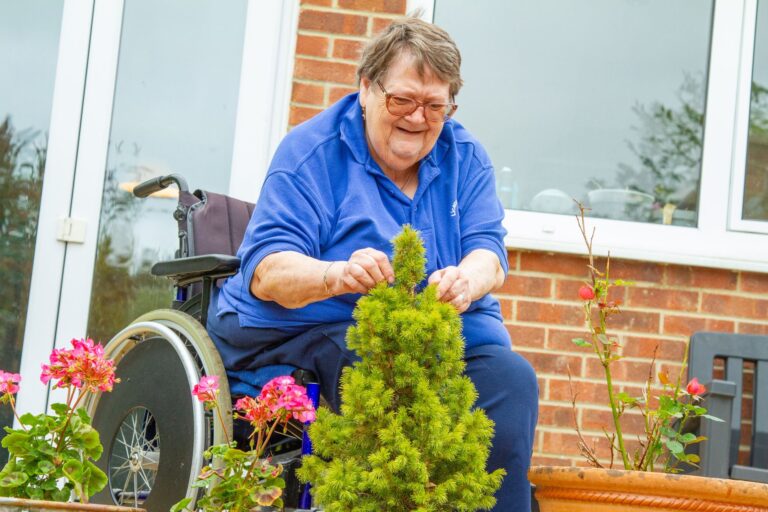
Watch for small responses. The person may point, name a plant, feel bark, follow birdsong, or smile at a passerby. Staff can join in, pause, and let the moment last.
Garden spaces gave residents places to talk with visitors and prompted memories, while supporting well-being for families and care staff, according to the University of Exeter review. A shared bench or flower bed can turn a visit into joint activity. A familiar smell like cut grass can start a story. A bench near flowers can invite a quiet chat without pressure to perform.
How can walks support calm?
Agitation means restlessness or distress, such as pacing, calling out, or striking out. A 2025 systematic review and meta-analysis in Healthcare concluded that thoughtfully applied nature-based interventions significantly reduced agitation in older adults with dementia in long-term residential care.
Thoughtful means calm, brief, and familiar. Choose a quiet time, a known route, and one simple focus, like shade, birds, or water. Stop early if noise, heat, or crowding raises tension.
How do you match the walk to ability?
The U.S. National Institute on Aging advises caregivers to match activities to ability, listing taking a walk together alongside biking, stretching, ball-toss and supervised exercise videos. That means let energy and balance on the day set length and pace.
Use ability on the day as the guide. Pick length, pace, and support to fit energy, balance, and mood. End while the outing still feels good. Note what helped, then repeat that pattern next time.
- Check shoes, weather, water, and toilet needs before leaving.
- Offer an arm, walker, or wheelchair, and plan rest seats.
- Keep instructions to one step at a time.
How can families and staff make walks work?
Plan the route for safety and ease. Use even paths, good light, shade, seating, and clear sight lines. Allow unhurried time so staff can stay present rather than rush.
Invite a relative or friend to join when possible. Shared notice of a dog, cloud, or song gives an easy topic. A short note after the walk keeps the next outing consistent.