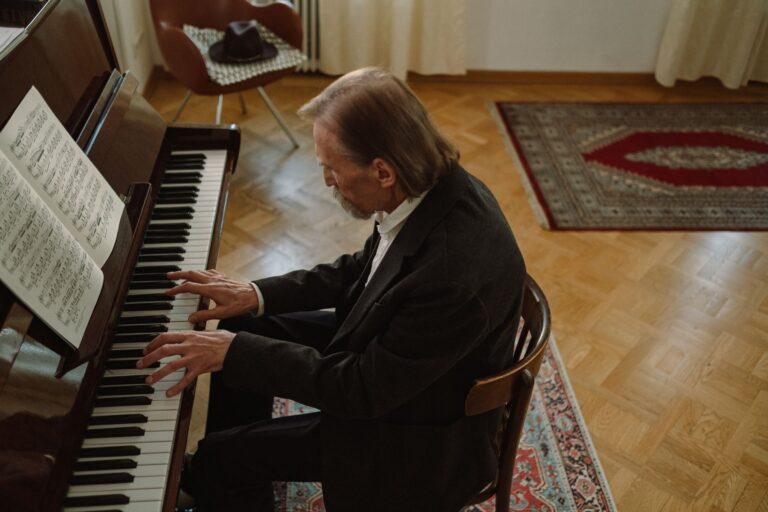
Yes — adults who often listen to music or play an instrument show lower dementia risk in recent studies. Dementia means lasting loss of memory and thinking skills that interferes with daily life, and regular music is tied to less of that loss. The clearest signal comes from older adults studied while still free of dementia. You can use these results to shape a simple music habit, while keeping study limits in mind.
Medical information disclaimer: This article is for general educational purposes only and does not provide medical advice, diagnosis, or treatment. Always consult a physician or other qualified health professional about symptoms, medications, tests, or treatment decisions.
Table of Contents
- How much lower was risk with regular music?
- Does other research point the same way?
- How could music support the aging brain?
- What are the limits of this evidence?
- How to make music a steady habit?
How much lower was risk with regular music?
ASPREE Australia reports that adults who always listened to music had 39% lower dementia risk than those who never, rarely or sometimes listened the ASPREE Australia report. The group held more than 10,800 Australians aged 70 and older who were dementia-free at enrollment. Follow-up recorded who developed dementia over time. The Journal of Dementia Care reports that people who often or always played an instrument, including voice, had 35% lower dementia risk during follow-up.
SciTechDaily, reporting the Monash University study, found people who both listened and played regularly had 33% lower dementia risk and 22% lower risk of milder impairment without dementia the SciTechDaily report on the Monash study. Milder impairment means clear thinking problems that do not yet block daily life. The same Monash report linked frequent listening alone to 17% lower risk of that milder impairment. It also linked frequent listening to better scores for overall thinking and memory.
Does other research point the same way?
Yes, an earlier pooled look at three long-term studies found the same direction. The BMC Neurology meta-analysis reports that playing an instrument was linked to lower dementia risk in older adults, with pooled hazard ratio 0.64 the BMC Neurology meta-analysis. Hazard ratio means relative risk over time, so 0.64 points to about one-third lower risk.
The review gave a 95% confidence range of 0.41 to 0.98, with low variation between studies. Confidence interval means the true value likely falls inside that span. Low variation means the three results broadly agreed.
How could music support the aging brain?
Music uses hearing, movement, memory, and attention at once. Neuroscience News, reporting Baycrest and Chinese Academy of Sciences work, says older musicians showed more youthful links between hearing and movement areas the Neuroscience News report on the Baycrest study. They also showed less age-related loss in understanding speech in noisy places. The researchers link this pattern to cognitive reserve.
Cognitive reserve means the brain keeps working well despite age-related change. A reserve built by complex activity may help thinking stay steady longer. PsyPost, reporting a study of 132 healthy adults near age 69, found music lessons increased gray matter in the cerebellum and improved auditory working memory. Gray matter is tissue that processes signals, and auditory working memory holds and uses sounds just heard. Gains appeared even as overall brain size shrank with age, which points to late-life flexibility.
What are the limits of this evidence?
The large cohort results show links, not proof that music prevents dementia. ASPREE Australia notes the findings rest on self-reported music frequency in elders first studied without dementia. Self-report means people described their own habits, which can be imprecise.
Early, unnoticed thinking decline could also reduce musical activity before diagnosis. That reverse path would make music look protective even if decline came first. Take the lower-risk numbers as encouragement to stay engaged, not as a promised shield.
How to make music a steady habit?
Monash researcher Joanne Ryan calls regular listening and playing a low-cost way to support thinking health. She notes brain aging reflects lifestyle and surroundings as well as age and genes. Pick forms you will repeat, not one perfect method.
Try these repeatable steps for listening and playing. Choose options you enjoy enough to repeat weekly. Start with one daily song session and one weekly sing or play session. If memory slips worsen, contact a clinician promptly rather than waiting for music alone to help.
- Listen daily to music you enjoy, while cooking, walking, or resting.
- Sing, hum, drum, or play a simple instrument often.
- Join a choir, class, or weekly music time with others.
- Keep hearing, mood, and memory changes in view and seek care for concerns.