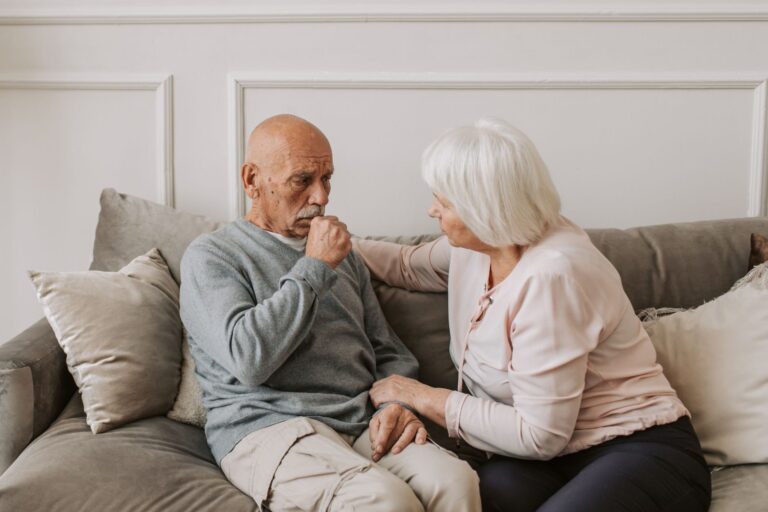
Short, slow voice notes in a familiar voice often help people with primary progressive aphasia, a dementia that weakens speaking, understanding, reading, and writing. Text works better when hearing loss, memory limits, or background noise make audio hard to follow.
Early memory and behavior often stay steadier while language declines. Care focuses on support and practice, not reversal. The right format for each message can reduce frustration and keep contact warm.
Medical information disclaimer: This article is for general educational purposes only and does not provide medical advice, diagnosis, or treatment. Always consult a physician or other qualified health professional about symptoms, medications, tests, or treatment decisions.
Table of Contents
- How PPA affects language
- When does a voice message help most?
- When does text work better?
- How to shape each message
How PPA affects language
Primary progressive aphasia harms language networks first. Speaking, understanding, reading, and writing become harder over time. Early memory and behavior often stay relatively intact, according to NIDCD's aphasia page.
Clinicians describe three main variants, according to the UCSF Memory and Aging Center. Nonfluent/agrammatic PPA brings effortful, halting speech. Semantic PPA erodes word and object meaning. Logopenic PPA causes word-finding pauses and poor repetition.
When does a voice message help most?
Voice helps when the message is short, slow, familiar, and easy to replay. The National Institute on Aging advises simple sentences, one idea at a time, a slow natural rate, and 5-10 seconds of response time, described in National Institute on Aging's communication guidance. A good note sounds like, "Hi, Mom.
I will visit Tuesday at three. Love, Ana." Send it in a quiet thread. Let the person replay it without rush or background talk.
When does text work better?
Text works better when hearing, memory, or noise limits audio. Written words stay visible and reduce recall load. The American Speech-Language-Hearing Association describes "augmented input" for these moments, explained in the ASHA Leader article on augmented input.
Use writing to support speech, not replace warmth. Write key names, dates, and choices. Offer written yes/no options. Draw, gesture, or point alongside the words.
How to shape each message
Loud or fast audio often backfires. The National Institute on Aging advises a normal tone, face-to-face cues for lip reading, less noise, and no shouting.
Raised voices distort speech sounds and add strain. Mayo Clinic notes that diagnosis requires worsening language trouble over 1-2 years, and care centers on speech-language therapy plus compensatory supports. UCSF research on speech-language therapy in PPA points toward short voice notes plus written backup, then multimodal books, pictures, and devices as needs change.
- Send one topic per voice note, under about 30 seconds.
- Add a short text with names, dates, and choices.
- Keep the thread quiet, familiar-voiced, and replayable.
- Slow down, pause, and allow extra response time.
- Shift the mix toward pictures and devices as language changes.
You Might Also Like
- Dementia With Primary Progressive Aphasia and Group Conversations: Agreeing on Turn-Taking Signals
- Dementia With Primary Progressive Aphasia and Emergency Calls: Planning an Accessible Way to Ask for Help
- Dementia With Primary Progressive Aphasia and Background Television: Testing a Quieter Conversation Setup