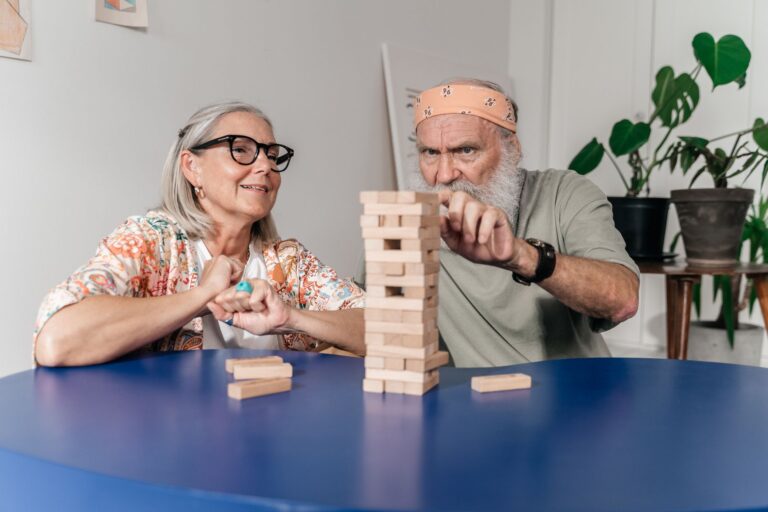
Yes — raised-dot dominoes make touch, grip and visibility easier for people with dementia and sight loss. Tactile sets are domino sets where each dot, called a pip, stands up from the tile so players can feel the count. Families often ask if bigger tiles will solve play problems. Touch and size help hands and eyes, but simpler rules still matter for enjoyment.
Medical information disclaimer: This article is for general educational purposes only and does not provide medical advice, diagnosis, or treatment. Always consult a physician or other qualified health professional about symptoms, medications, tests, or treatment decisions.
Table of Contents
- How Does Touch Help You Count Dots?
- What Makes Large Tiles Easier to Grip?
- What Helps Low Vision?
- How Should You Adapt Play for Dementia?
How Does Touch Help You Count Dots?
The Wisconsin Council of the Blind & Visually Impaired describes a standard tactile double-six set in its tactile set description. It has 28 plastic tiles with large raised dots and a raised center line. Blind and sighted players can feel each count by touch.
Activities to Share UK offers giant tactile-visual dominoes with texture on both sides. The high-contrast colours support players with visual impairment. Touch plus colour helps link what fingers feel and eyes see.
What Makes Large Tiles Easier to Grip?
Activities for Care sells giant foam dominoes for seniors, dementia and low-vision engagement. The large foam tiles use raised dots that are easy to grip and read at a glance.
Sensory Solutions points to backs and storage as grip aids. Rough or no-skid backs keep large tiles from sliding. A sturdy case keeps tiles easy to handle and store.
- large foam tiles for full-hand grip
- raised dots for finger reading
- rough or no-skid backs to stop sliding
What Helps Low Vision?
The Network of Care assistive-devices listing describes low-vision giant wooden dominoes in its assistive-devices listing. They measure about 4.25 x 2 x 0.25 inches with raised black-on-white dots. The listing specifies them for blindness, low vision and fine-motor or grasping disabilities.
NHS visual-impairment guidance from NHS South West explains why that colour works in its visual-impairment guidance. Print-to-background contrast matters for reading. Many people see dark print on white most easily.
How Should You Adapt Play for Dementia?
The Alzheimer's Society advises that familiar games like dominoes can use abilities a person still retains in its indoor-games guide. Adapted rules keep everyone involved as participation gets harder. Start with full rules only if the player still enjoys them.
Ageless Online activity guidance notes the limit of physical aids. Touch, grip and visibility aids do not fix memory, sequencing or rule-following loss. For later dementia, use simple matching or sorting instead of full scoring games.
You Might Also Like
- Implementation-Ready Dementia Interventions in the 2026 NIA Report: Questions Family Caregivers Can Ask About the Research
- Dementia Card Games When Suits Are Hard to See: Comparing Symbols, Size and Contrast
- Why the AAIC 2026 Soccer Study Does Not Prove Dementia: Questions Family Caregivers Can Ask About the Research