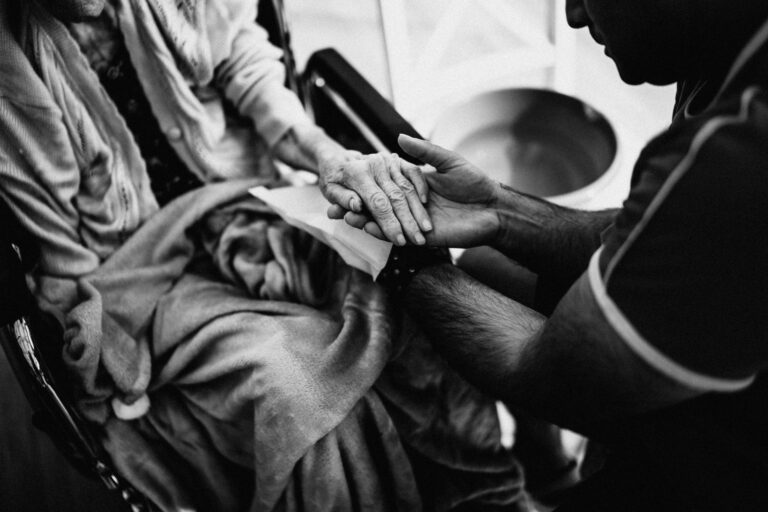
A complete dementia carer training programme should include five core skill areas: communication and de-escalation, behavioral management, assistance with daily living activities, medication safety, and person-centered care. These skills are evidence-based and directly reduce caregiver burden while improving outcomes for the person being cared for. Most carers benefit from structured, competency-based training rather than self-paced online modules alone. WHO's iSupport programme and tiered training models provide frameworks that organizations can adapt to their workforce, ensuring every caregiver—from new staff to managers—learns at the appropriate depth.
Medical information disclaimer: This article is for general educational purposes only and does not provide medical advice, diagnosis, or treatment. Always consult a physician or other qualified health professional about symptoms, medications, tests, or treatment decisions.
Table of Contents
- The Five Essential Skill Areas
- Training Structure and Depth
- Why Competency-Based Training Outperforms Passive Learning
- Measuring Training Impact
- Choosing a Programme for Your Setting
- Frequently Asked Questions
The Five Essential Skill Areas
.
- *Communication and de-escalation** forms the foundation. Carers must learn validated techniques such as the VERA framework (Validation, Emotion, Reassurance, Activity) to reduce agitation through observable behaviors like greeting by preferred name and explaining actions before carrying them out. This systematic review of communication skills training showed these approaches measurably lower distress responses.
- *Behavioral management** teaches carers to read behaviors as meaningful signals rather than problems to suppress. The Needs-Driven Dementia-Compromised Behavior model trains staff to recognize triggers and apply person-centered de-escalation instead of reactive responses. When a person becomes agitated, a trained carer looks for the unmet need—pain, hunger, discomfort, confusion—rather than treating the behavior itself.
- *Activities of daily living (ADL) assistance** requires hands-on competency in safe personal care. Training must cover bathing, dressing, toileting, and transfer techniques using equipment like gait belts and mechanical lifts while preserving dignity and the person's remaining independence. Without this training, carers risk injury to themselves and the person they support.
- *Medication safety and administration** includes proper dosage, storage, documentation, and infection control practices. Poor medication administration is a common cause of preventable harm in care settings, making this one of the few areas where error has immediate clinical consequences.
- *Person-centered care** ties all other skills together. Rather than viewing someone only through their diagnosis, carers learn to recognize preferences, personal history, and individual values—the foundation that makes communication, behavioral support, and ADL assistance effective rather than mechanical.
Training Structure and Depth
Not all carers need the same level of training. Tiered training structures address different roles: Tier 1 (dementia awareness for all staff), Tier 2 (communication, behaviour support, medication safety, end-of-life care for direct care staff), and Tier 3 (advanced practice and governance for managers).
This ensures new volunteers or administrative staff get essential awareness without overwhelming them, while hands-on carers gain deep competency in their specific tasks. WHO's iSupport programme exemplifies this structured approach, covering five core modules: introduction to dementia, being a caregiver, caring for yourself, providing everyday care, and dealing with behavior changes across 23 interactive lessons with immediate feedback. It combines problem-solving techniques and cognitive behavioral therapy methods rather than simple information delivery.
Why Competency-Based Training Outperforms Passive Learning
Online modules where carers simply click through slides do not produce reliable skill change. Recent research shows competency-based training using scenario-based assessments and skill demonstrations significantly improves dementia knowledge and caregiver self-efficacy compared to passive modules. A carer must practice reading a tense situation, actually perform a safe transfer technique, and demonstrate they understand when medication errors matter—not just see the information once.
This distinction matters because dementia care relies on split-second judgment calls that only practice builds. A carer who has never handled a person with a gait belt will struggle and risk both their own back injury and the care recipient's safety. A carer who has practiced with feedback knows what secure feels like.
Measuring Training Impact
Training effectiveness shows measurable results in both caregiver and care recipient outcomes. Recent multicomponent programmes demonstrate improvements in caregiver burden, depression symptoms, self-efficacy, and social support that persist up to 6 months after training, with greatest gains for carers who were previously untrained.
This means a training investment pays ongoing dividends, not just a short-term boost. A quality programme should have built-in assessment methods: quizzes that check knowledge retention, observed practice for hands-on skills, and follow-up evaluation of whether carers are actually using what they learned. If a training vendor cannot tell you how they measure success, the programme is likely not meeting evidence-based standards.
Choosing a Programme for Your Setting
When evaluating a training option, check whether it covers all five core skill areas and uses competency-based assessment rather than completion-only tracking. Ask whether the vendor offers tiered options suited to different roles, since one-size programmes often waste time and resources.
Request evidence of training effectiveness—published studies, outcome data, or feedback from organizations that have used the programme. Consider whether the training framework explicitly teaches person-centered care rather than task-focused care. A programme that teaches "how to bathe a dementia patient" is less complete than one that teaches "how to recognize a person's dignity during personal care and adapt your approach to their preferences and abilities." The first is a task; the second is the mindset that prevents harm and builds trust.
Frequently Asked Questions
Can online-only training work for dementia carer skills?
Purely passive online modules do not produce reliable skill change. If online training is used, it must include scenario-based assessments and observed practice—not just clickthrough content. Many organizations combine online modules with in-person practice sessions for balance.
How often should carers receive refresher training?
The verified research shows benefits lasting up to 6 months post-training. Most care settings refresh annual or twice-yearly, though more frequent updates may be needed for new techniques or policy changes. Competency-based refreshers are more effective than repeating the full original programme.
Should all carers in a care home receive the same training?
No. Tiered training matches depth to role—administrative staff need Tier 1 awareness, direct-care staff need Tier 2 depth in communication and safety, and managers need Tier 3 content on governance and advanced practice. This saves time and ensures appropriate skill focus.