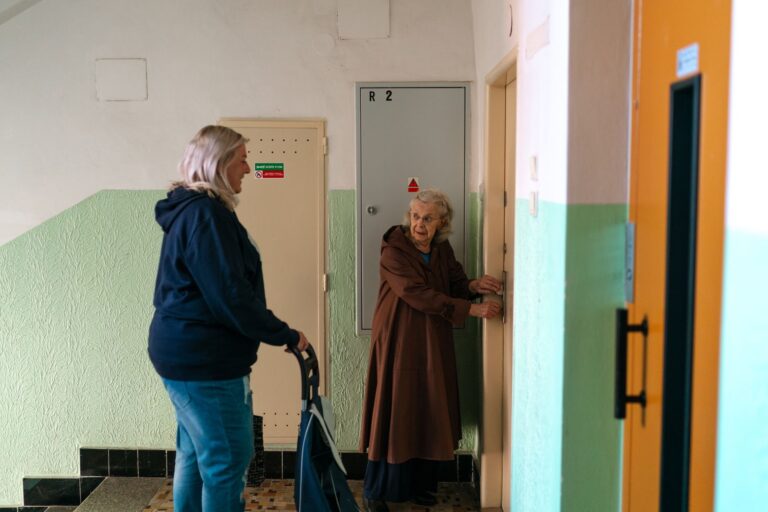
When a person with dementia wants to help but can no longer finish a task, preserve the wish to help while changing the task. Complete the difficult or unsafe part yourself, then offer one safe, manageable step the person can do. The goal is participation, not a perfect result. Dementia may affect planning, starting, or sequencing while the person still wants to contribute, so unfinished work does not necessarily mean they should be excluded.
Medical information disclaimer: This article is for general educational purposes only and does not provide medical advice, diagnosis, or treatment. Always consult a physician or other qualified health professional about symptoms, medications, tests, or treatment decisions.
Table of Contents
- Why the person may want to help but cannot finish
- How to divide the task
- When safety changes the answer
- When to stop or change course
- Frequently Asked Questions
Why the person may want to help but cannot finish
Many people with dementia still have the energy and desire to help. They may struggle, however, with planning a task, beginning it, remembering the sequence, or recognizing what comes next. The Alzheimer's Association explains that activities should be adapted to a person's remaining abilities and interests. Treat the request as meaningful communication.
The person may be seeking purpose, routine, connection, or a familiar role—not simply trying to complete a chore independently. Instead of saying, "You can't do that," identify the part they can still do. If they want to prepare food, you might handle the stove and measuring, then invite them to stir. If they want to fold laundry, give them towels rather than a mixed basket.
How to divide the task
Break the activity into a safe role with a clear beginning and end. Do the complex step yourself, then offer the remaining step without implying that the person failed.
Useful adaptations include: For example, say, "Would you help me place these napkins here?" rather than, "Finish setting the table." The CDC and NIOSH recommend simple instructions, demonstrations, extra response time, and respectful requests. Choose activities that match current ability, not the person's former performance. A person who once cooked a full meal may now safely wash vegetables, arrange ingredients, or carry unbreakable items.
- Set out only the materials needed for one step.
- Demonstrate the action briefly.
- Ask for one action at a time.
- Allow extra time for a response.
- Offer a respectful request instead of an order.
When safety changes the answer
A dementia diagnosis does not automatically answer whether someone can use every tool. Ability varies, and the relevant question is whether this person can use this item safely with the supervision or limits required. Knives, hot surfaces, cleaning chemicals, and other hazards may need direct supervision or removal from the activity. For cooking, the National Institute on Aging recommends safeguards such as automatic stove shut-off and, when necessary, disabling the stove.
That may mean delegating only preparation, serving, or cleanup. Watch the environment as well as the person. Keep the role away from traffic, heat, sharp edges, and clutter. If supervision cannot reliably prevent harm, choose a different task.
When to stop or change course
Stop, simplify, or postpone the activity if the person becomes increasingly frustrated, distressed, tired, embarrassed, inattentive, or agitated. Insisting on completion can turn a useful moment into a conflict. An imperfect result is often harmless. Correcting every detail or criticizing the work may undermine the person's sense of usefulness.
If the task is safe, leave minor imperfections alone; quietly fix only what matters for safety, hygiene, or someone else's essential needs. Tailored activities can help, but they are not a guaranteed treatment for every behavior. In a randomized trial of 250 dementia-caregiver pairs, an individualized activity program did not reduce agitation or aggression after three months, although it reduced needed daily assistance and improved caregiver well-being. The International Journal of Geriatric Psychiatry study supports practical participation while showing that benefits have limits.
Frequently Asked Questions
Should I let a person with dementia finish a task if the result is imperfect?
Yes, when the result is safe and harmless. Prioritize enjoyment and usefulness over precision, and correct only important problems.
What if the person insists on using a dangerous tool?
Do not argue about ability in the moment. Remove or control the hazard, explain the safer role, and offer another step that still supports participation.