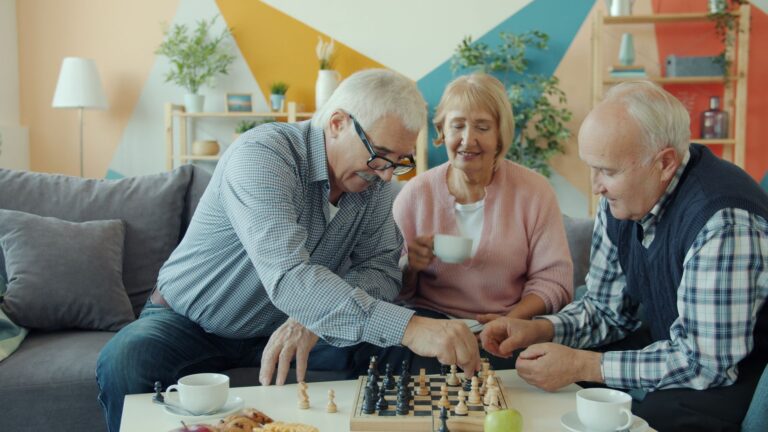
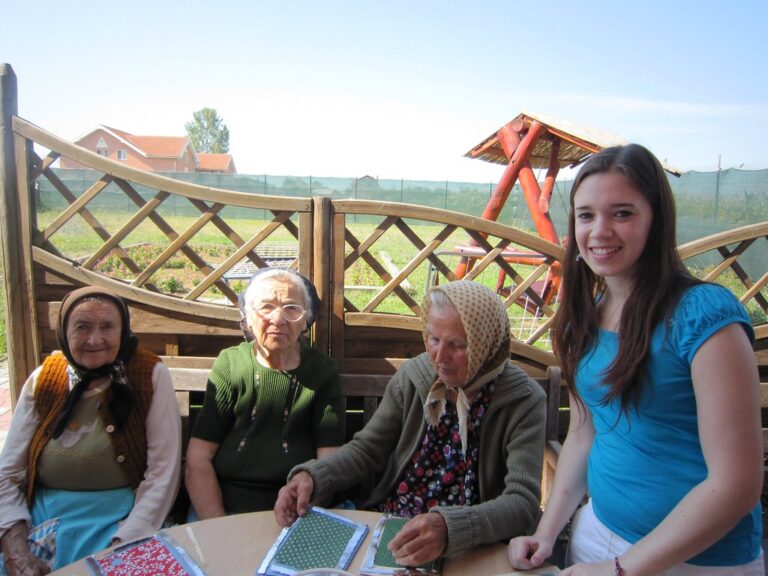
Large-print word games may work for some people with moderate dementia, but only when they can still recognize words and follow the activity. For advanced dementia, word-solving is usually less suitable than familiar, sensory activities. Large print commonly means 16- to 18-point type. It can make words easier to see, but it does not reduce the language, memory, reasoning, or attention demands of a game.
Medical information disclaimer: This article is for general educational purposes only and does not provide medical advice, diagnosis, or treatment. Always consult a physician or other qualified health professional about symptoms, medications, tests, or treatment decisions.
Table of Contents
- What does the evidence actually show?
- What large print can—and cannot—change
- How to tell whether a game is appropriate
- How to adapt a word game
- What is more suitable in advanced dementia?
What does the evidence actually show?
No stand-alone trial has established that large-print word games benefit people with dementia. The 2023 Cochrane review examined 37 trials of broader cognitive-stimulation programs for mild or moderate dementia—not large-print games alone or advanced dementia. These programs could include word games and puzzles, but usually combined them with several activities in social sessions.
The review found small, short-term cognitive benefits, with larger gains among participants who began with milder impairment. Across the pooled evidence, cognitive stimulation improved scores by about 1.99 points on the Mini-Mental State Examination immediately after treatment. The evidence was moderately certain, results varied considerably, and lasting benefit was not established.
What large print can—and cannot—change
large print is an accessibility format for low vision, not a dementia treatment. As the Library of Congress National Library Service explains, it commonly uses 16- to 18-point type. A larger word search may remove a visual barrier for someone who understands the instructions and can scan for letters.
It cannot restore word recognition, working memory, reasoning, or the ability to complete several steps. Moderate Alzheimer's disease can affect language, reasoning, sensory processing, new learning, conscious thought, and multistep tasks, according to the National Institute on Aging. A person might see every letter clearly yet remain unable to remember the target word or understand what to do next.
How to tell whether a game is appropriate
Judge the activity by the person's present abilities, not the diagnosis alone. A familiar game may remain enjoyable when it uses preserved skills and requires little explanation. Try a game if the person can: Success does not need to mean finishing a puzzle.
finding one word, choosing between two answers, or sharing a pleasant moment can be a reasonable goal. Stop or simplify the activity when the person repeatedly looks away, guesses anxiously, becomes upset, or no longer understands the task. These responses suggest that the game's demands exceed its value at that moment.
- Recognize at least some printed words or letters.
- Understand one short instruction.
- Stay interested without repeated pressure.
- Mark, point to, or say an answer in some way.
- Accept help without becoming distressed.
How to adapt a word game
Begin with the person's earlier interests and remaining strengths. The Alzheimer's Association activity guidance recommends matching activities to abilities, offering one simple step at a time, providing help, and changing course when attention fades or frustration rises.
Useful adjustments include: For example, replace a crowded word search with three large words and ask the person to point to "cat." If that is difficult, show a printed word beside a matching photo. If either version causes strain, move to an activity that requires no word-solving.
- Choose familiar subjects, such as favorite foods, songs, places, or occupations.
- Present one clue or target word instead of a full page.
- Use clear print with plenty of space around each item.
- Reduce the number of choices.
- Point to the starting place and demonstrate the first step.
What is more suitable in advanced dementia?
Severe Alzheimer's disease typically leaves a person fully dependent on care and unable to communicate. At this stage, the Alzheimer's Association describes experience as primarily sensory, so a conventional crossword or word search will often demand skills the person no longer has. Consider familiar music, meaningful reading aloud, family photographs, gentle touch, comforting scents, or simply sitting together.
A former reader may still enjoy hearing a favorite passage even when answering questions about it is no longer possible. A printed game can still serve as a prompt if it brings calm or recognition, but completing it should not be the aim. If the person relaxes when a familiar poem is read aloud but becomes tense when asked to find words, keep the reading and remove the test.