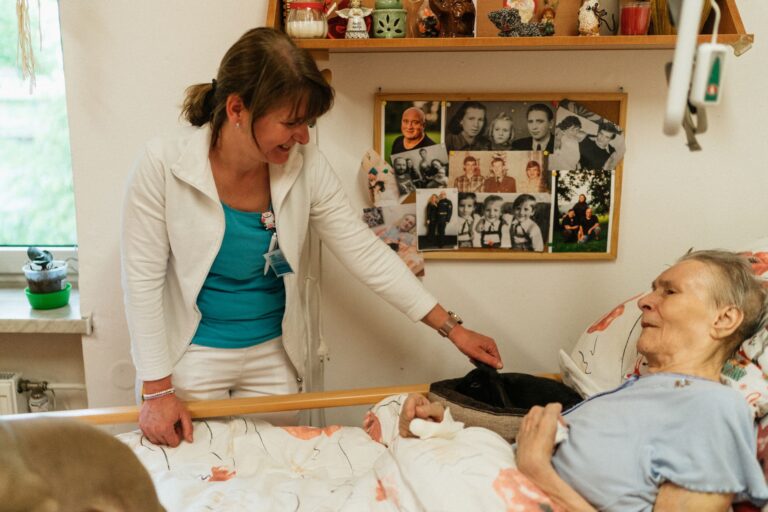
For early-stage dementia, offer doll therapy only as an optional, individual trial when the person seems receptive. There is no fixed schedule: repeat it only when it is welcomed and does not disrupt meals, sleep, or other needs. Doll therapy means offering a doll as a source of comfort, companionship, or meaningful activity. The early-stage premise needs caution because research has mainly involved nursing-home residents with moderate-to-severe dementia, according to a 2022 systematic review in Healthcare.
Medical information disclaimer: This article is for general educational purposes only and does not provide medical advice, diagnosis, or treatment. Always consult a physician or other qualified health professional about symptoms, medications, tests, or treatment decisions.
Table of Contents
- How should you introduce the doll?
- How often should you offer it?
- What should you monitor?
- When is doll therapy the wrong response?
- What does the evidence actually show?
How should you introduce the doll?
Choose a calm time earlier in the day, away from meals and bedtime. Place the doll nearby, perhaps on a chair, instead of immediately handing it to the person or telling them what to do.
Let the person decide whether to approach, hold, or ignore it. A simple choice—"Would you like this here or over there?"—preserves control without assuming they will treat the doll as a baby. A gradual introduction can follow these steps: This approach follows Dementia UK's guidance, which recommends gradual introduction, individual choice, and another attempt later when the person initially shows no interest.
- Put the doll where the person can notice it.
- Watch for interest, comfort, hesitation, or dislike.
- Offer a choice without urging a particular response.
- Remove it calmly if it is unwelcome.
- Try another day only if doing so still seems respectful.
How often should you offer it?
Use the person's response—not a daily quota—to set the frequency. A reasonable first trial is one brief opportunity, followed by observation during and after the interaction. If the person enjoys the doll, offer it again at similar calm times. If interest varies, keep it available without making every interaction a therapy session.
Stop offering it when repeated attempts bring indifference, irritation, embarrassment, or distress. Do not use a research protocol as a household prescription. For example, a 2026 nursing-home pilot used eight optional 20-to-30-minute introductory sessions over about 15 days, adjusted for fatigue and preference. That schedule tested feasibility; it did not establish how often people with early-stage dementia should use a doll.
What should you monitor?
Look beyond whether the person holds or talks to the doll. The useful question is whether the experience supports comfort without creating a new problem.
Watch for: If attachment interferes with food, rest, personal care, or relationships, reduce access or stop. Avoid sudden removal when the person is distressed; shift attention gently and reconsider when and whether to offer it again.
- Greater calm or positive engagement
- Anxiety when the doll is moved
- Refusal to eat because the doll "needs" care
- Delayed sleep or repeated checking near bedtime
- Distress about the doll's safety
When is doll therapy the wrong response?
Do not use a doll to cover up unexplained distress. Pain, delirium, uncomfortable surroundings, or inappropriate care may require attention first. NICE dementia guidance recommends investigating clinical or environmental causes before treating distress and favors personalised activities for agitation or aggression rather than naming doll therapy specifically.
Do not press the idea if the person declines it or finds it childish, deceptive, or insulting. Respect for the person matters more than completing an activity. Seek clinical help when agitation or behavior changes suddenly, persistently, or alongside possible illness or pain. Doll therapy is an optional activity, not a substitute for assessment or treatment.
What does the evidence actually show?
Evidence suggests possible behavioral benefits, but it does not establish benefits for early-stage dementia. A 2024 meta-analysis in Geriatric Nursing covering 10 studies of older nursing-home residents found improvements in behavioral and psychological symptoms, including agitation, but no significant cognitive improvement.
The 2026 pilot also reported preliminary improvement in neuropsychiatric symptoms at six and 12 weeks. It found no medication-dose difference, no sustained functional improvement, and called for a larger trial. For someone with early-stage dementia, treat any benefit as personal rather than predicted: continue only when the person's own response shows that the doll adds comfort or meaningful engagement.