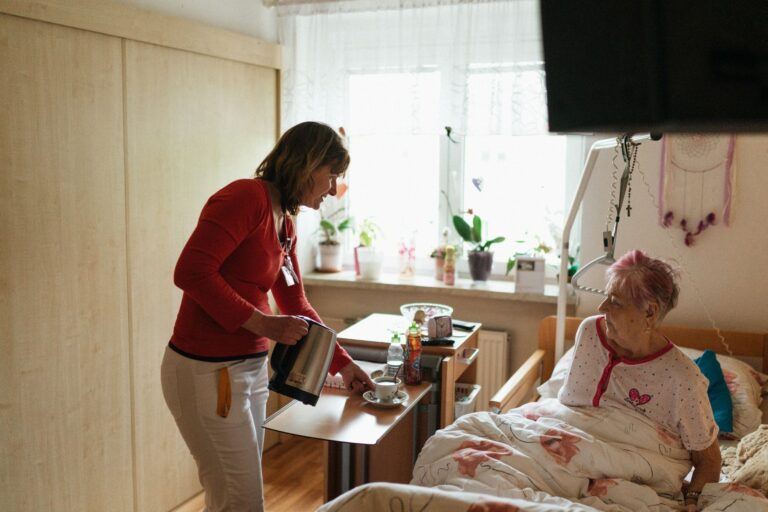
A person with dementia may gradually stop using or understanding a second language and return mainly to their first language—the language learned earliest. This happens to some people, not everyone, and language switching alone does not diagnose dementia. Treat the change as a communication need rather than stubbornness or proof that the person has lost all ability. The right language and a simpler setting may reveal skills that a language mismatch was hiding.
Medical information disclaimer: This article is for general educational purposes only and does not provide medical advice, diagnosis, or treatment. Always consult a physician or other qualified health professional about symptoms, medications, tests, or treatment decisions.
Table of Contents
- What does the language switch mean?
- The pattern is not always simple
- Could a language mismatch hide the person's abilities?
- How to communicate more effectively
- Plan for consistent language support
- Does bilingualism prevent dementia?
What does the language switch mean?
The National Institute on Aging says Alzheimer's disease can affect a bilingual person's ability to understand a second language, leaving the person communicating mainly in their first language in its communication guidance. The change may involve speaking, understanding, or both. In one clinic-based study, caregivers reported that 66 of 74 bilingual patients with probable Alzheimer's disease gradually returned predominantly to their first language.
That represents 89.2% of this particular group, not 89.2% of all bilingual people with dementia according to the 2020 study. The study relied on caregiver reports and included patients from a clinical setting. Its findings support the possibility of language reversion, but they do not turn it into a diagnostic test.
The pattern is not always simple
Dementia does not erase languages in a fixed order. Previous proficiency and how often the person used each language may affect which language remains easier to access. A longitudinal case study involving bilingual primary progressive aphasia—a condition marked by worsening language ability—found poorer second-language performance linked to earlier use and proficiency.
Both languages declined as the disease progressed. Someone may also mix languages, use different languages with different people, or understand more than they can say. Watch how the person responds instead of assuming that only one language remains available.
Could a language mismatch hide the person's abilities?
Yes. A person may appear confused, withdrawn, or unable to answer when the real barrier is that caregivers are speaking an increasingly difficult language. A study of Finnish immigrants with dementia in Sweden found that many struggled with Swedish-speaking caregivers but communicated adequately with Finnish-speaking caregivers when language needs were matched.
This shows why ability should be judged in the person's strongest available language whenever possible. Try the same question with a familiar first-language speaker. Compare comprehension, word choice, gestures, and response time before deciding what the person can no longer do.
How to communicate more effectively
Start by adapting to the person's current language rather than repeatedly correcting or testing them. Alzheimer's Society recommends involving relatives or friends who speak that language, using interpreters or translated material, and communicating in the person's usual language alongside other practical adjustments.
Useful steps include: Do not measure success only by complete spoken sentences. A look, gesture, point, facial expression, or single word may communicate a clear choice.
- Reduce background noise and other distractions.
- Speak calmly and use short, simple sentences.
- Ask one question at a time.
- Allow extra time for the person to respond.
- Support words with gestures, facial expressions, pictures, or objects.
Plan for consistent language support
Write down the person's preferred language, familiar terms, common greetings, and words for everyday needs. Include the names the person uses for relatives, foods, pain, toileting, sleep, and comfort. Share this information with everyone involved in care.
A short phrase sheet or labeled picture board can give people a common starting point, especially when bilingual relatives are unavailable. Continue observing the person's responses because language ability may change. If one language no longer works reliably, try simpler words, visual choices, and non-verbal cues rather than assuming the person cannot participate.
Does bilingualism prevent dementia?
Evidence does not show that bilingualism prevents dementia. Although one clinic-based study associated bilingualism with an approximately four-year delay in presentation with Alzheimer's clinical syndrome, an association cannot establish prevention.
A 2017 review of prospective studies involving 5,527 people found no statistically supported reduction in future dementia among bilingual participants. The researchers also warned that retrospective findings about delayed presentation may be influenced by education and differences in access to services.