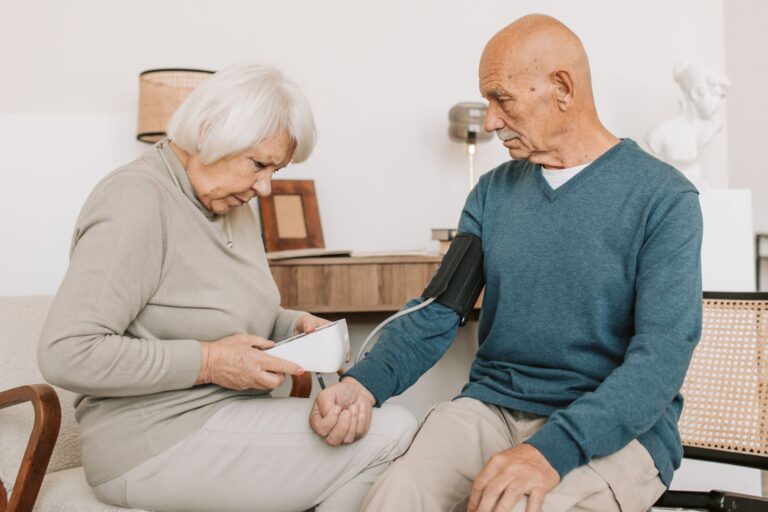
Older adults who notice hearing difficulty should discuss an evaluation and possible hearing-aid use with a doctor, especially if they have elevated cognitive risk. However, hearing aids have not been proven to prevent dementia outright, according to the World Health Organization. The strongest trial signal applies to adults ages 70 to 84 with untreated, adult-onset hearing loss in both ears and additional cognitive-risk factors. The tested intervention included hearing aids, counseling, and rehabilitative support—not simply buying a device.
Medical information disclaimer: This article is for general educational purposes only and does not provide medical advice, diagnosis, or treatment. Always consult a physician or other qualified health professional about symptoms, medications, tests, or treatment decisions.
Table of Contents
- What does the dementia evidence actually show?
- Who has the clearest reason to start the conversation?
- Who needs medical assessment before choosing an aid?
- What should you do next?
What does the dementia evidence actually show?
Unaddressed hearing loss is associated with greater dementia risk and faster cognitive decline. An association does not prove that hearing loss causes dementia or that correcting it will prevent dementia. The ACHIEVE trial studied 977 adults with mild-to-moderate hearing loss. Across all participants, the hearing intervention did not reduce global cognitive decline over three years.
results differed between participant groups. Among people in the higher-risk heart-health cohort, the intervention reduced cognitive change by 48%. It had no effect within three years among healthier volunteers, according to the Johns Hopkins ACHIEVE Study. That figure describes slower cognitive change in one group, not a 48% reduction in dementia diagnoses.
Who has the clearest reason to start the conversation?
Older adults should mention hearing problems when they struggle to follow phone calls, group conversations, speech amid background noise, or television at a comfortable volume. The National Institute on Aging advises evaluation and notes the higher dementia risk seen among older adults with hearing loss.
The case for discussing a hearing intervention is particularly strong when all or most of these points apply: People outside this profile may still benefit from better hearing. The trial evidence simply does not establish a universal cognitive benefit for every person with hearing loss.
- You are between 70 and 84.
- Hearing loss began in adulthood.
- Both ears have untreated mild-to-moderate loss.
- A clinician considers you at elevated risk for cognitive decline.
- Hearing problems interfere with conversations or everyday activities.
Who needs medical assessment before choosing an aid?
Some symptoms require medical assessment beyond hearing-aid selection. The FDA's hearing-aid guidance advises consulting a doctor, preferably an ear, nose, and throat specialist, for: Adults with severe or profound hearing loss should also use a licensed hearing professional. The FDA limits over-the-counter hearing aids to adults who perceive mild-to-moderate loss because these devices may not provide enough output for more severe loss.
- Sudden or rapidly worsening hearing loss
- Hearing that fluctuates
- Hearing loss or tinnitus on only one side
- Vertigo
- Ear pain or drainage
What should you do next?
Tell your doctor where hearing becomes difficult and whether the change affects one or both ears. Ask whether you need a hearing test, medical assessment, or referral to a licensed hearing professional. If hearing aids are appropriate, discuss support as well as the device.
ACHIEVE tested hearing aids together with counseling and rehabilitation, so its findings should not be used to promise the same cognitive result from an unsupported device purchase. Adults 50 or older without symptoms can ask about testing, but routine screening is a separate question. The USPSTF found insufficient evidence to recommend for or against screening asymptomatic adults in this age group; that finding does not apply to people already reporting hearing problems.