Simple strength exercises for someone with Alzheimer's can use body weight, light hand weights, or resistance bands. Start with familiar movements, remove trip hazards, and provide caregiver support when needed. Strength exercise is not proven to prevent or slow Alzheimer's disease. The National Institute on Aging says clinical-trial evidence remains insufficient, although physical activity supports mobility, independence, heart health, and fall reduction.
Medical information disclaimer: This article is for general educational purposes only and does not provide medical advice, diagnosis, or treatment. Always consult a physician or other qualified health professional about symptoms, medications, tests, or treatment decisions.
Table of Contents
- What supplies do you need?
- Five simple movements to try
- How much strength exercise is appropriate?
- Set up a safer, easier-to-follow space
- Safety checks before and during exercise
What supplies do you need?
A sturdy chair is the most useful starting item. Choose one with a firm seat, a back, and armrests if the person needs help standing. Place it against a wall so it cannot slide. Optional equipment includes light hand weights and resistance bands.
The National Institute on Aging advises beginners to practice each movement without weights or bands until it feels comfortable. Keep the setup simple. Put out only the equipment needed for that session, along with supportive shoes and water. Too many choices can make instructions harder to follow.
Five simple movements to try
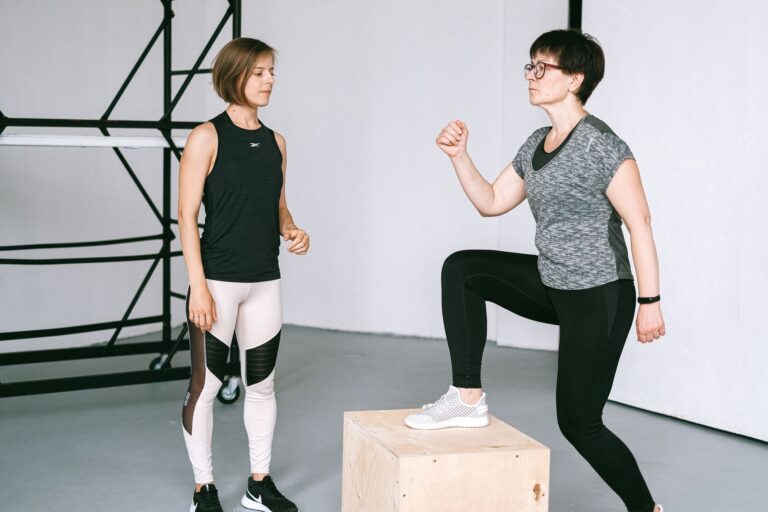
Choose movements that match the person's current ability. A caregiver can demonstrate each one, give one instruction at a time, and stay close enough to assist without pulling or rushing.
These exercises form a starter routine, not a complete program. Older adults also need strength work for the hips, back, chest, abdomen, shoulders, and arms.
- Chair stand: From a firm chair, place both feet flat on the floor. Stand up, then sit down slowly. Use the armrests if necessary.
- Wall push: Place both palms against a wall at chest height. Bend the elbows to move closer, then push back.
- Seated knee extension: Sit upright and slowly straighten one knee. Lower the foot, then change legs.
- Supported heel raise: Hold the back of a sturdy chair, rise onto the toes, and lower slowly.
- Seated arm curl: Hold very light weights with the arms at the sides. Bend the elbows, then lower the weights with control.
How much strength exercise is appropriate?
The CDC recommends muscle-strengthening activity at least two days each week. One set of 8–12 repetitions can be effective, while two or three sets may provide more benefit. That target may be too much at first. Begin with fewer repetitions or only two movements, especially after inactivity.
Several short sessions may be more practical for a person with dementia than one long workout. The resistance should eventually make another repetition difficult without help. Increase repetitions, resistance, or sets gradually—not all three together. Overdoing exercise can lead to exhaustion, joint soreness, muscle pain, or injury.
Set up a safer, easier-to-follow space
Use a clear, well-lit area with enough room for the person and caregiver. The CDC advises removing cords, throw rugs, and other trip hazards. It also recommends grab bars near toilets and tubs and railings on both sides of stairs. Reduce distractions by turning off the television and keeping other activity outside the exercise area.
Use the same chair and exercise location when practical. Short, direct cues such as "stand up" or "push the wall" are easier to act on than several instructions at once. Stay beside anyone who is unsteady or has difficulty understanding the movement. Do not leave weights or bands on the floor between exercises. Return each item to a fixed storage place immediately after use.
Safety checks before and during exercise
Before starting a new routine, consult the person's health-care provider. The Alzheimer's Association recommends this check before beginning an exercise program, particularly when health conditions or physical limitations may affect the plan. Pause the session if the person becomes dizzy, unusually sleepy, exhausted, unsteady, or develops muscle or joint pain.
Never force a repetition or add resistance when the person cannot complete the movement with control. Strength and balance activities can be combined as part of fall prevention. If falls or unsteadiness are concerns, ask a clinician or pharmacist to review medicines that may cause dizziness or sleepiness before the next session.