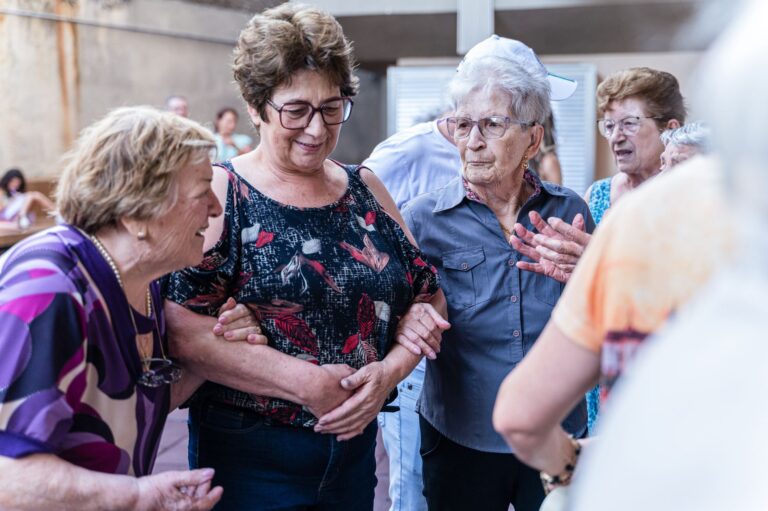
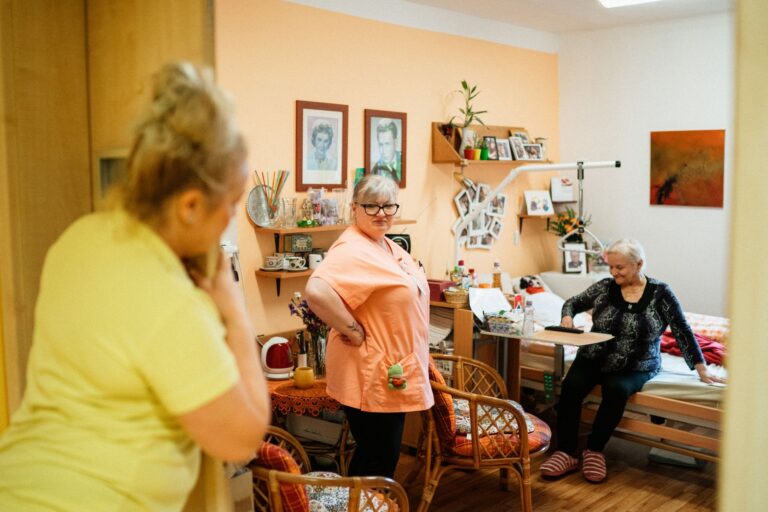
Yes, reminiscence conversations can support connection or communication in moderate dementia. They may also engage someone with advanced dementia, but they are not a proven treatment or a reliable way to restore memory. A reminiscence conversation uses familiar photos, music, objects, or shared stories to invite a response. Its value may lie in a comfortable moment together, even when the person cannot recall names, dates, or events.
Medical information disclaimer: This article is for general educational purposes only and does not provide medical advice, diagnosis, or treatment. Always consult a physician or other qualified health professional about symptoms, medications, tests, or treatment decisions.
Table of Contents
- What does the evidence show?
- What can reminiscence realistically accomplish?
- How should conversations change in moderate dementia?
- What works differently in advanced dementia?
- When should you change course?
What does the evidence show?
The strongest synthesized evidence finds small, inconsistent benefits. A Cochrane review of 22 trials involving 1,972 people found slight gains in some outcomes, but most participants had mild or moderate dementia. It therefore cannot establish comparable clinical benefits for advanced dementia. Cochrane's evidence review does not support presenting reminiscence as a proven dementia treatment.
Setting may matter. In care homes, three studies involving 193 people found a small immediate quality-of-life advantage over no treatment. Community studies found little or no quality-of-life difference. The review also found a very small cognitive effect at the end of treatment, with doubtful practical importance and little or no longer-term difference. Reminiscence should not be described as restoring memory or slowing dementia progression.
What can reminiscence realistically accomplish?
A successful conversation does not require accurate recall. It may create an opening for attention, expression, or shared enjoyment. Group reminiscence may slightly improve communication, although care-home findings were inconsistent and the evidence was uncertain. The research found no clear overall effects on mood, daily function, agitation, or relationship quality.
That does not mean an individual cannot enjoy a session. It means families should judge the activity by the person's immediate response rather than expect a predictable health improvement. NICE recommends considering structured group activities with reminiscence elements for mild to moderate dementia. Its dementia guideline does not make the same specific recommendation for severe dementia. This marks a gap in evidence, not a warning that reminiscence must never be used.
How should conversations change in moderate dementia?
reduce the demands of the exchange. The Alzheimer's Association recommends one-to-one conversation in a quiet setting, slow and clear speech, one question at a time, enough response time, and visual cues for moderate Alzheimer's disease. These communication adjustments can make reminiscence easier to join.
Try prompts that leave room for several kinds of response: Avoid turning the exchange into a quiz. "This is your sister, June" offers information and companionship. "Who is this?" can make success depend on memory the person may no longer be able to access.
- Show one familiar photograph instead of an entire album.
- Make an observation before asking a question: "That was your blue car."
- Ask about preference or feeling: "Did you like riding in it?"
- Wait without repeating the question immediately.
- Supply a name or detail yourself if the person seems stuck.
What works differently in advanced dementia?
In advanced dementia, the word "conversation" may be misleading. A person might respond through facial expressions, eye movement, vocal sounds, touch, or changes in attention rather than complete sentences. Shift from retrieving facts to sharing something familiar.
Play a familiar song, hold up one meaningful object, describe a photograph, or gently tell part of a shared story. A smile, relaxed expression, sound, or sustained attention can be enough participation. Keep the language simple and grounded in the present: "This song sounds familiar," or "Here is the soft scarf you used to wear." Do not insist that the person identify the song, explain the object, or confirm your version of an event.
When should you change course?
Watch the person rather than following a fixed script. If a prompt appears to bring embarrassment, frustration, fear, withdrawal, or repeated correction, remove the demand. Change the subject, offer quiet company, or stop the activity. Alzheimer's Society advises against trying to jog the person's memory because this can frustrate or embarrass them.
Its communication guidance suggests sharing your own memories and using familiar prompts so the person can respond without pressure. Treat uncertain memories gently. There is usually no need to correct a mistaken date or demand agreement about who appears in a photograph. If the person cannot respond, describe what you notice and allow silence: "The garden was bright that day.".