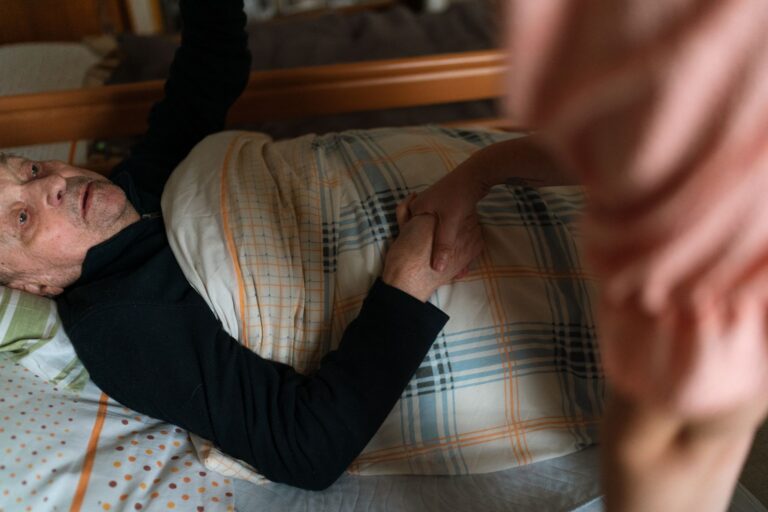
Families often first notice repeated questions, missed important events, and growing dependence on reminders or relatives. They may also see trouble with familiar tasks, planning, conversation, judgment, navigation, mood, or social engagement. The affected person may not recognize these changes as readily as those close to them, according to the CDC's guidance on Alzheimer's signs and symptoms. These warning signs can justify medical evaluation, but they cannot confirm Alzheimer's disease.
Medical information disclaimer: This article is for general educational purposes only and does not provide medical advice, diagnosis, or treatment. Always consult a physician or other qualified health professional about symptoms, medications, tests, or treatment decisions.
Table of Contents
- When memory lapses become a pattern
- Problems with tasks, place, and language
- Changes in judgment, interests, and personality
- How to document what the family sees
- When to seek a medical evaluation
When memory lapses become a pattern
An isolated lapse does not establish a pattern. The concern grows when recent information repeatedly disappears and the change begins to interfere with everyday life. A person might forget an event, ask the same question several times, or need relatives to provide reminders they previously managed alone.
The Alzheimer's Association's warning-sign guidance also includes increasing difficulty with planning, concentration, familiar recipes, bills, and numbers. Look at change over time rather than judging one mistake. Compare current behavior with what has been usual for that person.
Problems with tasks, place, and language
families may notice unfinished routine tasks or confusion during activities the person once handled confidently. Someone might struggle with a familiar recipe, lose track while paying bills, or become unsure how to complete an ordinary household task. Other changes involve orientation and objects.
The National Institute on Aging's description of Alzheimer's signs includes getting lost on familiar routes, losing track of dates or location, and misplacing belongings without being able to retrace one's steps. Conversation can change as well. A person may repeat a point, have increasing trouble finding words, lose the thread of a discussion, or use an incorrect name for a familiar object.
Changes in judgment, interests, and personality
Early warning signs are not limited to memory. Relatives may see unsafe financial decisions, declining self-care, or withdrawal from hobbies, work, and social activities.
A meaningful personality change also deserves attention. new suspicion, confusion, depression, anxiety, fearfulness, or unusual irritability may be relevant when it differs clearly from the person's established behavior. These changes can have several causes, so families should describe what happened without assuming a diagnosis.
How to document what the family sees
Specific observations are more useful than a general statement that someone "seems different." Keep brief notes about: When discussing the concern, use concrete examples rather than labels. "You asked the same question several times this morning" gives everyone more to work with than "Your memory is failing." Include problems involving money, navigation, or self-care when requesting an appointment. These details show how the change affects daily functioning.
- The exact change, such as repeated questions or difficulty following a recipe
- How often it happens and whether it appears to be worsening
- Its effect on bills, familiar routes, conversations, or self-care
- Any related illness, sleep problem, or medication change
- Who witnessed the incident
When to seek a medical evaluation
Arrange an evaluation when one or more changes persist or disrupt daily life. A clinician can assess possible causes rather than treating the warning signs as proof of Alzheimer's.
The National Institute on Aging's diagnostic guidance explains that clinicians commonly ask both the person and someone close to them about changes in functioning and behavior. It also identifies other possible causes of memory problems, including depression, medication effects, sleep disorders, infection, stroke, tumors, Parkinson's disease, and other dementias. Bring the written examples and, when possible, a relative or friend who has directly observed the changes.