No authenticated last message from an identified grandfather or grandson is available. The closest published account comes from an anonymous online post, so its wording and family history cannot be independently verified. Dementia is an umbrella term for cognitive decline that disrupts daily life, not a normal part of aging. Alzheimer's disease causes an estimated 60%–80% of dementia cases, according to the Centers for Disease Control and Prevention.
Medical information disclaimer: This article is for general educational purposes only and does not provide medical advice, diagnosis, or treatment. Always consult a physician or other qualified health professional about symptoms, medications, tests, or treatment decisions.
Table of Contents
- What can be verified about the final message?
- Does dementia always make conversation impossible?
- How can families communicate as speech becomes harder?
- Can newer Alzheimer's treatments restore communication?
What can be verified about the final message?
A September 2025 Scoop Upworthy report retells a story posted by an anonymous Reddit account. It does not identify the supposed grandson or authenticate the handwritten message.
that means the note's precise wording, authorship, and status as the grandfather's "last message" cannot be established. The story may reflect a family's real experience, but readers should not treat it as a documented case.
Does dementia always make conversation impossible?
No. A dementia diagnosis does not mean a person immediately loses the ability to speak or understand others. Alzheimer's is progressive, and communication abilities vary by person and disease stage.
Someone may struggle to find words, follow a train of thought, organize an answer, understand language, or maintain attention. The National Institute on Aging explains that these difficulties can change as Alzheimer's advances. In later stages, Alzheimer's can eventually prevent conversation, daily activities, and responses to the surrounding environment. Even then, the loss of spoken conversation does not make every form of connection impossible.
How can families communicate as speech becomes harder?
Adjust the conversation to the person's current abilities. The National Institute on Aging's communication guidance for caregivers emphasizes simple language, patience, and alternatives to spoken answers.
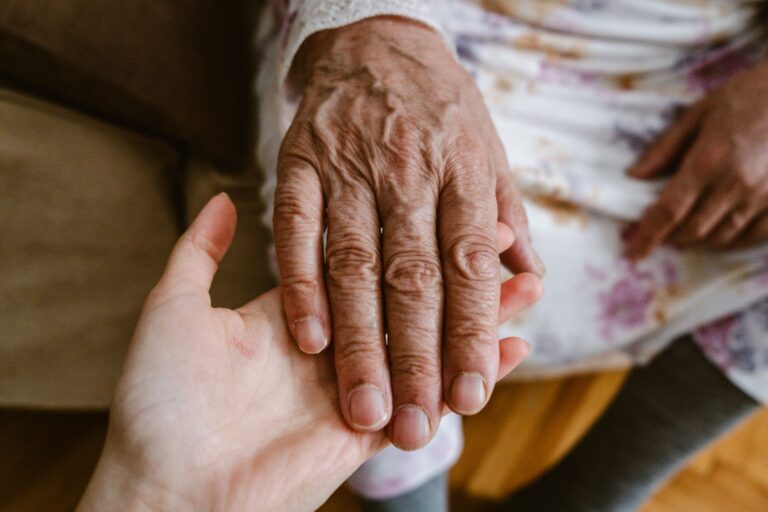
If the person cannot answer, continue addressing them respectfully rather than testing or correcting them. A look, gesture, or touch may carry more meaning than a complete sentence.
- Use the person's name to gain attention.
- Allow extra time for an answer.
- Ask questions that can be answered with yes or no.
- Rephrase the question if it is not understood.
- Avoid arguing over an incorrect word or memory.
Can newer Alzheimer's treatments restore communication?
No approved treatment has been shown to restore communication already lost to advanced Alzheimer's. The FDA granted traditional approval to Leqembi, or lecanemab, in July 2023 and approved the intravenous drug Kisunla, or donanemab, in July 2024. These anti-amyloid treatments were studied in early symptomatic disease, not advanced communication loss. Leqembi reduced decline by 0.45 points versus placebo on a disease rating measure after 18 months in a 1,795-person trial.
That represents modest slowing, not recovered memory or speech. Treatment decisions also require careful risk assessment. Kisunla carries a boxed warning for amyloid-related imaging abnormalities, or ARIA, involving brain swelling or bleeding. People with two copies of the ApoE ε4 variant face greater ARIA risk, and the FDA prescribing information requires MRI monitoring. Before considering an anti-amyloid drug, families should confirm that the person has the early disease stage studied, documented amyloid pathology, and a plan for risk evaluation and MRI monitoring.