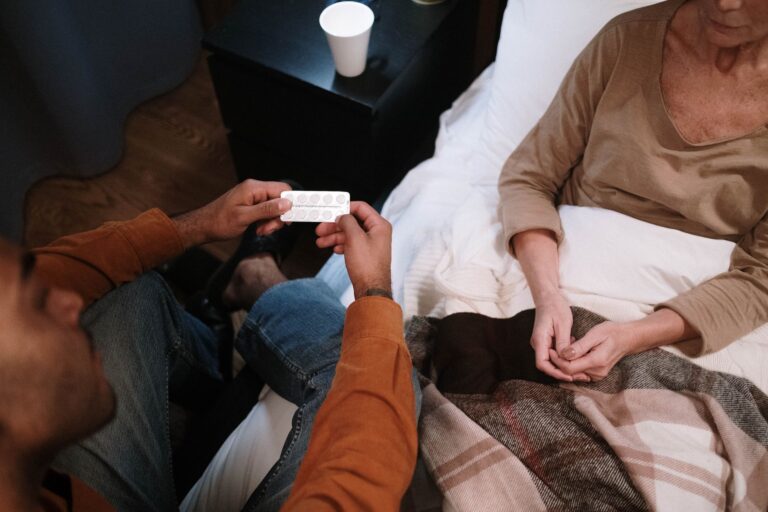
MRI monitoring is a mandatory safety step for the Alzheimer's drugs Leqembi and Kisunla because both can trigger a side effect called ARIA—amyloid-related imaging abnormalities—that is usually invisible without a brain scan. These drugs work by clearing amyloid plaque from the brain, and that same process can cause temporary brain swelling or small bleeds that only an MRI reliably detects. Both drugs are anti-amyloid antibodies given by IV infusion for early Alzheimer's. Their FDA labels build MRI checks directly into the treatment schedule, and the scan results decide whether your next dose goes ahead, pauses, or stops.
Medical information disclaimer: This article is for general educational purposes only and does not provide medical advice, diagnosis, or treatment. Always consult a physician or other qualified health professional about symptoms, medications, tests, or treatment decisions.
Table of Contents
- What Leqembi and Kisunla are, and how they work
- What ARIA is and why MRI is the only way to catch it
- The MRI schedule for each drug
- How scan results change your treatment
- Who faces higher risk, and questions to ask before starting
- Frequently Asked Questions
What Leqembi and Kisunla are, and how they work
leqembi (lecanemab) and Kisunla (donanemab) are monoclonal antibodies—lab-made proteins that bind to a target in the body. Both target amyloid-beta, the sticky protein that clumps into plaques in the Alzheimer's brain. The goal is to slow decline by clearing that plaque.
The FDA granted Leqembi traditional approval on July 6, 2023, dosed by IV every two weeks, for people at the early symptomatic stage—mild cognitive impairment or mild dementia, per the Eisai approval announcement. Kisunla followed with FDA approval on July 2, 2024, given as a once-monthly infusion for the same early stage, according to the FDA approval notice. Neither drug reverses Alzheimer's or restores lost memory. They aim to slow progression, and that modest benefit is weighed against the imaging risks that make MRI monitoring necessary.
What ARIA is and why MRI is the only way to catch it
aria stands for amyloid-related imaging abnormalities. It comes in two forms: ARIA-E, which is swelling or fluid buildup in the brain, and ARIA-H, which is tiny bleeds (microhemorrhages) or iron deposits (siderosis). Both drugs' FDA labels carry warnings for ARIA. The critical problem is that ARIA is often silent.
Most cases cause no symptoms, so a person can feel fine while a scan shows swelling or bleeding. Occasionally ARIA becomes serious or even fatal, per the FDA Kisunla label. Because you cannot feel most ARIA, an MRI is the only dependable way to find it early. That is why the labels do not leave scanning to chance—they schedule specific MRIs at the highest-risk points in treatment.
The MRI schedule for each drug
Both labels require a baseline MRI before starting, plus scheduled surveillance scans during the early months when ARIA risk peaks. The scans are timed to specific infusions rather than repeated at every single dose.
In 2025 the FDA strengthened Leqembi's monitoring, adding an earlier scan between the 2nd and 3rd infusion. The agency acted after 101 serious ARIA-E cases—including 6 fatal—linked to lecanemab were reported to its FAERS adverse-event system, prompting the label change to catch swelling sooner, according to the FDA Drug Safety Communication.
- Kisunla: MRIs are required before the 2nd, 3rd, 4th, and 7th infusions, with heightened vigilance through the first 24 weeks, per the DailyMed prescribing information.
- Leqembi: MRIs were originally required before the 5th, 7th, and 14th infusions.
How scan results change your treatment
The MRIs are not just record-keeping. Each scan is a checkpoint: if a scan shows ARIA, your care team may pause dosing, hold treatment until it resolves, or stop the drug entirely, depending on severity and whether you have symptoms. This is why the schedule clusters scans in the first six months, when ARIA is most likely.
Kisunla's label singles out the first 24 weeks for heightened vigilance, and Leqembi's earlier scan targets the same high-risk window. Dosing design also affects risk. Kisunla's July 9, 2025 label update introduced a titration regimen—a slower ramp-up in dose—that cut ARIA-E incidence by about 41% at 24 weeks versus the original schedule, without reducing plaque clearance, per Eli Lilly.
Who faces higher risk, and questions to ask before starting
Genetics matter here. People who carry the ApoE ε4 gene variant—especially those with two copies (homozygotes)—face substantially higher ARIA risk.
Both labels recommend genotype testing before treatment so the risk can be discussed honestly upfront. Before starting either drug, it helps to raise a few specific points with the prescribing clinician: If you cannot reliably get to scheduled MRIs, or an MRI is medically incontraindicated for you, that is a direct factor in whether either drug is a safe fit. The scanning is not optional; it is the safety system the whole treatment depends on.
- Have I had ApoE ε4 genotype testing, and what did it show?
- What is my personal ARIA risk given my genotype and any prior microbleeds?
- What symptoms—headache, confusion, dizziness, vision changes, nausea—should prompt an urgent call?
- What happens to my treatment if a routine MRI shows ARIA?
Frequently Asked Questions
Can I take Leqembi or Kisunla without regular MRIs?
No. Scheduled MRIs are built into both FDA labels as a safety requirement, and results determine whether each dose proceeds. Skipping them removes the only reliable way to detect ARIA.
Does ARIA always cause symptoms I would notice?
No. Most ARIA is asymptomatic, which is exactly why surveillance MRIs are required. When symptoms do occur, they can include headache, confusion, dizziness, vision changes, or nausea.
Why did Leqembi's MRI schedule change in 2025?
The FDA added an earlier scan between the 2nd and 3rd infusion after 101 serious ARIA-E cases, including 6 fatal, were reported. The goal was to detect brain swelling sooner.