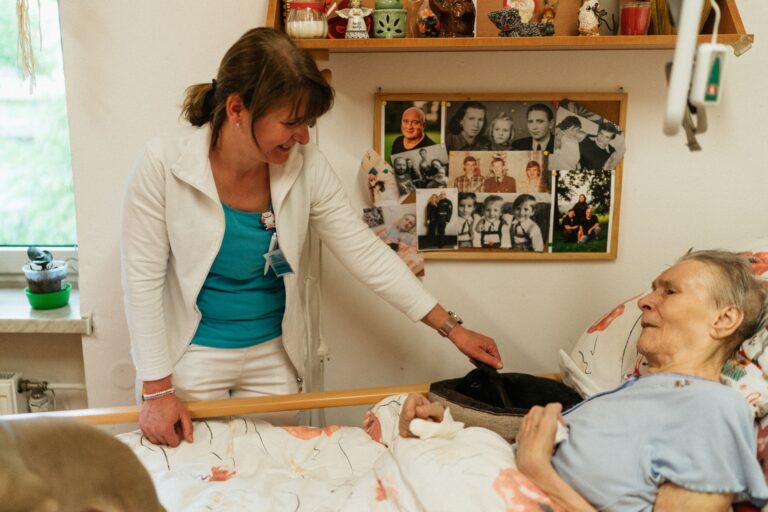
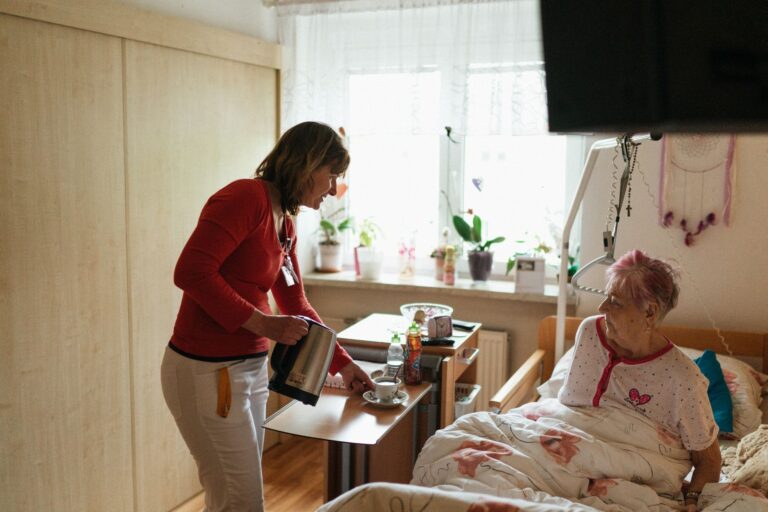
Supporting independence for someone with dementia requires a fundamental shift in thinking: it’s not about choosing between freedom and safety, but rather creating conditions where both can coexist. The goal is to allow a person to maintain as much control and choice in their daily life as possible while putting safeguards in place for genuine risks that could cause harm. This means resisting the instinct to restrict everything “just in case” while simultaneously avoiding a false confidence that permits dangerous situations to develop unchecked.
Consider a person with early-stage dementia who lives alone and wants to continue cooking meals. A blanket prohibition—forbidding cooking entirely—strips away an activity that provides purpose, routine, and dignity. But ignoring the legitimate risk of leaving the stove on or forgetting a pot of boiling water is equally irresponsible. The realistic approach falls somewhere in the middle: adapting the kitchen with safer appliances, establishing check-in routines with family, or gradually shifting toward meal preparation activities that carry lower risk while still engaging the person in food-related decisions.
Medical information disclaimer: This article is for general educational purposes only and does not provide medical advice, diagnosis, or treatment. Always consult a physician or other qualified health professional about symptoms, medications, tests, or treatment decisions.
Table of Contents
- What Does “Safe Independence” Actually Mean in Dementia Care?
- How Dementia Progression Changes What’s Actually Safe
- Real Scenarios Where the Balance Gets Tested
- Practical Strategies That Preserve Agency Within Boundaries
- The Limitations of “Letting Them Decide”
- Monitoring and Oversight Without Control
- Recognizing When Independence Expectations Need to Shift
- Frequently Asked Questions
What Does “Safe Independence” Actually Mean in Dementia Care?
Safe independence is not the same as unrestricted independence, nor is it the same as supervised dependence. It describes a state where a person can exercise choice and control within carefully considered boundaries, with support structures in place for the specific risks that matter. The boundaries differ for every person because dementia affects each individual differently—one person may retain strong decision-making skills while losing the ability to manage medication, while another loses judgment early but can physically perform daily tasks without problem.
The distinction matters because it prevents two common mistakes. The first is “safety theater,” where caregivers implement restrictions that feel good but don’t address actual risks—like preventing someone from going outside without addressing the fact that they might wander away from home. The second is selective blindness, where caregivers acknowledge some risks (like falling in the bathroom) but minimize others (like the risk of exploitation or poor nutrition) because those feel harder to manage. Real safe independence requires naming the specific risks for that specific person and then deciding which ones warrant intervention.
How Dementia Progression Changes What’s Actually Safe
Dementia is not static, and independence that was safe two months ago may become unsafe now. Early-stage dementia might present mainly as memory lapses or difficulty with complex tasks, while leaving physical ability and judgment largely intact. Later stages can involve poor impulse control, inability to communicate needs, or physical decline that makes basic tasks genuinely dangerous. A person who could safely live alone in month three of their diagnosis may need live-in support by month eighteen, not because they’ve become irresponsible but because the disease has altered their actual capabilities.
This progression creates a painful limitation: caregivers must often restrict independence not because someone is stubborn or difficult, but because what was once safe has become genuinely risky. Someone in later-stage dementia might not remember taking medication, might take it multiple times in an hour, or might take someone else’s pills thinking they’re their own. No amount of encouragement for independence can change the fact that unsupervised access to medications becomes dangerous. The hardest conversations with families involve recognizing when independence in a particular domain has genuinely crossed over from achievable-with-support to unsafe-at-any-level.
Real Scenarios Where the Balance Gets Tested
Many caregivers face the question of driving. A person in early-stage dementia might still pass a basic road test, might have decades of driving experience, and might feel that driving is central to their sense of independence. But dementia affects judgment, reaction time, and the ability to handle unexpected situations—sometimes subtly, sometimes suddenly. The honest approach isn’t to make a blanket decision but to involve an occupational therapist or geriatrician in assessing actual driving ability, to acknowledge what’s genuinely at stake (the person’s safety and that of others), and to begin talking about transitioning away from driving while there’s still time to make that decision together rather than having it forced by an accident or loss of license.
Another common scenario involves managing finances. Someone with early cognitive decline might still enjoy paying bills or shopping, and participating in financial decisions can feel empowering. But cognitive decline often includes impaired judgment about money, vulnerability to scams, and poor decision-making about major purchases. Supporting independence here might mean allowing the person to participate in or approve smaller decisions while a trusted family member or attorney-in-fact maintains oversight, or creating automatic bill-pay systems that reduce the need for active financial management while preserving some sense of control.
Practical Strategies That Preserve Agency Within Boundaries
One effective approach is to shift from “yes or no” decisions to “how” decisions. Instead of deciding whether someone can go outside unaccompanied (which sets up an either/or), ask “how can we make going outside safer?” This might involve a walking route that stays near home, a cell phone or wearable GPS device, a neighbor who checks in, or scheduled walks with a companion. The person still gets the independence and fresh air, but within a framework that reduces the specific risks.
Another strategy is to externalize the rule-setting so the restriction doesn’t feel like caregiver control. Instead of “I won’t let you cook,” a stove that turns off automatically after 10 minutes removes the need for willpower or constant monitoring. Instead of preventing financial mistakes, automatic bill-pay and limited access to checking accounts create a structure where bad decisions can’t cause serious harm. Technology can feel less paternalistic than people-based restrictions, though it’s also imperfect—a person might feel reassured or frustrated by a GPS tracker depending on how it’s framed and implemented.
The Limitations of “Letting Them Decide”
There’s a well-intentioned belief in dementia care that respecting someone means letting them make their own choices, even risky ones. This becomes complicated when dementia itself impairs decision-making. A person who no longer remembers why they agreed to something yesterday, or who can’t hold enough information in mind to weigh consequences, isn’t making an informed choice in the way that principle usually assumes. They may feel free, but they’re not functioning within the framework that would make complete autonomy safe.
This creates a genuine ethical problem with no perfect answer. Caregivers can’t reasonably allow someone to make a decision that would harm them (leaving a stove on that will burn down the house) just to preserve the appearance of autonomy. But caregivers can also cause harm by being so controlling that the person becomes isolated, depressed, or infantilized. The limitation is that there’s no formula—each decision requires judgment about that specific person’s capabilities, the actual severity of the risk, the person’s stated wishes before dementia, and the values they’ve expressed throughout their life.
Monitoring and Oversight Without Control
Modern technology offers ways to maintain oversight that don’t require constant presence or heavy-handed restriction. A medication reminder system can prompt someone to take pills and alert a caregiver if doses are missed, creating accountability without requiring someone to stand over the person. Activity monitors can alert caregivers if an elderly person hasn’t moved in several hours (suggesting a fall) without surveilling their every moment. Sensors on doors or stoves can notify caregivers of unusual activity patterns without video surveillance.
The tradeoff is between privacy and safety. Some people and families are comfortable with this trade in exchange for more independence—monitoring provides reassurance that emergencies will be caught quickly. Others find the surveillance itself a form of harm or loss of dignity. There’s also the practical reality that monitoring technology is most effective when the person is still lucid enough to understand why it exists and willing to accept it, which often isn’t the case in more advanced dementia.
Recognizing When Independence Expectations Need to Shift
At some point, for most people with dementia, the safe zone of independence shrinks significantly. This isn’t a failure on anyone’s part—it’s how the disease progresses. Someone who could dress and groom themselves with reminders may eventually need hands-on assistance with everything.
Someone who could be left alone for an afternoon may need someone present at all times. Accepting these shifts is one of the harder tasks in dementia caregiving, partly because it involves grieving, partly because it challenges the common assumption that with enough creativity or technology, independence can always be preserved. The practical question then becomes not “how do we maintain independence” but “how do we maintain dignity and choice within necessary dependence.” This might look like letting someone choose which clothes to wear even though they can’t dress themselves, or what to eat even though they can’t shop or cook, or what music to listen to during personal care. Independence shrinks, but agency—the ability to have a say in what happens to you—can sometimes be preserved longer than pure independence can be.
Frequently Asked Questions
At what point should I take away someone’s independence in a specific area?
When the risk moves from possible to probable, and the consequence would be serious harm. An occupational therapist can help assess actual capability versus imagined risk.
Is it wrong to use monitoring technology to keep someone safe?
Monitoring technology is a tool—not inherently right or wrong. Its use depends on whether the risk it prevents is genuine, whether the person can understand and consent to it, and whether you’re using it to enable independence or simply to restrict activity.
Can someone with dementia still make decisions about their own care?
Yes, but it depends on their stage of dementia and the complexity of the decision. Early decisions (like advance directives) while still lucid are valuable. Day-to-day decisions can be supported even in later stages through simplified choices presented in an understandable way.
What do I do if they want to do something that’s genuinely dangerous?
Combine environmental changes (make it harder to do) with redirection and acceptance that some safety limits are necessary. You can’t support independence in ways that would cause serious harm.
How do I know if I’m being overprotective?
If the restrictions you’ve put in place are preventing activities that don’t actually carry significant risk, or if the person is expressing distress about loss of control, you may be overprotecting. Reassess what the actual risks are.