Kisunla, known generically as lecanemab, represents a shift in how neurologists approach Alzheimer’s disease treatment. As an anti-amyloid monoclonal antibody, it works by targeting and clearing amyloid-beta buildup in the brain—the hallmark pathology of Alzheimer’s. One of the key advantages compared to earlier disease-modifying approaches is its improved tolerability profile. While no medication is without risk, Kisunla’s clinical trial data showed a notably lower incidence of amyloid-related imaging abnormalities (ARIA), the serious brain inflammation and microhemorrhages that have plagued earlier amyloid-targeting drugs. For families considering options for someone in early cognitive decline, this distinction matters enormously.
The tolerability advantage stems from Kisunla’s design. Administered via intravenous infusion every two weeks, it reaches therapeutic levels with a gentler pharmacological approach than some predecessors. In head-to-head context, drugs like aducanumab and solanezumab generated considerable safety concerns, leading to withdrawal or limited adoption. Kisunla’s development specifically aimed to reduce those adverse events while maintaining cognitive benefit. That focused engineering translates into fewer hospitalizations for brain-related complications and fewer families facing wrenching decisions about continuing treatment due to unbearable side effects.
Table of Contents
- What Are the Dangerous Side Effects Kisunla Aims to Reduce?
- How Kisunla’s Design Reduces Adverse Effects
- Real-World Monitoring and What Families Should Expect
- Weighing Kisunla Against Alternative Treatments
- Who Should Not Take Kisunla and Why
- MRI Monitoring and What ARIA Actually Looks Like
- The Importance of Genetic Counseling Before Starting
- Frequently Asked Questions
What Are the Dangerous Side Effects Kisunla Aims to Reduce?
Amyloid-related imaging abnormalities (ARIA) represent the primary safety concern with amyloid-targeting antibodies. ARIA comes in two forms: ARIA-E (amyloid-related imaging abnormality—edema), which involves brain swelling, and ARIA-H (amyloid-related imaging abnormality—microhemorrhages), which involves tiny bleeding in the brain. In patients taking earlier amyloid-targeting drugs, ARIA-E presented with headaches, confusion, vision changes, and nausea. ARIA-H could cause similar symptoms or remain asymptomatic but visible only on MRI.
Both conditions require close monitoring and can necessitate stopping the drug, undoing the cognitive benefits the patient had achieved. Kisunla’s clinical trials documented lower rates of these complications compared to other anti-amyloid approaches. Approximately 21% of Kisunla-treated patients in the pivotal trial developed ARIA-E versus higher percentages in earlier drug cohorts, and microhemorrhage rates also decreased substantially. This doesn’t mean Kisunla is risk-free—patients still require baseline MRI screening, regular cognitive and neurological assessments, and follow-up imaging. But the lower incidence means fewer families encounter the frightening scenario of an aging parent developing new neurological symptoms as a side effect of treatment intended to help them.
How Kisunla’s Design Reduces Adverse Effects
Kisunla’s engineering specifically targets amyloid-beta plaques with high affinity and selectivity. The drug’s molecular structure and administration schedule were optimized during development to maximize brain clearance of amyloid while minimizing inflammatory response and blood-brain barrier disruption. Bi-weekly infusions allow for steady-state therapeutic levels without spike-related toxicity. This contrasts with earlier monthly or quarterly infusion schedules that could cause more pronounced immune activation. Genetic risk factors, particularly the APOE4 genotype, significantly influence ARIA risk.
Patients carrying one or two APOE4 alleles face considerably higher incidence of both ARIA-E and ARIA-H. Kisunla’s trials were transparent about this limitation: the 21% ARIA-E rate in the overall population jumped to approximately 35% in APOE4 carriers. For homozygous APOE4 individuals, the risk climbs further. This means genetic counseling and testing before starting Kisunla is not optional—it’s essential for informed consent and appropriate monitoring intensity. A patient and family unaware of APOE4 status might face unexpected complications.
Real-World Monitoring and What Families Should Expect
Once a patient begins Kisunla, intensive monitoring becomes part of the treatment regimen. Baseline MRI imaging establishes a reference for future comparison. Patients receive neuropsychological testing before and during treatment to track cognitive changes. Every infusion visit includes blood work, vital signs, and clinical assessment. If any signs suggest ARIA—sudden worsening of headache, new confusion, vision loss, or balance problems—the neurologist orders urgent imaging. In some cases, MRI findings prompt temporary pause or permanent discontinuation of Kisunla, coupled with corticosteroid treatment if ARIA-E is confirmed. Consider the real scenario of a 65-year-old with mild cognitive impairment who begins Kisunla.
His daughter, the primary caregiver, notices he seems more confused than usual after the sixth infusion. She reports this to his neurologist, who orders an MRI. It shows subtle ARIA-E: mild cerebral edema but no symptoms of imminent danger. The neurologist pauses Kisunla infusions, starts low-dose corticosteroids, repeats MRI in two weeks. The edema resolves. They resume Kisunla at slower escalation. This scenario, while requiring careful management, has a positive outcome because the monitoring framework caught early change. In the era before Kisunla’s refined approach, similar patients might have experienced more severe ARIA and faced discontinuation of a potentially beneficial drug.
Weighing Kisunla Against Alternative Treatments
Families often face the choice between Kisunla and cholinesterase inhibitors like donepezil (Aricept), which remain the older standard of care for mild to moderate Alzheimer’s. Donepezil is oral, widely available, and decades-proven, but offers modest cognitive slowing rather than disease modification. Side effects include gastrointestinal symptoms, dizziness, and syncope in some patients—unpleasant but generally manageable. Kisunla, by contrast, aims at the underlying pathology and slows cognitive decline more substantially in early stages, but requires bi-weekly IV infusions, genetic testing, regular MRI monitoring, and carries the ARIA risk.
The tradeoff is deliberate and personal. A 70-year-old living alone, with poor IV access, significant medical comorbidities, and no APOE4 testing performed might be better served by optimized donepezil than by Kisunla. Conversely, a 60-year-old in early mild cognitive impairment, genetically tested as APOE4-negative or single-allele carrier, cognitively engaged, with reliable transportation and family support, might see Kisunla as worth the monitoring burden. Neurologists increasingly present both options and discuss the patient’s values around invasiveness, monitoring time commitment, and desired outcomes.
Who Should Not Take Kisunla and Why
Absolute contraindications to Kisunla include active or recent infection, uncontrolled hypertension, and certain cardiovascular conditions. Severe ARIA in prior exposure to any anti-amyloid antibody is a red flag. Beyond that, relative cautions emerge. Patients with multiple microinfarcts on baseline MRI, history of amyloid-related events, or cognitive impairment so severe that infusion attendance becomes unrealistic are often deemed higher-risk candidates. A patient with advanced dementia requiring locked facility care may not be an appropriate candidate; Kisunla’s benefits emerge early in the disease course, and safety monitoring demands active engagement.
One critical limitation often overlooked: Kisunla is approved only for mild cognitive impairment or mild dementia stage due to Alzheimer’s pathology. It does not reverse existing cognitive loss. A family hoping Kisunla will restore a loved one’s lost memories or functional independence will be disappointed. The drug slows decline, not recovery. If someone is already in moderate or advanced dementia, Kisunla offers no evidence-based benefit. Starting it requires realistic expectations and honest conversation about what disease modification actually means in human terms—a few more years of maintained independence before continued decline, not a cure or dramatic reversal.
MRI Monitoring and What ARIA Actually Looks Like
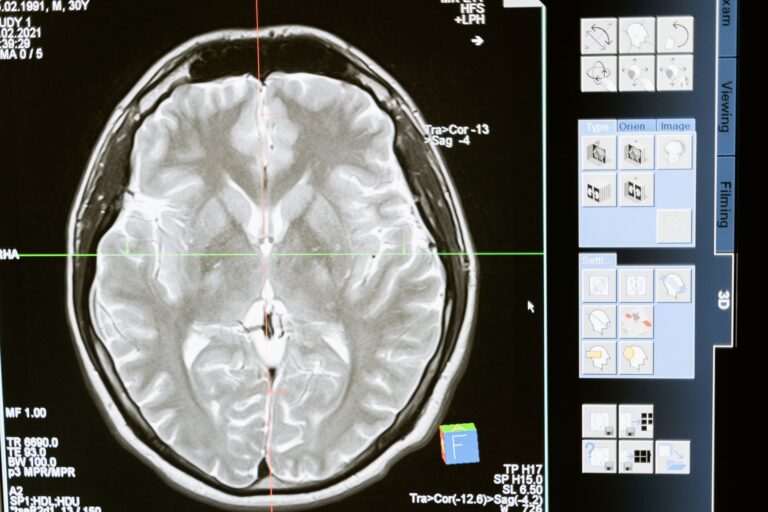
Baseline and periodic MRI scans are mandatory. On imaging, ARIA-E appears as white-matter signal abnormalities, cortical swelling, or ventricular enlargement. ARIA-H shows as microhemorrhages, tiny dark spots scattered through the brain tissue, particularly in microvasculature. Most ARIA remains asymptomatic—the patient feels fine, but the scan shows it. This puts neurologists in the position of managing an imaging finding that hasn’t yet (or may never) translate into clinical symptoms. Some mild ARIA-E resolves spontaneously even with continued Kisunla; some requires intervention.
A 67-year-old woman on Kisunla for eight months has routine MRI. Scan shows two microhemorrhages, unchanged from baseline, and minimal new ARIA-E. She reports no symptoms. Should Kisunla continue or stop? The neurologist may choose to continue with more frequent imaging—say, every three months instead of six—while closely monitoring for symptom emergence. Different practices handle this differently; there is no single guideline. The family needs to understand that imaging findings don’t automatically mean the drug must stop, but they do require thoughtful, collaborative decision-making.
The Importance of Genetic Counseling Before Starting
APOE4 genotyping should occur before Kisunla initiation. Patients who are APOE4/APOE4 (homozygous) face particularly elevated ARIA risk and may be counseled against the drug or advised that the monitoring burden and risk may outweigh expected benefit. Single-allele APOE4 carriers (APOE4/APOE3 or APOE4/APOE2) have intermediate risk—still higher than APOE3/APOE3 individuals but often manageable with vigilant oversight. APOE3/APOE3 patients have the lowest ARIA incidence and may represent the best candidates for Kisunla therapy.
Genetic counseling is not a one-time checkbox. It’s a conversation about inheritance, personal and family disease risk, and how genetic status affects treatment decisions. Some families choose not to test, citing privacy concerns or fatalism; that choice should be respected, though neurologists typically recommend testing as essential for informed Kisunla consent. Without knowing APOE4 status, a patient and clinician cannot accurately weigh risk. The ethical practice is transparency: discuss what the gene means, what testing entails, and how the results change the treatment conversation.
- —
Frequently Asked Questions
Is Kisunla a cure for Alzheimer’s disease?
No. Kisunla slows cognitive decline in early stages but does not reverse existing memory loss or cognitive damage. It is a disease-modifying treatment, not a cure.
How often do patients get ARIA-E or ARIA-H on Kisunla?
In clinical trials, approximately 21% of patients experienced ARIA-E (brain swelling). Rates are higher in APOE4 carriers. Most ARIA-E is mild and asymptomatic, managed by imaging monitoring and pausing the drug if needed.
What happens if someone develops ARIA while taking Kisunla?
Depending on severity and symptoms, the neurologist may pause infusions, start corticosteroids, and repeat imaging in weeks. Mild ARIA often resolves. The drug may resume once the condition clears, or be discontinued permanently if ARIA is severe.
Does Kisunla require genetic testing?
Yes. APOE4 genotyping is strongly recommended before starting Kisunla because carriers have higher ARIA risk and benefit from more intensive monitoring.
How long does someone stay on Kisunla?
There is no set duration. Treatment continues indefinitely unless ARIA develops, cognitive decline accelerates significantly, or the patient chooses to stop. Regular monitoring and reassessment guide continuation decisions.
Can people with moderate or advanced dementia take Kisunla?
No. Kisunla is approved only for mild cognitive impairment or mild dementia due to Alzheimer’s pathology. Evidence of benefit in later stages is lacking.