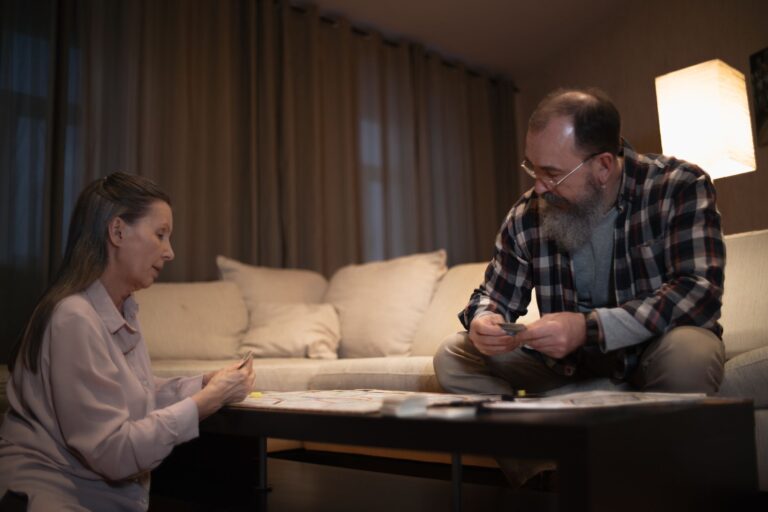
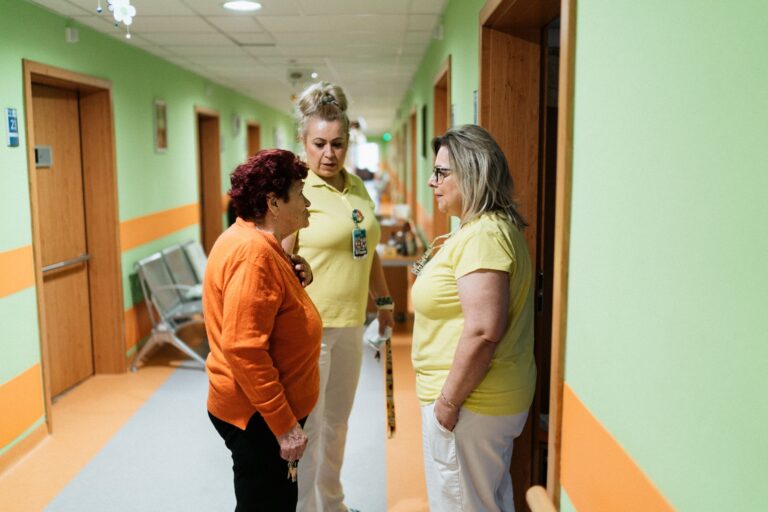
Technology cannot manufacture the quiet presence of someone who simply sits with a person living with dementia. No app alerts a family member to the specific moment when their parent will feel most afraid, most lonely, or most like themselves. No device replaces the hand-holding, the familiar voice, the inside jokes and decades of history that make a relationship what it is. Dementia care technology excels at tracking, monitoring, reminding, and organizing—but it fundamentally cannot do what dementia care most urgently requires: the deliberate, ongoing choice to show up.
Consider Margaret, who lives in assisted living and wears a monitoring device that alerts her daughter to falls, missed medications, and vital changes. Her daughter reviews the data conscientiously, and the alerts have prevented serious harm. But no notification told her that Margaret spent Thursday afternoon staring at the wall, unable to recognize her own hands, afraid she was dying. Margaret’s daughter visited Saturday and held her mother’s hand for an hour without speaking. No technology can program that kind of attention.
Table of Contents
- Can Devices Build Relationships That Dementia Destroys?
- The Limits of Artificial Companionship and Presence
- Why Memory Recovery Tech Creates False Hope
- Safety Tech vs. Freedom: The Tradeoff Nobody Wants to Admit
- Medication Reminders Cannot Enforce Compliance or Wisdom
- When Monitoring Becomes Surveillance
- The Data That Never Captures What Matters Most
- Frequently Asked Questions
Can Devices Build Relationships That Dementia Destroys?
technology can document relationship decline; it cannot reverse it. A monitoring system can track that your parent is sleeping less, eating less, becoming more withdrawn. It can log the fact that they no longer respond to their favorite music or recognize photographs. But knowing these things happen does not prepare you for the moment when your father looks at you with no recognition, or when your mother asks where you are while you are standing beside her.
The expectation that better monitoring will somehow preserve the relationship—or ease its loss—often sets families up for disappointment. A study from the Journal of Medical Internet Research found that adult children who relied most heavily on remote monitoring technologies reported higher levels of guilt and anxiety than those who maintained regular in-person visits. The data created the illusion of caregiving without the reality of presence. Some family members found themselves checking the app instead of calling, scrolling alerts instead of driving to visit.
The Limits of Artificial Companionship and Presence
No robotic companion can replace the complexity of human relationship. Yet in the last decade, research facilities and some care homes have invested in social robots—designed to engage people with dementia through conversation, reminders, and emotional interaction. These devices achieve measurable outcomes in some domains: they reduce agitation in some residents for some periods of time. But they achieve these outcomes through a kind of learned deception.
The person with dementia may become attached to the robot, may engage with it repeatedly, may seem comforted by it. This is not evidence that the technology has solved a problem. It is evidence that humans will seek connection with whatever responds to them, even something mechanical. When the robot needs charging or malfunctions, the person with dementia may grieve its absence genuinely. The technology has not healed the underlying isolation—it has obscured it, and sometimes deepened it, by offering a substitute for the irreplaceable thing: another human being who chooses to show up.
Why Memory Recovery Tech Creates False Hope
Numerous startups and research initiatives promise to stimulate memory, slow cognitive decline, or even restore lost function through cognitive training games, music therapy apps, or neurostimulation devices. Some of this research is legitimate and ongoing. But the marketing around memory-recovery technology often outpaces the evidence, and families desperate to slow their parent’s decline are susceptible to the promise. When technology suggests that dementia progression can be halted or reversed through adherence to an app, it shifts the burden of disease progression onto the person with dementia and their caregivers.
If your mother is declining despite doing the cognitive training program, the implication becomes: you are not doing it correctly, or often enough, or with enough engagement. The guilt becomes weaponized by the technology itself. In reality, individual lifestyle choices matter far less than genetics, disease stage, and the underlying pathology of the specific dementia diagnosis. A person can complete every exercise, use every app, take every supplement, and still lose cognitive function month by month. Technology cannot change this fact.
Safety Tech vs. Freedom: The Tradeoff Nobody Wants to Admit
GPS trackers, door sensors, bed alarms, and wander-detection systems genuinely do prevent some injuries and some tragic outcomes. A person with dementia who wanders into traffic or becomes lost outdoors is in real danger, and these devices provide real protection. But the cost of that safety is a loss of autonomy that is rarely discussed openly. An 87-year-old man who has worn a wander-detection device for two years stops attempting to walk around his neighborhood. A woman who lived independently now refuses to go anywhere without the door alarm signaling to staff every time she tries to leave her room.
The technology keeps them safe, but it also keeps them confined. Caregivers and facility administrators often frame this as an acceptable tradeoff: safety over freedom. But the person experiencing it experiences it as imprisonment. They do not always have the language to say so because dementia has taken some of their words. The technology solves the problem of liability for the institution; it does not solve the problem of what a life looks like when someone is safe but not free.
Medication Reminders Cannot Enforce Compliance or Wisdom
Smart pill dispensers, medication reminder apps, and automated refill systems have genuinely improved medication adherence in some populations. But they cannot distinguish between a person who forgets to take their medication and a person who has decided—whether rationally or not—not to take it. An 82-year-old woman with moderate Alzheimer’s disease was prescribed a drug that reduces agitation. The medication worked; it made her calmer, more manageable, easier to care for. It also made her emotionally flat and less herself.
She had moments of lucidity when she understood what the drug was doing, and she began hiding her pills. Her automated reminder system would notify her son that the medication had been “dispensed,” but it had not been taken. The system created the data point without creating the outcome. Moreover, reminding someone with advanced dementia to take medication, when that person’s cognitive decline means they cannot understand why or what it does, is to ask them to take something on faith. They are not taking medicine. They are obeying a voice or a sound that has come to seem arbitrary and frightening.
When Monitoring Becomes Surveillance
There is a meaningful difference between monitoring someone’s safety and surveilling their behavior. Technology often collapses this distinction in dementia care. A family member or facility can now track not only where a person is and whether they have fallen, but also how long they sat still, how many times they got up at night, which rooms they entered, who they spoke to, and how long the conversation lasted. One 78-year-old woman’s family installed a comprehensive monitoring system in her home without her explicit consent—she lacked the capacity to consent by that point in her disease.
Within weeks, her daughter had compiled data showing that her mother sat alone in her room for extended periods, that she appeared to be showering less often, and that she had become more isolated. Rather than prompting the family to visit more frequently or arrange care differently, the data itself became the conversation. The family discussed the data; they did not discuss the loneliness the data reflected. The person became a dataset.
The Data That Never Captures What Matters Most
Every evening, an alert confirms that a person with dementia took their medications. Every night, a monitor logs that they slept six hours. The temperature in their room stays at 70 degrees. Their heart rate is 62.
But technology cannot measure whether that person felt dignified today, whether someone laughed with them, whether they experienced a moment of joy or peace. It cannot log the three minutes when they remembered their grandchild’s name, or the afternoon when they seemed almost like themselves. The impulse to quantify everything—activity, compliance, vitals, behavior—stems from the reasonable desire to ensure safety and quality of care. But it misses entirely the thing that people with dementia often need most: the knowledge that they are worth someone’s time and attention not because their vital signs warrant monitoring, but because they matter.
- —
Frequently Asked Questions
Aren’t monitoring devices still worth using if they prevent falls and serious harm?
Yes. Monitoring technology can prevent real injuries and save lives. The point is not to reject technology, but to understand its actual scope. It prevents specific physical harms; it does not create connection, preserve identity, or ease the emotional weight of decline. Used alongside genuine caregiving, monitoring can be valuable. Used as a substitute for presence, it creates safety theater.
What should families do instead of relying on apps and devices?
Show up. Visit regularly and without an agenda—not to assess how your parent is doing based on data, but to be present with them as they are. Listen without trying to fix or correct. Hold their hand. Look them in the eye. The hardest things about dementia cannot be outsourced to technology.
Can cognitive training games slow dementia at all?
Some research suggests that cognitive stimulation and social engagement may have modest protective effects in early-stage cognitive decline, before a dementia diagnosis is confirmed. Once dementia is diagnosed, there is limited evidence that apps or games alter the disease course. They can provide engagement and potentially reduce behavioral symptoms, but they are activities, not treatments.
If dementia care tech has these limits, why do so many facilities and families use it?
Because it serves a real administrative need. Technology makes care more measurable, more documentable, and more defensible in the event of harm. It also reduces labor costs by automating reminders and monitoring. These are legitimate institutional needs. But they are not the same as meeting the actual needs of the person with dementia. —