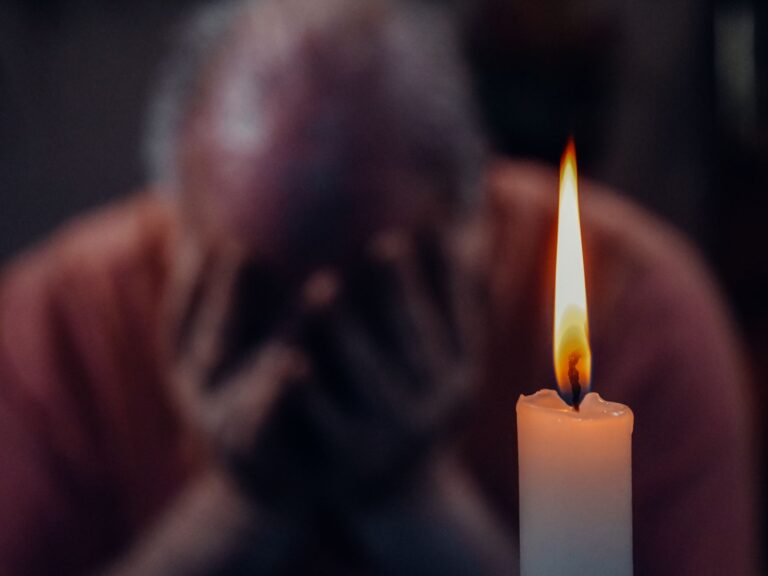
Addressing the spiritual needs of patients with dementia means honoring their sense of meaning, connection, and purpose—whether through religious practice, nature, relationships, or personal ritual—even as cognitive decline makes traditional expressions of faith difficult. A 78-year-old woman with mid-stage Alzheimer’s disease who no longer recognizes her daughter may still respond with deep calm and contentment when hymns she learned in childhood are played aloud, or when she sits in a chapel, because spiritual experience bypasses the language and memory centers that dementia attacks most directly. Meeting these needs requires recognizing that spirituality is not optional comfort or late-life entertainment; it is a core human function that dementia affects but does not erase.
Spiritual care in dementia is complicated because the patient cannot always tell us what they need or believe. Unlike addressing pain, which can be inferred from behavior and treated with medication, spiritual distress shows up as restlessness, agitation, withdrawal, or a sense of incompleteness—symptoms that may look like disease progression when they actually reflect unmet existential or religious needs. Caregivers and healthcare providers often miss this distinction, assuming that behavioral changes are purely neurological when they may also reflect the patient’s awareness, however fragmentary, that something meaningful has been lost or left undone.
Table of Contents
- How Does Dementia Affect Spiritual Practice and Belief?
- The Role of Religious Community and Ritual in Dementia Care
- Meaning-Making and Legacy Work in Dementia
- Adapting Spiritual Practice in Different Settings and Disease Stages
- Spiritual Distress, Guilt, and Existential Suffering in Advanced Dementia
- The Secular Spiritual Dimension in Dementia Care
- Integration of Spiritual Care Into Clinical Practice and Family Conversations
How Does Dementia Affect Spiritual Practice and Belief?
Dementia disrupts the cognitive scaffolding on which spiritual life usually depends: memory of prayers, ability to read scripture, recognition of familiar places of worship, and capacity to explain personal faith. A patient may forget the words to a prayer they said daily for sixty years, or no longer remember why they keep a particular religious object on their bedside table—yet the emotional and spiritual weight of those practices often remains. Research on patients with Alzheimer’s disease and frontotemporal dementia shows that while explicit religious knowledge erodes, implicit spiritual responsiveness—the felt sense of connection, peace, or transcendence—can persist until very late stages of disease. This paradox means that abandoning all spiritual practice because “they won’t remember” may strip the patient of one of the last sources of comfort available to them.
The pattern of loss varies by dementia type. Patients with Alzheimer’s typically retain emotional memory and music recognition longer than declarative facts, so singing familiar hymns or playing beloved music may maintain spiritual connection even when conversational prayer becomes impossible. Frontotemporal dementia, which damages the frontal and temporal lobes early, can strip away impulse control and emotional regulation while sparing memory, creating a patient who recalls their faith intellectually but loses the behavioral discipline to practice it—a troubling and sometimes anguishing state for both patient and family. Vascular dementia, tied to specific strokes, may affect spiritual processing unpredictably depending on which brain regions are damaged.
The Role of Religious Community and Ritual in Dementia Care
For many patients, spiritual life centers on religious community: weekly services, prayer groups, ritual celebrations, pastoral relationships. As dementia progresses, the patient may no longer be able to attend worship independently, remember when services occur, or follow the liturgy. Some families and religious communities respond by bringing worship to the patient—a chaplain visits the care facility, communion is administered in the home, or recordings of services are played regularly. This approach maintains the thread of practice and identity. However, there is a real limit to what adaptation can achieve.
A patient in advanced dementia may not recognize the chaplain, may become distressed during rituals that once brought peace, or may experience the formal elements of worship as confusing rather than meaningful, particularly if dementia has impaired their ability to understand sequencing or complex symbolism. The risk of over-accommodation is real: well-meaning caregivers sometimes attempt to recreate entire worship experiences for a patient who is no longer able to engage with that level of complexity. A patient with moderate to advanced dementia may find a forty-five-minute service overwhelming rather than comforting, while a five-minute prayer, a specific song, or simply sitting quietly in a place of natural beauty may provide the spiritual nourishment that long ritual no longer can. Religious communities vary enormously in their willingness and ability to adapt. Some congregations embrace visiting the homebound and modifying practices; others have limited resources or less flexible theology around what constitutes “real” worship, leaving families to navigate these adaptations alone.
Meaning-Making and Legacy Work in Dementia
Spiritual distress in dementia often emerges from confronting the loss of roles, agency, and purpose. A retired teacher, a devoted parent, a community leader—the patient may still retain fragmentary awareness that they are no longer able to do the work that defined their identity and sense of spiritual contribution. Some patients experience acute distress during this awareness; others seem to move past it into a simpler present-centered existence. Legacy work—creating video letters, recording stories, writing ethical wills (documents in which individuals express their values, hopes for loved ones, and spiritual wishes)—can address this need, though it must happen early enough that the patient retains capacity to participate meaningfully.
A 72-year-old man with early-stage dementia and a deep Christian faith spent several weeks in acute agitation, angry and despairing, expressing that he was “no good now” and “a burden.” After his daughter suggested recording a message to his grandchildren about his faith and what he wanted them to know about him, he spent an afternoon speaking directly to the camera. The distress did not vanish, but it shifted. He had transformed from helpless recipient of care to one who still had something to give—and for him, that spiritual reorientation mattered more than any medication adjustment would have. This kind of work is not possible for all patients and is most successful when initiated while the patient can still initiate and shape the narrative themselves.
Adapting Spiritual Practice in Different Settings and Disease Stages
Early-stage dementia offers a window for deliberate spiritual planning. The patient can still articulate their beliefs, preferences, and wishes; they can select music, art, or places that matter to them; they can communicate what “spiritual care” means in their own context. Documenting these preferences in an advance directive—not just for medical decisions but for spiritual care—gives caregivers concrete guidance when the patient can no longer express wishes.
Yet this early planning phase is often missed because dementia in its earliest stages does not always look like an emergency; families are adapting to diagnosis and may not yet think to ask “What spiritual or religious practices do you want to continue?” In facilities like assisted living and nursing homes, spiritual care exists on a spectrum. Some communities have chaplains on staff and designated quiet spaces; others offer little beyond whatever residents’ families bring themselves. Adult day centers sometimes include spiritual programming, though access depends on the center’s mission and resources. Home care and palliative care settings can be highly responsive to spiritual needs because they operate on a smaller scale and the caregiver is often deeply familiar with the patient’s history, but this responsiveness depends entirely on whether the caregiving system prioritizes it and whether the patient has access to knowledgeable guidance about how to adapt practices as ability declines.
Spiritual Distress, Guilt, and Existential Suffering in Advanced Dementia
As dementia progresses into moderate and advanced stages, some patients experience acute spiritual distress that does not follow a predictable pattern or resolve with standard interventions. This may take the form of existential questioning—”What is the point?” or rumination about past failures and unforgiven wrongs—or acute anxiety about death and the afterlife. A patient may no longer be able to articulate these concerns clearly, but their behavior—agitation, refusal to eat, expressions of despair—may reflect spiritual crisis rather than pain or medication side effects. The risk for caregivers and providers is misinterpreting this as delirium or depression and medicating without addressing the underlying existential or spiritual emergency.
Guilt is a particular danger. Some patients with dementia, especially those from religious backgrounds that emphasize sin and accountability, experience anguish about things they believe they have not made right. Late-stage dementia makes formal spiritual practices like confession or reconciliation extremely difficult; the patient may lack capacity to participate meaningfully in these practices, or may not be able to sustain the emotional and cognitive work they require. Pastoral care providers and hospice chaplains have expertise in addressing this, but access to them is uneven. A family member without training might believe the only thing they can offer is comfort and reassurance, when what may also be needed is spiritual intervention—a pastoral conversation, a blessing, a ritual that acknowledges the patient’s concerns within their own faith tradition.
The Secular Spiritual Dimension in Dementia Care
Not all spiritual needs are religious. Patients who identify as secular or atheist still experience existential concerns about meaning, legacy, connection, and how to face decline and mortality.
For these patients, spiritual care might mean time in nature, engagement with art or music, connection with loved ones, or participation in causes they believe in. The advantage is that these forms of spiritual practice often require less cognitive scaffolding than structured religion; a patient who no longer understands religious concepts may still feel moved by the sight of a garden, the presence of grandchildren, or a recording of music they loved. The risk is that secular spiritual needs are sometimes overlooked by religious caregivers or institutions, or treated as “nice to have” rather than essential to the patient’s dignity and wellbeing.
Integration of Spiritual Care Into Clinical Practice and Family Conversations
Addressing spiritual needs requires asking about them explicitly. Most clinicians are trained to assess pain, mood, cognition, and function; spiritual assessment is rarely part of standard intake or ongoing evaluation, despite growing evidence that spiritual wellbeing is associated with better quality of life, reduced depression, and greater acceptance of illness in dementia populations. A simple screening question—”What gives your life meaning?” or “Are there spiritual or religious practices that are important to you?”—opens the conversation.
Family meetings should include discussion of how to honor these practices as the patient’s ability to participate changes. This is not additional work; it is reframing care planning to include the whole person rather than symptoms alone. Practical integration includes ensuring that patients have access to chaplains or pastoral care if they want it; that staff in facilities can recognize and respond to spiritual distress; that advance directives include spiritual preferences; and that caregivers have permission to prioritize spiritual practice even when it seems inefficient or medically “unnecessary.” A nursing home resident who will not get out of bed for physical therapy but asks to hear a particular prayer may recover more dignity and quality of life by having that prayer honored than by forcing compliance with a therapy protocol that exceeds their current capacity to engage. The underlying clinical question—what promotes this person’s wellbeing and dignity in the face of disease?—shifts when spiritual care is genuinely integrated rather than treated as afterthought.
- —