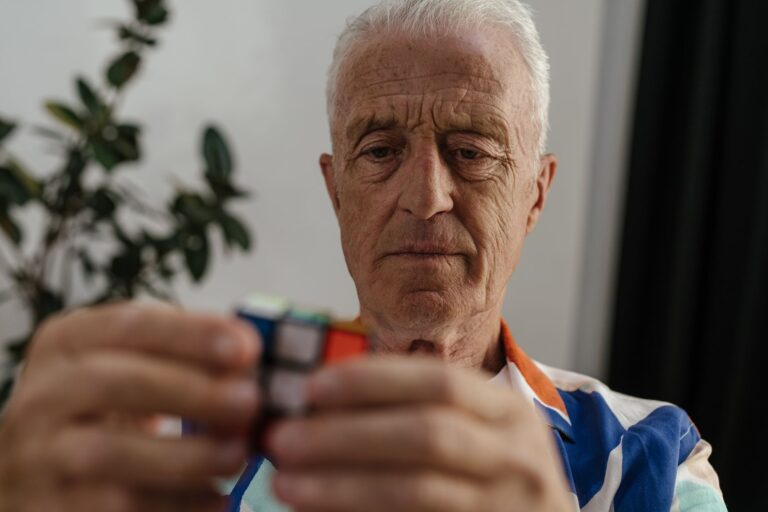
The gap between dementia research and routine care is not theoretical—it’s the distance between a peer-reviewed study showing that structured cognitive activities can slow memory decline and a family caregiver who doesn’t know how to implement those activities with their aging parent. Research has identified hundreds of interventions that improve cognitive function, reduce behavioral symptoms, or enhance quality of life in dementia, yet many of these findings never make it into the daily routines of care homes, hospitals, or families. This isn’t because the research is wrong or caregivers are negligent; it’s because translating scientific evidence into real-world practice involves solving problems that researchers themselves rarely encounter: staffing limitations, cost constraints, patient variability, and the friction of organizational change.
The bridge between research and routine care requires not just better science, but better systems for implementation. A study conducted at a major academic medical center with carefully selected participants and dedicated research staff may show impressive results, but those results don’t automatically transfer to a residential facility with rotating staff, limited resources, and residents with complex comorbidities. Closing this gap requires understanding the barriers that prevent good evidence from becoming good practice, and knowing how to adapt interventions to fit the reality of everyday care environments.
Table of Contents
- Why Does Research Fail to Reach Daily Practice?
- The Complexity of Evidence Translation in Dementia Care
- How Evidence Actually Moves into Practice
- Adapting Interventions for Real-World Implementation
- Implementation Pitfalls and Unintended Consequences
- The Caregiver’s Role in Bridging the Gap
- Measuring Implementation Success
Why Does Research Fail to Reach Daily Practice?
The most common reason research doesn’t translate to routine care is that published studies don’t address the practical constraints of real care settings. A study on reducing sundowning through environmental modifications might show a 40% improvement in behavioral symptoms over eight weeks—but that assumes consistent implementation, trained staff, and an environment that can be modified as the protocol specifies. In a typical nursing home with 80 residents, three rotating night shifts, and staff who are undertrained in dementia-specific approaches, that 40% improvement might shrink to 10%, making the intervention feel like extra work for minimal return. Researchers also select their study populations carefully. They exclude people with severe comorbidities, uncontrolled psychiatric conditions, or profound cognitive decline. They work with motivated participants or family members who understand the research goals. Real-world care environments don’t have the luxury of selection.
A memory care unit serves everyone—the person who engages willingly with cognitive activities and the person who becomes agitated when approached. This heterogeneity makes it much harder to see the clean results that a controlled trial produced, and it can make staff doubt whether the intervention is actually effective. Another barrier is the time and training required. Research protocols are often explicit and detailed, but they assume that staff implementing them have been trained and have time to follow them precisely. A cognitive remediation protocol might require 30 minutes of one-on-one work per day, structured materials, and documentation of performance. In an understaffed care facility where one aide covers 15 residents, that protocol becomes impossible. Staff adapt it, skip parts, or abandon it altogether. The intervention becomes degraded, and its benefits disappear—not because the original research was flawed, but because the real world doesn’t match the research conditions.
The Complexity of Evidence Translation in Dementia Care
Translating dementia research is especially difficult because the disease itself is heterogeneous. Alzheimer’s disease, vascular dementia, Lewy body dementia, and frontotemporal dementia have different pathologies and progress differently. An intervention that works well for someone with early-stage Alzheimer’s disease might be useless or harmful for someone with frontotemporal dementia or advanced Lewy body disease. Yet most published interventions are studied in relatively homogeneous populations, often people with mild to moderate cognitive impairment. When a care facility tries to apply that intervention to its entire dementia population—which includes people at every stage and with every type—staff find that it doesn’t work equally well for everyone, and the temptation is to abandon it. The timeline of evidence translation also works against implementation. A study published today reports data from work that started three to five years ago. By the time the results are published, reviewed by other researchers, incorporated into clinical guidelines, and filtered down to individual care settings, a decade may have passed.
The staff member who attended a training workshop on implementing the intervention may have moved to a different job. New leadership arrives with different priorities. What seemed cutting-edge in the research world feels outdated or irrelevant in the care world. This delay means that caregivers are often working from outdated evidence, or they’re not implementing new evidence because the systems to support implementation are still being built. A critical limitation is that implementation research itself is underfunded compared to basic and clinical research. Funders invest heavily in discovering new interventions, but far less in studying how to get those interventions into practice reliably. A researcher who discovers that a new medication slows cognitive decline gets substantial grant funding and publication prestige. A researcher who figures out how to get staff in care homes to implement a complex behavioral intervention consistently gets far less support. This funding mismatch means that many excellent interventions remain poorly implemented simply because no one has invested in solving the implementation problem.
How Evidence Actually Moves into Practice
When dementia interventions do successfully reach routine care, it typically happens through one of several pathways. Clinical guidelines are one route—organizations like the Alzheimer’s Association issue position statements on evidence-based practices, and some facilities use these guidelines to inform their protocols. However, guidelines alone rarely drive change. A facility’s leadership might read a guideline recommending structured cognitive engagement for residents with mild cognitive impairment, nod in agreement, and then return to the day-to-day challenges of understaffing and budget constraints. Without resources and accountability, reading a guideline doesn’t change behavior. A more effective pathway is formal implementation training and ongoing support. Some researchers and organizations (academic medical centers, quality improvement programs, national dementia organizations) have built structured programs to help care facilities adopt evidence-based practices. These programs don’t just distribute information; they provide staff training, help facilities adapt protocols to their specific context, set up monitoring systems to track whether the intervention is actually being used, and provide feedback and troubleshooting.
A care facility that participates in such a program is much more likely to sustain an intervention than one that simply reads about it. The downside is that these programs are time-intensive and require payment or significant institutional commitment. Many smaller or less resourced facilities can’t access them. Another powerful pathway is embedding research into care systems. Some integrated health systems include researchers and quality improvement specialists on staff, and they continuously study what works in their own settings and implement improvements systematically. A large health system might have a dementia specialist team that reviews new evidence quarterly and tests whether specific interventions work in their patient population. This approach avoids the translation gap because the research is happening within the care context itself. However, this model is expensive and is primarily available in large academic systems or wealthy care organizations. Most community-based care facilities don’t have this capacity.
Adapting Interventions for Real-World Implementation
Even when a care facility commits to implementing an evidence-based intervention, the intervention rarely stays exactly as designed. Adaptation is actually necessary, not a failure of fidelity. A dementia care intervention researched in a specialized memory clinic with trained staff and selected patients needs to be modified for a general nursing home with mixed diagnoses and varying staff expertise. The question is not whether to adapt, but how to adapt in ways that preserve the core mechanisms while making the intervention feasible. Effective adaptation requires understanding what part of an intervention drives its benefit. If a study showed that structured reminiscence therapy improved mood in people with early-stage dementia, the question becomes: what are the active ingredients? Is it the structure, the reminiscence process, the one-on-one attention, the social engagement, or something else? If it’s primarily the attention and engagement, then a care facility might achieve similar benefits by increasing any form of meaningful one-on-one activity, not necessarily reminiscence therapy specifically.
This flexibility makes implementation possible with existing staff and resources. A concrete example is the evidence around cognitive stimulation. Research shows that structured cognitive activities benefit people with mild to moderate dementia. Some care facilities have tried to implement this exactly as studied—standardized cognitive games, precise timing, consistent dosing. But many have found that delivering this intervention uniformly to 40 or 80 residents is logistically impossible. Facilities that adapted the intervention to use available staff (recreation therapists, volunteers, trained aides), flexible timing, and a menu of cognitive activities appropriate to different abilities actually sustained the intervention long-term. By moving away from perfect fidelity to the protocol, they made it survivable within their system.
Implementation Pitfalls and Unintended Consequences
One common pitfall is implementation drift—where an intervention starts strong but gradually becomes weaker or disappears entirely. A facility adopts structured cognitive activities for residents, trains staff, and sees good initial results. But over weeks and months, as competing priorities mount and staff turnover occurs, the intervention becomes less consistent. New staff aren’t trained as thoroughly. Activities run shorter or less frequently. Monitoring falls away. Within six months, what looked like a significant improvement fades, and leadership concludes the intervention didn’t work—when actually implementation did. Another pitfall is poor adaptation that destroys the mechanism. A well-intentioned care facility might try to implement an intervention in a way that’s convenient for staff but misses what made the original work effective.
For example, if evidence shows that regular, structured physical activity reduces behavioral disturbances in dementia, but a facility implements “physical activity” as five minutes of walking once a week, the adaptation has gutted the intervention. The dose and consistency matter. When adapted interventions fail, staff may blame the evidence rather than the adaptation. There’s also a warning about standardization: some interventions lose effectiveness when made too rigid. People with dementia are not interchangeable. An intervention optimized for people with early-stage Alzheimer’s disease may frustrate someone with frontotemporal dementia who has lost insight and impulse control. A structured activity that engages one person may distress another. Care facilities that implement an evidence-based intervention as an inflexible protocol for all residents will see better results in some and worse results in others. Individualization—using clinical judgment to determine whether and how to apply an intervention—is crucial but requires skilled staff.
The Caregiver’s Role in Bridging the Gap
Bridging the research-practice gap isn’t the responsibility of researchers or health systems alone. Family caregivers are essential frontline translators of evidence into daily practice. A family caregiver who understands that structured cognitive engagement helps memory and mood, and who implements simple cognitive activities during visits, is more effective than any institutional program that isn’t reaching their family member. However, family caregivers typically don’t have access to the research literature, training, or support to know what evidence-based practices exist.
This is where education and accessible information become critical. Legitimate dementia organizations provide evidence-based guidance specifically tailored for caregivers—not highly technical, but grounded in research and practical enough to implement at home. When a family caregiver can access clear guidance on what actually helps (avoiding “natural remedies” without evidence, for example, and focusing instead on structured engagement, modified communication, and appropriate activities), the gap between research and care closes at the individual level. A caregiver who spends 30 minutes a day doing something that research shows helps is doing more for their family member’s dementia than many formal interventions achieve.
Measuring Implementation Success
Knowing whether research has successfully moved into routine practice requires measuring not just clinical outcomes, but implementation itself. Some care facilities track the proportion of eligible residents who receive an intervention, how consistently it’s delivered, and whether residents are actually engaging. Monitoring at this level is tedious but crucial. A facility might discover that although all residents with mild cognitive impairment are supposed to participate in cognitive activities, only 60% actually do because of competing priorities, attendance at medical appointments, or low engagement. That 40% gap explains why observed improvements are smaller than the research predicted. Documentation and data collection are labor-intensive in care settings, but they’re essential for knowing whether an implementation is working.
If a care home implements a new behavioral intervention but doesn’t systematically track whether behaviors change, staff may attribute observed improvements to the intervention when they’re actually due to seasonal variation, medication changes, or simply placebo effect. Conversely, true improvements might go unrecognized because no one is measuring. A facility that invests in simple, sustainable measurement—periodic behavioral ratings, documentation of incidents, staff observations—can actually know whether an intervention is working in its specific context, adjust as needed, and build institutional knowledge about what works for its residents. One practical example: a memory care unit that implemented structured afternoon activities tracked engagement and behavioral incidents weekly. Within three months, they could see that engagement improved significantly, behavioral incidents (aggression, agitation) declined by 25%, and these improvements were sustained. This data gave staff confidence to continue the program even when it required effort, and it provided concrete evidence to show families and leadership that the investment was worthwhile. Without the measurement, the program might have been cut as too burdensome.