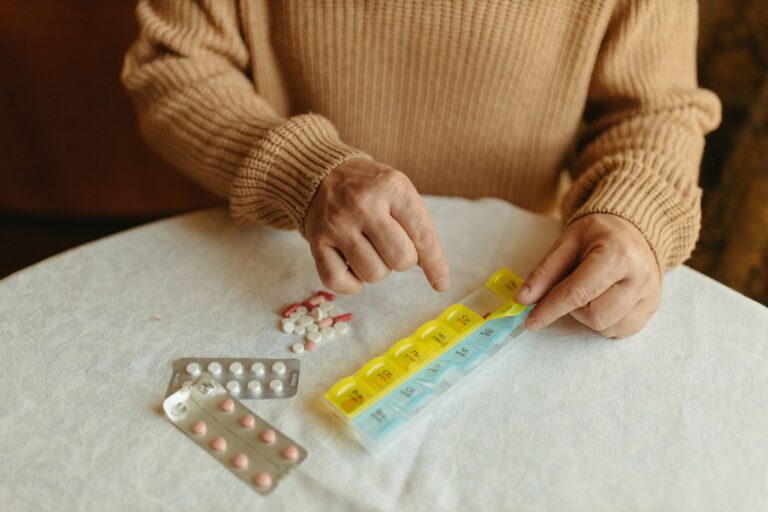
Drug interactions in the frail population represent a critical healthcare challenge that fundamentally differs from how the same interactions affect younger, healthier adults. When an 82-year-old frail patient takes a blood thinner, a heart medication, and a pain reliever together, their body processes these drugs differently than a robust 60-year-old would—not simply because they’re older, but because frailty itself changes how medications move through the body, interact with each other, and accumulate to dangerous levels. Understanding these interactions requires recognizing that frailty is a distinct physiological state marked by reduced reserves and compromised ability to handle physiologic stress, and this state dramatically amplifies medication risk in ways that chronological age alone does not explain.
Research shows that between 51-54% of older adults take multiple medications simultaneously, and roughly half of these patients experience moderate-level drug interactions. But the real concern isn’t just the number of medications—it’s that frail individuals are approximately twice as likely to develop adverse drug reactions during hospitalization compared to non-frail counterparts. Among hospitalized patients with a frailty index of 0.16 or higher, 83% show signs of frailty, with an average age of nearly 90. These aren’t rare edge cases; they represent a substantial portion of the elderly population receiving care.
Table of Contents
- How Does Frailty Change the Way the Body Processes Medications?
- What Are the Real Rates of Adverse Reactions in Hospitalized Frail Patients?
- Which Drug Classes Pose the Highest Risks in Frail Patients?
- What Role Does Multimorbidity Play in Drug Interactions?
- Why Do Frail Patients Have Different Absorption and Distribution Patterns?
- How Does Polypharmacy Vary Across Age Groups and Gender?
- What Assessment Tools Help Identify High-Risk Patients?
How Does Frailty Change the Way the Body Processes Medications?
The fundamental issue with drugs in frail patients lies in pharmacokinetics—the journey a medication takes through the body’s absorption, distribution, metabolism, and excretion (ADME). The liver, responsible for breaking down most medications, shows a 30-40% reduction in overall clearance capacity through cytochrome P-450 pathways as people age. However, frailty accelerates and amplifies this decline. In one study comparing frail and non-frail patients taking amlodipine (a common heart medication), frail patients showed 37% greater drug exposure—meaning the medication accumulated to significantly higher levels in their bloodstream—even when given identical doses. This isn’t merely a matter of age; frailty itself drives the metabolism changes.
The changes extend beyond the liver. Reduced hepatic blood flow specifically impairs clearance of high-extraction drugs like morphine, verapamil, and lidocaine—medications frequently used in elderly and dementia care. Simultaneously, kidney function declines, and drug clearance via renal excretion drops proportionally with creatinine clearance. A frail 85-year-old might have only 30-40% of the kidney function of a healthy 45-year-old. Body composition shifts further complicate matters: decreased muscle mass, increased body fat, and altered protein binding affect how drugs distribute throughout the body. A medication that dissolves in fat will concentrate differently in a frail patient with higher fat-to-muscle ratios, changing how quickly it reaches therapeutic or toxic levels.
What Are the Real Rates of Adverse Reactions in Hospitalized Frail Patients?
Adverse drug reactions account for 10.0-11.7% of all hospital admissions among older adults—a striking figure that suggests roughly 1 in 9 to 1 in 10 hospitalizations could be prevented through better medication management. The burden falls far more heavily on frail patients. Among heart failure patients specifically, the prevalence of adverse drug events climbs steeply with frailty severity: 31% in low-risk frailty groups, 56% in intermediate-risk groups, and 84% in high-risk frailty groups. This isn’t a gradual increase; the relationship between frailty and harm is steep and concerning.
A crucial limitation of these statistics is that they capture only events severe enough to trigger hospitalization or formal documentation. Many adverse reactions—cognitive decline, falls, appetite changes, or gradual functional loss—occur at home and never appear in hospital records. An older adult may fall, break a hip, and enter the hospital, with the fall attributed to “old age” when the true culprit was an unrecognized drug interaction or medication accumulation. Studies examining potentially inappropriate medications (those more likely to cause harm than benefit in older adults) found that 39.8% of patients aged 65 and older are prescribed at least one such medication. This widespread prescribing reflects not carelessness but the genuine complexity of balancing multiple chronic conditions against medication risks.
Which Drug Classes Pose the Highest Risks in Frail Patients?
Certain medication categories carry substantially higher risk in the frail population. Anticoagulants and antiplatelet medications emerged as significant risk factors in multiple studies examining adverse drug events. A patient taking a blood thinner combined with an anti-inflammatory medication faces an elevated bleeding risk; add kidney dysfunction from frailty, and drug levels climb dangerously. Opioids (morphine, codeine) present another critical concern, particularly given the hepatic metabolism issue mentioned earlier—frail patients clear these medications slowly, risking oversedation, constipation, and respiratory depression even at standard doses.
Medications for heart conditions, cognitive symptoms, and pain management often interact in ways specific to frailty. Verapamil (a heart medication) interacts with numerous other drugs and depends on hepatic blood flow—compromised in frail patients. Certain dementia medications like donepezil can interact with cardiovascular agents. NSAIDs, commonly used for pain, increase bleeding risk when combined with anticoagulants and impair kidney function—particularly dangerous in someone whose kidneys are already declining. The challenge is that many of these medications are genuinely necessary; the goal isn’t to avoid them but to understand their elevated risk profile and monitor more carefully in frail patients.
What Role Does Multimorbidity Play in Drug Interactions?
Multimorbidity—the presence of multiple chronic conditions—rarely comes alone in frail elderly patients. A typical frail 85-year-old might have heart disease, diabetes, arthritis, and cognitive decline simultaneously. Each condition generates medication recommendations: a beta-blocker and ACE inhibitor for the heart, metformin for diabetes, an NSAID for arthritis, and perhaps a cholinesterase inhibitor for cognition. The risk escalates not arithmetically but exponentially—each additional medication increases the probability of unexpected interactions while simultaneously reducing the liver and kidney’s capacity to handle drug loads.
Immobility and other conditions common in frailty further complicate the picture. Patients who are bedbound or nearly immobile face increased risk of blood clots, leading to anticoagulant prescriptions, which then interact with pain medications and gastric protectors. Delirium or a history of ulcer disease signals additional vulnerability to certain drug combinations. A frail patient with multiple conditions is not simply a younger patient with more pills; they represent a different pharmacologic landscape where the assumption that a “standard dose” is safe becomes increasingly dangerous. The comparative safety margin between a helpful dose and a harmful dose narrows substantially.
Why Do Frail Patients Have Different Absorption and Distribution Patterns?
Beyond metabolism, the basic processes of how drugs enter and move through the body shift with frailty. Absorption from the gastrointestinal tract can be compromised by reduced gastric acid (making some medications less available), slower gut motility, and changes in the intestinal lining. A medication that depends on acidic conditions for absorption might become less effective in an older person taking acid-reducing medications—a common scenario in the elderly. Distribution to tissues changes due to body composition alterations and shifts in how drugs bind to blood proteins. An medication that binds heavily to albumin might circulate at higher unbound (and thus more pharmacologically active) levels if albumin levels drop.
A significant limitation of current practice is that many standard drug dosing guidelines don’t adequately account for these distribution changes. A dose calculated by weight alone fails to capture the reality that a frail 70-kilogram patient has a fundamentally different body composition than a robust 70-kilogram patient. Water-soluble drugs may reach higher concentrations in frail patients with less fluid distribution; fat-soluble drugs accumulate in increased adipose tissue. Warfarin (a blood thinner often used in elderly patients) exemplifies this complexity—it depends on liver metabolism, binds heavily to albumin, and its effects are influenced by dietary vitamin K intake, other medications, and kidney function. In frail patients, all these factors shift simultaneously, making dosing a genuine clinical challenge rather than a straightforward calculation.
How Does Polypharmacy Vary Across Age Groups and Gender?
The prevalence of polypharmacy shows distinct patterns across demographics. A 2026 Indian study found that polypharmacy occurred in 53.84% of females and 51.94% of males, with the highest rates concentrated in the 70-79 age group at 48.88%. This suggests that polypharmacy reaches its peak in the early-old-old years, not continuously increasing with age. European data from 2024-2025 confirms that polypharmacy prevalence among older adults remains substantial across multiple countries, though specific rates vary.
The gender difference—slightly higher in women—may reflect longer life expectancy or different prescribing patterns for cardiovascular and bone health. These prevalence figures underscore that polypharmacy is not aberrant; it’s the dominant pattern for older adults. The challenge this creates is that healthcare systems have normalized multiple-medication regimens without simultaneously building robust systems to manage interaction risks. A patient taking five or six medications might be considered “standard” management of common conditions, when the reality is that each additional medication multiplies the interaction possibilities and strains an aging body’s ability to process and eliminate drugs safely.
What Assessment Tools Help Identify High-Risk Patients?
Clinical assessment of drug interaction risk has evolved, though gaps remain. Several instruments attempt to quantify frailty, with the Frailty Index being among the most evidence-based—measuring impairments across multiple domains to produce a score. Patients with a Frailty Index of 0.16 or higher show a doubling of adverse drug reaction risk, providing a concrete threshold that should trigger more intensive medication review. Beyond frailty scores, careful assessment of renal and hepatic function is essential, though standard creatinine levels can be deceptive in older adults with reduced muscle mass.
Calculated creatinine clearance using formulas like the Cockcroft-Gault equation provides better estimates of kidney function. A practical limitation is that comprehensive medication reviews remain time-intensive and are often performed only during acute events rather than preventively. Many community-dwelling older adults and their providers lack access to pharmacist-led medication reviews, leaving potentially dangerous combinations unexamined. When assessments do occur, they sometimes focus on identifying “inappropriate medications” from lists like the Beers Criteria (drugs generally considered high-risk in older adults), but this checklist approach misses the personalized interaction risk profile specific to each patient’s unique medication combination, kidney and liver function, and frailty status. The tools exist; the challenge lies in systematic implementation and adequate clinical time for thorough review.