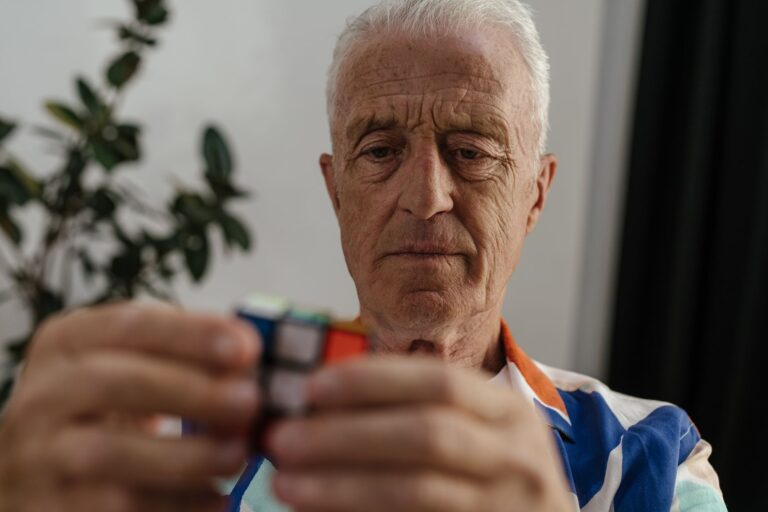
Mixed dementia—the simultaneous presence of more than one type of dementia pathology in the brain—is notoriously difficult to predict in terms of life expectancy because no two cases progress the same way. A person diagnosed with mixed dementia involving both Alzheimer’s disease and vascular dementia might live five years or fifteen years after diagnosis, and doctors cannot reliably know which trajectory any individual will follow. The unpredictability stems from the complex, variable ways these different pathologies interact, accelerate, or slow one another, combined with the unique baseline health of each patient.
Unlike single-pathology dementias, which have more established life expectancy ranges based on decades of research, mixed dementia introduces too many independent variables. The relative severity of each component—how much Alzheimer’s damage exists compared to vascular damage, for instance—differs from person to person. Age at diagnosis, cardiovascular health, kidney function, susceptibility to infection, the specific brain regions affected, and how quickly cognitive decline accelerates all shift the prognosis unpredictably. This is why a 75-year-old and an 82-year-old, both with identical dementia pathology confirmed at autopsy, may have had dramatically different survival times.
Table of Contents
- What Makes Mixed Dementia Different from Single-Cause Dementia?
- Why Medical Professionals Struggle to Predict Mixed Dementia Outcomes
- How Progression Patterns Vary Dramatically Between Individuals
- How Cardiovascular and Metabolic Conditions Complicate the Picture
- Complications That Can Shorten Survival Unexpectedly
- The Interaction Between Alzheimer’s and Vascular Damage
- Individual Resilience and Baseline Cognitive Reserve
- Frequently Asked Questions
What Makes Mixed Dementia Different from Single-Cause Dementia?
Mixed dementia occurs when a person’s brain contains the characteristic damage of two or more dementia types at the same time. The most common combination is Alzheimer’s disease paired with vascular dementia (caused by small strokes or blood vessel disease in the brain), but mixed presentations can also include lewy body pathology, frontotemporal damage, or other variants. A 68-year-old patient might have amyloid plaques and tau tangles from Alzheimer’s alongside chronic small-vessel ischemic changes from a history of high blood pressure and diabetes—a combination that doesn’t fit cleanly into any single survival model. The reason this matters for life expectancy is that each pathology type follows its own timeline and interacts with the others unpredictably.
Vascular dementia, for example, can progress in sudden steps after small strokes, while Alzheimer’s typically declines more gradually. When both exist together, you cannot simply average their prognosis timelines. A person with pure Alzheimer’s diagnosed at age 75 has a median survival of about 8–10 years, while someone with pure vascular dementia might expect 5–7 years. A 75-year-old with both has an uncertain range anywhere from 3 to 12 years or beyond, because the two processes may reinforce, interfere with, or accelerate one another in ways that individual patient data does not predict.
Why Medical Professionals Struggle to Predict Mixed Dementia Outcomes
Doctors and researchers cannot reliably forecast mixed dementia progression because the brain damage patterns vary so widely and are only definitively confirmed through autopsy. During life, clinicians can use imaging (MRI, PET scans) and cognitive testing to detect signs of multiple pathologies, but they cannot measure exactly how much Alzheimer’s plaques exist compared to how much white-matter damage from small strokes, or predict which form will dominate the clinical picture. This is a hard limitation: we lack real-time, in-vivo markers that quantify the relative burden of each pathology with precision. Additionally, the speed of cognitive decline—even when clinicians can identify both pathologies—does not reliably predict survival length.
A person may experience rapid memory loss over two years from accelerated Alzheimer’s, then plateau for years as the vascular component remains stable. Another person might show slower cognitive decline but develop severe mobility problems and swallowing difficulties from mixed brain damage, leading to earlier death from aspiration pneumonia or falls. Two patients with identical autopsy findings can have had completely different symptom trajectories and lifespans. The brain is too individual, and mixed pathology too heterogeneous, for population-level statistics to safely predict an individual’s remaining years.
How Progression Patterns Vary Dramatically Between Individuals
One person with mixed Alzheimer’s and vascular dementia might decline cognitively while remaining physically mobile for years, while another with similar pathology might become bedridden within months after a severe stroke. The variability is not random noise—it reflects real differences in where the damage is located, how much the damage is concentrated versus spread, and whether the remaining healthy brain tissue can compensate through alternative neural pathways. Consider a 76-year-old with mixed dementia who experiences sudden cognitive and physical decline following two small strokes within one week; her life expectancy might be measured in months to two years.
Contrast that with a 76-year-old with identical neuropathology (confirmed at autopsy years later) whose vascular events were minor, whose Alzheimer’s progressed slowly, and who lived eight more years after diagnosis. The same underlying brain damage produced vastly different outcomes. Neurologists cannot predict these stroke events in advance, nor can they model how an individual’s immune system, infection resistance, and organ function will interact with advancing dementia. This unpredictability is intrinsic to mixed dementia, not a gap in current medical knowledge that better scanning would close.
How Cardiovascular and Metabolic Conditions Complicate the Picture
Survival length in mixed dementia is heavily shaped by conditions outside the brain. A person with vascular dementia components is at risk of heart attack or major stroke—events that can shorten life suddenly and unpredictably. Someone with both Alzheimer’s and vascular pathology who also has uncontrolled high blood pressure, diabetes, or atrial fibrillation (irregular heartbeat) faces multiple accelerating threats. These systemic conditions can shift the expected survival range by years in either direction.
For example, a 79-year-old woman with mixed dementia and well-controlled diabetes, no history of stroke, and a stable heart rate might live 10+ years after diagnosis because her cardiovascular risk is lower. A 79-year-old man with identical dementia pathology but with atrial fibrillation (which increases stroke risk), poorly controlled blood sugar, and a prior heart attack might have an expected survival of 3–5 years. Both are living with the same underlying brain damage, but their systemic health profiles diverge their prognoses sharply. Doctors cannot reliably predict which catastrophic vascular event will occur or when, making forecasting unrealistic. The lesson for families: mixed dementia prognosis depends as much on the rest of the body as on the brain.
Complications That Can Shorten Survival Unexpectedly
Advanced dementia of any type increases risk for infection, malnutrition, dehydration, falls, and aspiration pneumonia—but in mixed dementia, these secondary complications can appear faster or more severely because cognitive decline may be steeper and motor control more compromised. A person with mixed pathology might lose the ability to swallow safely earlier than someone with Alzheimer’s alone, leading to a higher likelihood of food or fluid entering the lungs (aspiration) and causing life-threatening pneumonia. UTIs (urinary tract infections) are a particular hazard in advanced dementia; they can trigger acute confusion, delirium, and sometimes sepsis in older adults.
A mixed dementia patient who develops a UTI may deteriorate rapidly in ways that a doctor cannot predict in advance. Similarly, falls and head injuries carry higher immediate risk in someone with both cognitive decline and balance problems from vascular or motor changes. A person who lives in a care facility with fall-prevention measures in place may avoid this risk entirely, while an identical patient in a less-supervised setting might die from a single fall within months. These unforeseeable events—infection, injury, or complications of immobility—often determine actual lifespan more than the dementia pathology alone.
The Interaction Between Alzheimer’s and Vascular Damage
When Alzheimer’s plaques and vascular damage coexist, they do not simply add together arithmetically; they interact in ways that can accelerate neurodegeneration. Vascular damage reduces blood flow to brain regions already stressed by Alzheimer’s pathology, accelerating the death of neurons. Conversely, Alzheimer’s damage may compromise the integrity of blood vessels themselves, worsening cerebrovascular disease. This compounding effect can push some mixed dementia patients into advanced stages of decline faster than either condition alone would predict.
A 73-year-old with chronic small-vessel vascular disease might have minimal cognitive symptoms for years. Add Alzheimer’s plaques into the same brain, and suddenly the cognitive decline accelerates—the combination has activated a faster, more aggressive trajectory. Yet in another 73-year-old with the same dual pathology, the decline remains gradual, suggesting that the regional distribution of damage, individual compensatory capacity, or other unknown neurobiological factors matter enormously. This is why autopsy studies, which can definitively map both pathologies post-mortem, sometimes reveal that people with extensive mixed pathology lived relatively long and functional lives, while others with less visible damage progressed devastatingly fast.
Individual Resilience and Baseline Cognitive Reserve
One of the least predictable factors in mixed dementia survival is an individual’s cognitive reserve—the brain’s inherent resilience and capacity to compensate for damage through alternative neural networks. A person with lifelong intellectual engagement, education, multilingualism, and rich social connections may tolerate substantial mixed pathology with slower functional decline. The same burden of Alzheimer’s and vascular damage in someone with less cognitive reserve can produce rapid, dramatic decline.
A highly educated 80-year-old with mixed dementia might maintain independent living and conversation for several years after diagnosis, while a less-educated 80-year-old with similar neuropathology becomes dependent within one year. Autopsy studies cannot fully explain these differences—they point instead to lived experience, mental stimulation, and neuroplasticity as real biological modifiers of disease course. This individual variability is why families cannot rely on published survival statistics to predict their own loved one’s timeline. The range given by a neurologist (for example, “typically 4 to 10 years”) reflects population averages, not the specific resilience and health profile of the person sitting in the clinic room.
Frequently Asked Questions
Can doctors tell me exactly how long someone with mixed dementia will live?
No. Mixed dementia involves two or more pathologies that interact unpredictably, and doctors cannot reliably forecast individual survival. Published ranges exist (typically 3–12 years), but actual outcomes depend on too many variables—where the damage is located, the person’s age, cardiovascular health, and how quickly complications arise.
Is mixed dementia always worse than single-type dementia?
Not necessarily. Someone with mixed Alzheimer’s and vascular pathology might decline faster than someone with Alzheimer’s alone, or might live just as long. The outcome depends on the severity and location of each pathology, and on the person’s baseline health. Variability is the defining feature.
What factors do most influence survival in mixed dementia?
Cardiovascular health (heart disease, stroke risk, blood pressure control), age at diagnosis, the person’s ability to swallow and eat safely, infection risk, and resilience against complications like falls and pneumonia all matter. So does cognitive reserve—how much mental “buffer” the brain has built up over a lifetime.
Why can’t imaging tell doctors which type of dementia someone has and how long they’ll live?
Imaging (MRI, PET) can detect signs of Alzheimer’s, small strokes, and other pathologies during life, but it cannot measure them with the precision and completeness that autopsy provides. More importantly, imaging cannot predict which pathology will drive decline, how fast decline will progress, or when sudden events (stroke, infection, falls) will occur.
Should families avoid planning around a life expectancy number?
Yes. Use published ranges as general context (“people with this condition often live 4 to 10 years”), but do not treat them as a forecast for your loved one. Instead, focus on realistic near-term planning—weeks to months—and revisit expectations as the disease progresses. Early dementia looks and feels completely different from late dementia, and predicting the timeline between them is unreliable.
Does treating high blood pressure or diabetes help predict or improve mixed dementia survival?
Controlling cardiovascular risk factors may slow vascular dementia progression and reduce stroke risk, potentially extending life or delaying complications. However, it does not make prognosis more predictable. Some people with well-controlled conditions still experience sudden stroke or decline, while others remain stable longer than expected.