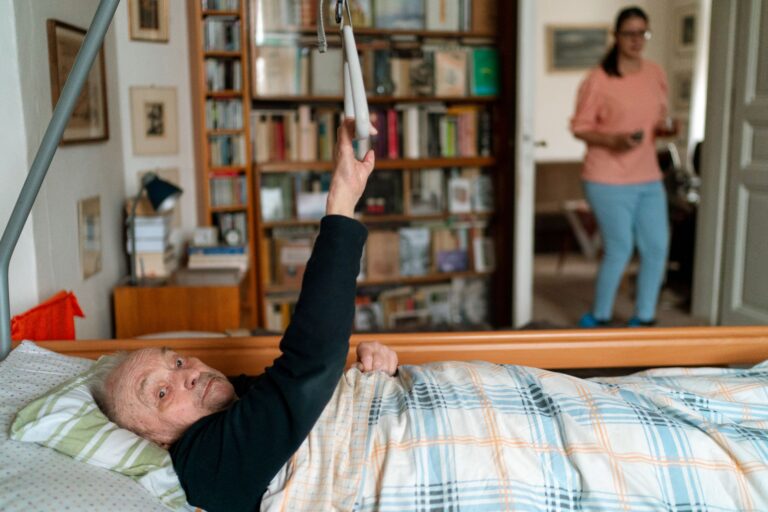
Doctors need family observations because they cannot see what happens in patients’ daily lives. A person may perform normally during a 15-minute office visit while showing significant memory loss, mood changes, or behavioral problems at home. Family members witness the actual progression of symptoms, notice subtle changes that patients themselves may not recognize or report accurately, and provide the context that turns scattered complaints into a coherent clinical picture. For dementia diagnosis in particular, family input is so critical that most neurologists cannot confidently confirm cognitive decline without hearing directly from someone who spends regular time with the patient.
The gap between office behavior and home behavior is not new to medicine, but its importance has grown as diagnosis increasingly depends on detecting early, gradual changes rather than acute crisis events. A wife may notice her husband rewearing the same shirt three days in a row. A daughter may observe that her mother now asks the same question five times during lunch. A son may report that his father, once methodical about finances, has left bills unpaid for months. These observations are not small anecdotes—they are the primary diagnostic data for many conditions.
Table of Contents
- What Information Do Doctors Actually Need From Family?
- The Limits of Patient Self-Report in Early Cognitive Decline
- How Family Observations Prevent Misdiagnosis
- Building a Reliable Timeline of Symptom Onset
- The Challenge of Distinguishing Normal Aging From Pathology
- Family Input in Psychiatric and Neurological Conditions Beyond Dementia
- Preparing for Doctor Visits: Making Family Observations Useful
- Frequently Asked Questions
What Information Do Doctors Actually Need From Family?
Doctors ask family members specific questions designed to fill gaps that medical testing cannot reach. They want to know about memory failures in context: Is the person forgetting recent conversations but recalling distant events? Do they get lost in familiar places? Do they struggle to learn new information, like the name of a new neighbor or the location of a new grocery store? These patterns matter because they point to specific types of cognitive damage, not just general “forgetfulness.” Beyond memory, doctors ask about functional decline.
Can the patient still manage medications independently, or does the family now supervise? Can they handle household bills, or are they making financial errors? Do they drive safely, or have family members taken over? A patient who still remembers conversations but can no longer cook dinner safely has a different clinical picture than one with severe memory loss but intact practical abilities. Doctors also ask about behavioral and personality changes—irritability, withdrawal, repetitive behaviors, or uncharacteristic risk-taking—because these signal involvement of brain regions different from those responsible for memory.
The Limits of Patient Self-Report in Early Cognitive Decline
A major limitation of relying only on what patients tell their doctors is that cognitive decline often includes lack of awareness about that decline. Someone with early Alzheimer’s disease may genuinely not notice memory lapses because the same damage that causes memory loss also reduces their ability to track what they are forgetting. They may feel exactly as sharp as always, while family members at home see a clear pattern of decline. This mismatch—between the patient’s own sense of stability and the family’s observation of change—is actually a diagnostic clue.
Patients also have strong motivations to minimize or hide cognitive problems during medical visits. They may feel embarrassed or afraid of losing independence, so they try harder to appear sharp than they do at home. They may arrive well-rested, showered, and focused on the appointment, whereas at home they are exhausted and confused in the evening. A patient might score reasonably on a brief cognitive screening test in the office but fail to recognize their own grandchild or spend an hour searching for a light switch that is three feet away.
How Family Observations Prevent Misdiagnosis
Incorrect diagnosis happens when doctors rely only on in-office testing. Someone with depression may complain of memory problems, and both patient and doctor may attribute this to early dementia. But when a family member describes that the memory troubles began after the person lost a spouse, started sleeping twelve hours a day, and lost interest in activities they once enjoyed, the clinical picture shifts toward depression, which responds very differently to treatment than dementia does.
Similarly, someone with severe anxiety may report confusion and difficulty concentrating, but family input about when these problems occur—always in crowded places or before certain events—suggests anxiety rather than neurodegenerative disease. For conditions like delirium, family observations are essential for distinguishing confusion caused by an acute infection or medication side effect from confusion caused by progressive brain disease. A person who has been sharp for eighty years and becomes confused over two days is exhibiting a very different clinical picture than someone who has been gradually declining over three years. Family members know the baseline and can report the timeline of change, which a patient with acute confusion may not remember or even recognize.
Building a Reliable Timeline of Symptom Onset
Doctors need to know when symptoms started and how quickly they worsened—information that becomes increasingly difficult for patients to provide accurately as cognitive decline progresses. A family member who has been present for the person’s daily life can often pinpoint that memory problems began last spring, or that the person’s decision-making noticeably changed two years ago. This timeline is not just a clinical detail; it affects the diagnosis and urgently, it affects the urgency of intervention.
The tradeoff is that family members also construct narratives that may not be entirely accurate. Someone may attribute recent confusion to stress or normal aging for months before mentioning it to a doctor, so the “onset date” reported to the physician may be later than when problems actually began. Additionally, family members sometimes conflate unrelated events or attribute all recent changes to a single cause when multiple factors may be at work. Despite these limitations, family observations still provide more reliable timing information than patients with cognitive decline can typically offer.
The Challenge of Distinguishing Normal Aging From Pathology
One of the hardest diagnostic questions is whether observed changes represent normal aging or disease requiring treatment. Most people become somewhat slower thinkers and slightly more forgetful as they age. The question is: has this person changed in ways that are beyond normal aging for their age and background, and is that change progressing? Family members who have known the person for decades are often the best judges of whether current abilities represent a real decline from their previous baseline.
A warning: family members sometimes minimize concerning changes, attributing them to normal aging when a doctor would recognize them as disease. Others overestimate changes, reading too much into occasional forgetfulness or attributing non-cognitive problems (like depression or poor sleep) to dementia. Doctors must interpret family reports in context, not simply accept all observations as facts. Additionally, family members may have their own agenda—an adult child concerned about inheritance, or a spouse in denial about deterioration—that colors their reports.
Family Input in Psychiatric and Neurological Conditions Beyond Dementia
In ADHD diagnosis, family observations are standard practice, especially in children. Teachers and parents report whether a child is actually inattentive across different settings or focused during preferred activities. In psychiatric conditions, family members describe mood states, periods of elevated energy or withdrawal, sleep changes, and behavioral shifts that the patient themselves may not report accurately or may actively hide from a doctor.
For seizure disorders, family members often witness seizures the patient does not remember. They can describe whether seizures involve loss of consciousness, whether the person falls, what movements occur, and how long the episode lasts—information essential for diagnosis and treatment planning. For movement disorders like Parkinson’s disease or Huntington’s disease, family members detect gradual changes in gait, tremor, coordination, or posture that the patient might not consciously register.
Preparing for Doctor Visits: Making Family Observations Useful
When family members prepare for a doctor’s visit by organizing their observations, they significantly improve the quality of information the doctor receives. Writing down specific examples—not generalizations like “she’s more forgetful,” but concrete instances like “she asked me three times in one hour if we had lunch”—gives doctors actionable information.
Noting when problems occur (morning versus evening, at home versus in public, during stress versus calm times) helps narrow the differential diagnosis. The most useful family input includes specific, time-marked observations rather than interpretations. Instead of “she seems confused,” a family member might say “two months ago she stopped being able to pay the electric bill correctly, and now she leaves the stove on unattended.” Instead of “he’s not himself,” a family member might describe “he sits silently for hours now, which is completely unlike him—he used to talk constantly.” Doctors can then ask follow-up questions and integrate these observations with testing and history to reach an accurate diagnosis.
Frequently Asked Questions
What if the family member’s memory of changes is unreliable?
Doctors consider information from multiple sources—the patient, family members, and testing—and look for consistency across reports. If only one person reports changes while others do not, doctors weigh that information accordingly. Written records of specific incidents (dates, contexts) are more reliable than general impressions.
Can family observations ever be harmful to diagnosis?
Yes, if a family member minimizes serious changes, denies what’s happening, or exaggerates normal aging into false alarm. Doctors assess whether reports seem consistent with test results and whether the observer has reason to distort information. Multiple family perspectives help balance individual biases.
Should a patient be present when doctors discuss information with family?
This varies by situation. In early cognitive decline, the patient should usually be present and participate. If a patient lacks decision-making capacity, doctors may meet with family privately to discuss sensitive concerns. Laws regarding privacy and capacity vary by location.
How detailed should family observations be?
Specific examples with dates or timeframes are most useful. “Her memory for recent events got noticeably worse starting in January” is more helpful than “she’s forgetful.” Doctors can ask follow-up questions, but prepared, specific details speed diagnosis.
Is there a family member relationship that provides the most reliable observations?
Spouses and adult children who see the person regularly typically provide useful information. Anyone close to the patient who has noticed changes can contribute, but consistency across multiple observers is more reliable than a single family member’s report.
What if family members disagree about whether changes have occurred?
Disagreement itself provides diagnostic information—it may suggest the person is inconsistent across settings (important for ADHD or psychiatric assessment) or that one observer is mistaken about the baseline. Doctors listen to all reports but weigh them according to how much time each person spends with the patient.