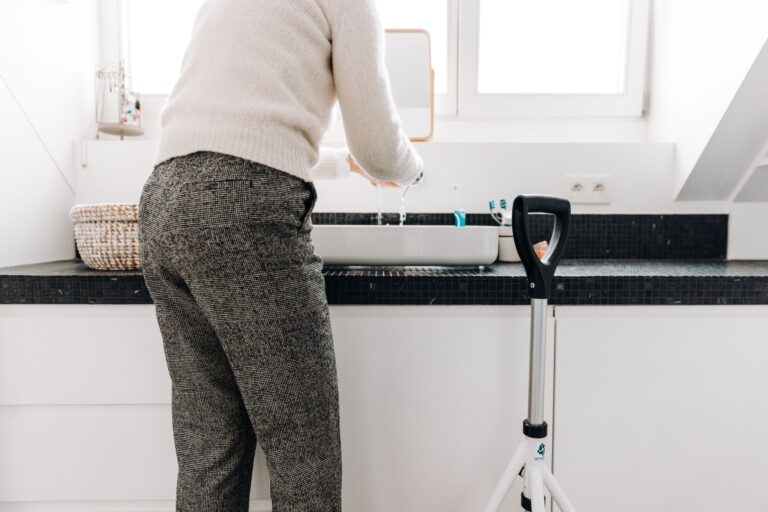
Kitchen safety for caregivers means understanding that someone with cognitive decline—whether from dementia, Alzheimer’s, or aging-related changes—can no longer safely perform familiar cooking tasks without support or environmental controls. The kitchen poses concentrated risks: stoves that get left on, hot surfaces, sharp tools, spoiled food, and fire hazards. A caregiver’s job is to prevent injuries while balancing the person’s desire for independence and dignity.
This requires both knowledge of specific dangers and practical modifications to the environment that reduce risk without constant surveillance. The stakes are significant. Falls are twice as likely to occur for seniors living with dementia, and people age 65 and older have a 2.5 times greater risk of dying in a kitchen fire compared to the general population. For caregivers, the knowledge of how cognitive changes translate into kitchen danger is the foundation of effective prevention.
Table of Contents
- How Does Cognitive Decline Create Kitchen Safety Risks?
- The Stove and Oven—The Highest-Risk Kitchen Appliances
- Burns, Scalds, and Hot Surface Injuries
- Falls on Kitchen Floors—A Common but Preventable Hazard
- Food Poisoning and Spoiled Food—A Risk That Grows With Age
- Sharp Objects and Cutting Injuries
- Medication Storage and Kitchen Safety
How Does Cognitive Decline Create Kitchen Safety Risks?
When someone begins to experience memory loss or cognitive changes, cooking is often one of the first activities where trouble becomes visible. They may forget they’ve turned on the stove, become distracted and not return to a task, or lose track of the steps required to complete a simple meal. Unlike healthy aging, dementia-related cognitive decline undermines the ability to multitask, recognize danger, and make safe judgments—such as knowing not to put the wrong type of pan in a microwave or discarding spoiled food.
The danger lies in the speed of deterioration. Early dementia affects executive function, which is essential for cooking: planning a sequence of steps, monitoring time, managing heat, and staying alert to hazards. Someone may have cooked safely for decades, but a change in their cognitive abilities can make them unsafe almost immediately. This is why a caregiver must act quickly when they notice cooking becoming difficult or when the person forgets tasks they’ve done thousands of times.
The Stove and Oven—The Highest-Risk Kitchen Appliances
The stove represents the single greatest kitchen hazard for someone with cognitive decline. Leaving a burner on without attention can lead to severe burns, fires, and smoke inhalation. Unlike a knife, which requires intention to cause harm, a hot stove can damage the kitchen and threaten everyone in the home if left unattended for even a few minutes. The solution is environmental control, not reliance on memory.
Common strategies include removing stove knobs entirely so the appliance cannot be turned on without a caregiver present, installing stove locks that prevent the burners from heating, or using stovetops equipped with automatic shut-off features that turn off the heat after a set time. Some families choose to turn off the gas supply to the stove when the person is unsupervised, making the appliance completely inaccessible. A limitation of these approaches is that they eliminate the person’s ability to cook independently or participate in meal preparation, which can affect their sense of autonomy and identity. Caregivers must weigh safety against independence, and for many, safety becomes non-negotiable when the risk of fire or serious burns is present.
Burns, Scalds, and Hot Surface Injuries
The kitchen contains multiple sources of extreme heat: boiling pots, simmering sauces, hot cookware, and steam from ovens. Older adults have slower reaction times and can be more sensitive to heat, which means a minor contact with a hot surface can cause a more severe burn than it would in a younger person. If someone has dementia, they may not remember to avoid a hot pan left on the counter, or they may pick up a pot without checking if it’s hot.
Scalding injuries from boiling water or steam are particularly dangerous because they cause deep burns that are prone to infection. A caregiver can reduce this risk by using the back burners on the stove when cooking, turning pot handles inward so they cannot be accidentally grabbed, and keeping the person away from the stove while cooking is happening. Installing safety devices like stove guards or using pots with locking lids can also help. The tradeoff is that some of these modifications make cooking less convenient for the caregiver and can slow meal preparation.
Falls on Kitchen Floors—A Common but Preventable Hazard
Falls are the leading cause of injuries in people older than 65, and the kitchen is a high-risk environment because floors become slippery from grease, oil, or water spilled during cooking and cleanup. A person with dementia may not notice a spill, may be distracted and lose their footing, or may have reduced coordination and balance due to both aging and cognitive changes.
Caregivers can prevent falls by keeping the kitchen floor clear of clutter, cleaning spills immediately, ensuring adequate lighting so the person can see the floor clearly, and using non-slip rugs or mats in areas prone to getting wet. Ensuring the person wears non-slip shoes rather than socks is another practical step. Unlike the stove, where complete restriction may be necessary, fall prevention typically relies on environmental changes and supervision that do not eliminate the person’s ability to move through the kitchen safely.
Food Poisoning and Spoiled Food—A Risk That Grows With Age
The immune system weakens with age, and older adults are more vulnerable to food poisoning and have a harder time fighting off infection if they do get sick. Someone with dementia may eat food that has spoiled, not remember whether they’ve already eaten, or forget to refrigerate prepared food. Bacteria in food left at room temperature can double every 20 minutes, which means a meal left on the counter for an hour can become unsafe. A caregiver must manage food storage and disposal carefully.
Keep hot foods at 135 degrees Fahrenheit and cold foods at 41 degrees Fahrenheit. Remove spoiled food from the refrigerator regularly, and clearly label leftovers with the date they were prepared. If the person has access to the kitchen, inspect the refrigerator and pantry frequently to identify foods that should be discarded. A limitation of this approach is that it requires constant vigilance—a caregiver cannot always be present to monitor what the person eats. For this reason, some families find it safer to restrict access to the kitchen and manage all food preparation themselves.
Sharp Objects and Cutting Injuries
Many older adults experience a decline in grip strength and dexterity, which increases the risk of dropping or mishandling knives and other sharp kitchen tools. Someone with dementia may also lose the judgment to handle sharp objects safely, using them inappropriately or forgetting that a knife is sharp.
The most straightforward solution is to lock knives, cheese shredders, graters, and other sharp implements in drawers or cabinets that the person cannot access. Store these tools only where a caregiver can retrieve them when needed for meal preparation. This virtually eliminates the risk of cutting injuries while the person is in the kitchen.
Medication Storage and Kitchen Safety
Medications are often stored in kitchen cabinets or drawers, and someone with dementia may confuse medications with food or forget that they have already taken their dose. Additionally, certain medications can cause side effects like dizziness, fatigue, or blurry vision that make it unsafe to cook or move around the kitchen. A caregiver should observe the person for red flags after they take medication and, if side effects are present, keep them out of the kitchen temporarily. Store all medications in a clearly labeled, dedicated container or drawer that is separate from food and is locked or difficult for the person to access.
Use a pill organizer to simplify medication schedules and make it clear which doses have been taken. If the person is experiencing medication side effects that impair their safety, speak with their doctor about alternative medications or dosing schedules. Educate yourself about all medications they are taking and the possible side effects, so you can respond quickly if something changes. Sources:.
- —
- *Dementia and Kitchen Safety:**
- [Kitchen Safety Tips for Dementia Care – Caregiver Action](https://www.caregiveraction.org/kitchen-safety-and-alzheimers-disease/)
- [Essential Kitchen Safety Tips for Dementia Care at Home – JEVS Human Services](https://www.jevshumanservices.org/essential-kitchen-safety-tips-for-dementia-care-at-home/)
- [Alzheimer’s and Dementia Home Safety Tips – Alzheimer’s Association](https://www.alz.org/help-support/caregiving/safety/home-safety)