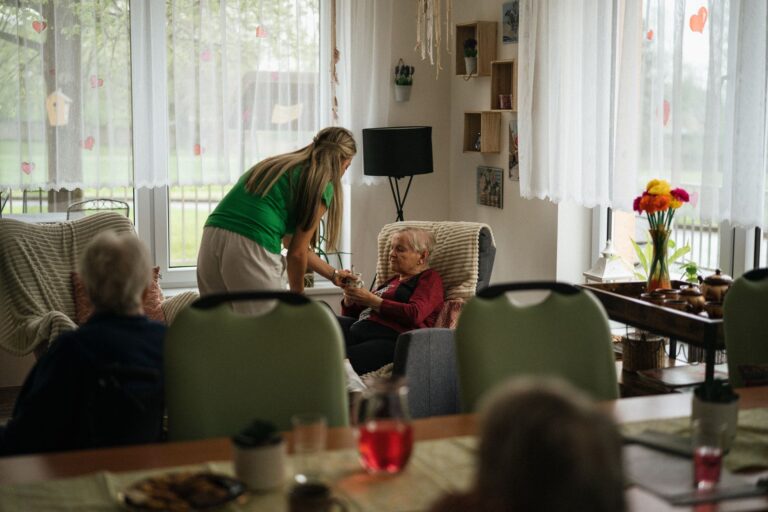
Compassionate communication in dementia means speaking and listening in ways that honor the person’s feelings and dignity, even when their memory and reasoning have changed. It’s about meeting someone where they are mentally—accepting their version of reality, validating their emotions, and letting go of the need to correct, argue, or convince them they’re wrong. When someone with dementia says their mother is still alive, or asks the same question for the tenth time, a compassionate response doesn’t point out the error; it acknowledges what they’re experiencing and responds with patience and warmth. This approach differs radically from how many of us are taught to communicate.
Most social interaction rewards pointing out facts, correcting misconceptions, and using logic to persuade. But in dementia, those tools backfire. A person whose short-term memory is failing cannot be reasoned back to “correct” thinking, and trying to do so often triggers anger, shame, and withdrawal. Compassionate communication replaces correction with connection.
Table of Contents
- Why Validation Matters More Than Facts in Dementia Communication
- The Hidden Cost of Correction and How It Damages Relationships
- Meeting Emotional Needs Behind Behavioral Changes
- Practical Techniques That Actually Work in Daily Moments
- The Pitfall of Speaking About the Person as If They’re Not There
- Adapting Your Approach as Dementia Progresses
- The Role of the Environment and Timing in Communication
- Frequently Asked Questions
Why Validation Matters More Than Facts in Dementia Communication
The single most powerful tool in dementia communication is validation—acknowledging the emotion behind someone’s words, regardless of whether the facts are accurate. If your father insists he needs to go to work at 9 p.m., even though he retired twenty years ago, the compassionate response isn’t to argue about the date or his career status. Instead, you might say, “It sounds like work was really important to you. Tell me about the job you did.” This approach reassures him that his feelings matter and his concerns are being heard, not dismissed. Research in dementia care has found that arguing about facts—even gently—increases agitation and can trigger emotional distress lasting hours. The person with dementia is not being stubborn or difficult; they genuinely cannot access the memory or logic you’re invoking.
Their brain isn’t choosing the “wrong” version of reality; it’s the only version available to them in that moment. By validating the underlying feeling instead of debating the fact, you reduce the person’s distress and maintain the relationship. A concrete example: Your mother says someone stole her purse. You know it’s in the drawer where she always puts it, but you also know from past experience that saying “No, it’s right here” will lead to accusations that you’re hiding it or calling her crazy. Instead, try: “That must be very frightening, losing your purse. Let’s look together.” Often, as you search, she’ll feel reassured by your presence and the search itself, and the panic fades. You’ve addressed her emotion without forcing her to accept a reality her brain has already rejected.
The Hidden Cost of Correction and How It Damages Relationships
Every time you correct someone with dementia—especially in front of others—you risk a cascade of shame, anger, and withdrawal that can last far longer than the original confusion. The person may not remember the facts you corrected, but they will remember the feeling of being wrong, embarrassed, or dismissed. Over repeated corrections, many people with dementia become withdrawn and depressed because every interaction feels like a failure. The limitation of validation is that it requires patience you may not always have, and it requires resisting the impulse to educate or fix.
If someone repeatedly insists on something false that creates practical problems—like refusing to eat because they’re convinced they just ate—validation alone won’t solve the problem. You may still need to redirect the person to the kitchen or offer food in a different way, but you do it while saying, “I understand you’re not hungry right now,” rather than arguing about whether they ate lunch. There’s also a risk that constant validation without any gentle redirection can enable dangerous behaviors. If your spouse insists on driving despite having advanced dementia and a revoked license, compassion doesn’t mean saying, “Yes, let’s go drive.” It means acknowledging their desire (“I know you love driving”) while redirecting to a safe alternative (“Let’s take a walk together instead, or I can drive us to get coffee”).
Meeting Emotional Needs Behind Behavioral Changes
Behavioral changes in dementia often reflect unmet emotional needs, not deliberate misbehavior. A person who becomes aggressive, withdrawn, or repetitive is frequently scared, uncomfortable, or trying to communicate something they can no longer express in words. Compassionate communication means looking past the behavior to the emotion underneath. A common example is someone who repeatedly accuses a family member of stealing or wanting to hurt them. This accusation can feel deeply personal and painful to the accused, but it usually signals fear or confusion, not a genuine belief rooted in logic. The person may be disoriented about who is caring for them, or they may be reacting to physical pain they can’t articulate.
Responding with hurt feelings or defensiveness (“How could you think I’d steal from you?”) escalates the situation. Responding with curiosity (“Tell me what happened”) and reassurance (“I’m here to keep you safe”) addresses the emotional core. Another example: An older woman with dementia repeatedly asks “Where am I?” every few minutes. Without compassionate communication, this can feel exhausting and futile—you’ve already answered this question a hundred times today. But the repetition usually isn’t a memory failure the person can control; it’s anxiety or disorientation that gets temporarily soothed by hearing a familiar answer. Each time you calmly answer, “You’re safe at home, I’m right here with you,” you’re temporarily relieving that anxiety, even if she’ll forget and ask again in ten minutes.
Practical Techniques That Actually Work in Daily Moments
Specific communication techniques can make dementia conversations smoother and kinder. One essential technique is the “yes, and” approach, borrowed from improvisational theater. Instead of contradicting, you acknowledge what the person said and gently add information. If your mother says, “We need to pick up the kids from school,” you don’t say, “No, the kids are grown now.” You say, “Yes, you were a wonderful mother to them. Right now, they’re all grown up with families of their own. Let’s have a cup of tea together.” Another practical approach is using simple, concrete language.
Instead of saying, “We’ll go to the doctor’s office this afternoon to check your blood pressure,” try: “After lunch, I’m taking you to see Dr. Smith. She’ll check your heart and make sure you’re healthy.” Fewer words, no abstract time concepts, a clear sequence. People with dementia often understand concrete, present-tense language much better than complex or future-focused sentences. Open-ended questions can backfire with someone whose language skills have declined. Asking “How was your day?” might result in silence or confusion because the question requires too much cognitive effort to organize a response. Instead, use yes-or-no questions or offer specific choices: “Did you enjoy breakfast?” or “Would you like tea or water?” This approach respects their cognitive capacity and makes connection easier for both of you.
The Pitfall of Speaking About the Person as If They’re Not There
One of the most damaging forms of communication happens when family members or staff talk about someone with dementia as though they’re invisible or unable to understand. Even people in advanced dementia often sense the emotional tone of conversations and may feel the sting of being discussed negatively. Someone may not remember your words five minutes later, but they’ll remember feeling disrespected or hurt. A warning: Avoid speaking in a condescending “baby talk” voice or using third-person language in front of the person, such as saying to another family member, “He’s had a difficult morning” while addressing the person directly.
This diminishes their dignity and can trigger shame or anger. Instead, speak directly to the person with respect, and if you need to discuss concerns with a family member or caregiver, do so privately. It’s also important to recognize that some people with dementia retain more comprehension than they can express. Someone may not be able to speak clearly or engage in conversation, but they may still understand tone, emotion, and respect. Treating everyone with dementia as though they’re able to perceive and feel—because many of them are—is both more humane and more effective at reducing agitation.
Adapting Your Approach as Dementia Progresses
Compassionate communication isn’t a one-size-fits-all approach; it must evolve as someone’s cognitive and communication abilities change. In early-stage dementia, validation and simple, direct language are usually sufficient. A person may be aware of their diagnosis and anxious about the future, so honest, gentle reassurance (“We’ll figure this out together”) is appropriate.
In mid-stage dementia, the person may have significant memory loss and confusion, but still engage in conversation. This is when techniques like “yes, and,” redirecting without correcting, and emotional validation become most important. In late-stage dementia, when someone may no longer speak or appear to recognize anyone, compassionate communication takes a different form—it’s about tone of voice, gentle touch, presence, and treating the person’s body and dignity with respect even if they seem unaware.
The Role of the Environment and Timing in Communication
The physical and emotional environment affects how well someone with dementia can understand and engage in communication. A loud, chaotic setting makes it harder for someone whose hearing or attention is already compromised to focus on your words. A calm, quiet space, good lighting, and one person speaking at a time all make a difference. If someone isn’t responding well to conversation, it may not be refusal or stubbornness—it may be sensory overload or fatigue.
Timing matters too. Many people with dementia have better cognitive function at certain times of day, often earlier in the morning. Trying to have a complex conversation or address a difficult topic when someone is tired or sundowning is unlikely to go well. Compassionate communication also means recognizing when the person is too distressed, tired, or overwhelmed to communicate effectively, and waiting for a calmer moment rather than pushing for conversation when they’ve shut down.
- —
Frequently Asked Questions
What should I do when my relative with dementia insists on something I know is false?
Avoid arguing about the facts. Instead, validate the emotion behind their belief and gently redirect. If they’re upset or frightened, address that feeling first. Correction rarely works and often increases agitation.
Is it okay to use “white lies” to comfort someone with dementia?
Yes, in many situations. If your mother asks where her deceased husband is and becomes distressed, saying “He’s at work, he’ll be home soon” is more humane than causing repeated grief by reminding her he’s dead. The goal is comfort and connection, not factual accuracy.
How do I stay patient when I’m exhausted from caregiving?
You don’t have to be perfect. Compassionate communication is an ideal to work toward, not a standard you must meet every moment. When you’re burnt out, it’s okay to take a break, ask for help, or acknowledge that you’re too tired to engage well. Self-care is part of treating the person with compassion.
What if my relative with dementia becomes aggressive when I try to communicate?
Aggression is usually a sign of fear, pain, or feeling threatened. Stay calm, don’t take it personally, and try to identify the trigger. Give space if needed, use a soft voice, and try again when everyone is calmer. If aggression is frequent or severe, talk to their doctor about possible causes or treatments.
Can someone with very advanced dementia still benefit from compassionate communication?
Absolutely. Even if someone seems unaware or unable to respond, your tone of voice, touch, and presence still matter. Treating them with dignity and gentleness, even if they don’t consciously remember it, is both ethically right and often helps reduce agitation. —