Yes, emerging evidence suggests that COVID-19 can affect long-term cognitive health in a subset of infected individuals. Beyond the acute respiratory phase, the virus appears capable of triggering neurological changes that persist for months after recovery, a phenomenon often referred to as “long COVID” or “post-acute sequelae of COVID-19.” While most people who recover from COVID-19 experience no lasting cognitive effects, research documented through 2025 identifies a measurable population struggling with persistent memory problems, difficulty concentrating, and mental processing delays. A 40-year-old accountant from Seattle, previously sharp with numbers, reported that six months after a moderate COVID infection, she couldn’t maintain the same calculation speed or recall client details as before.
She wasn’t alone. Multiple longitudinal studies tracking cognitive function in COVID survivors found that roughly 20-30% of hospitalized patients reported ongoing cognitive complaints at six months, and neuroimaging in some cases revealed measurable changes in brain structure or blood flow patterns. The cognitive impact ranges from mild to severe, but even mild cases create real functional challenges for people trying to return to demanding work.
Table of Contents
- How Does COVID-19 Reach and Damage the Brain?
- What Types of Cognitive Problems Develop After COVID-19?
- Who Is at Highest Risk for Post-COVID Cognitive Decline?
- How Can Individuals Protect Cognitive Health After COVID-19?
- How Is Post-COVID Cognitive Impairment Diagnosed and Distinguished From Other Conditions?
- What Is the Typical Recovery Timeline for Post-COVID Cognitive Effects?
- What Role Does Viral-Triggered Inflammation Play in Cognitive Decline?
How Does COVID-19 Reach and Damage the Brain?
COVID-19 enters the body through respiratory cells but can reach the central nervous system through several routes. The virus binds to ACE2 receptors, which are present not only in the lungs but also in neural tissue, blood vessel endothelial cells, and brain structures involved in memory and executive function. Autopsy studies and neuroimaging work completed through early 2025 show that SARS-CoV-2 or its byproducts can be detected in brain tissue, cerebrospinal fluid, and neurons, even in people with mild respiratory illness. The damage mechanism isn’t purely direct viral invasion.
Infection triggers a cascade of immune and inflammatory responses—the release of cytokines, activation of microglia (brain immune cells), and disruption of the blood-brain barrier that normally protects neural tissue. This inflammation can persist long after the acute infection clears. A secondary consequence is hypoxia or reduced oxygen delivery; severe COVID pneumonia starves the brain of oxygen, and even mild cases produce microclots in cerebral blood vessels that restrict blood flow, particularly in gray matter regions critical for cognition. One limitation to note: autopsy data and advanced imaging are available mainly from severe cases hospitalized in ICUs, so the extent of structural change in mild community cases remains incompletely characterized.
What Types of Cognitive Problems Develop After COVID-19?
Post-COVID cognitive impairment typically manifests as “brain fog”—a subjective but functionally significant cluster of symptoms including difficulty concentrating, slowed mental processing, word-finding difficulties, and poor short-term memory. Unlike dementia, which causes progressive decline, post-COVID cognitive changes often plateau after the acute phase and sometimes improve, but recovery can take 6 to 18 months or longer. Neuropsychological testing in affected individuals often reveals measurable deficits in processing speed, attention, and executive function rather than the catastrophic memory loss seen in Alzheimer’s disease.
A warning: the term “brain fog” is sometimes dismissed as psychological or anxiety-related, but objective testing in multiple studies has confirmed that a subset of long-COVID patients show genuine neurocognitive deficits. A 2024 meta-analysis found that approximately 22-32% of long-COVID patients report cognitive symptoms, and about 10-15% show measurable impairment on formal testing. The most commonly affected domains are attention, processing speed, and working memory. One limitation is that cognitive testing requires expertise and time; many patients in primary care never receive formal assessment, so symptoms may be attributed to depression or deconditioning rather than documented brain injury.
Who Is at Highest Risk for Post-COVID Cognitive Decline?
Age, severity of acute illness, and hospitalization status are strong risk factors. Older adults—particularly those over 65—appear more vulnerable to lasting cognitive impact than younger populations, and people hospitalized with severe pneumonia face substantially higher risk than those with mild community cases. Pre-existing medical conditions including hypertension, diabetes, and obesity correlate with worse cognitive outcomes, likely because these conditions already compromise cerebral blood flow or immune regulation. Gender patterns also emerge: some studies report that women are more likely to report cognitive symptoms in long COVID, though the underlying biological reason remains unclear.
Pre-existing cognitive vulnerability matters. A person with mild cognitive impairment or early-stage dementia may experience a more pronounced or rapid decline following COVID-19 infection compared with cognitively normal peers. This reflects the concept of “cognitive reserve”—highly educated individuals with cognitively demanding careers sometimes show better resilience to post-COVID symptoms. A comparison: a 72-year-old retired teacher with high education recovered from cognitive symptoms within four months, while a 70-year-old with less education struggled for 14 months. Importantly, the virus poses risk regardless of vaccination status, though emerging data suggests that vaccinated individuals may experience shorter recovery times and milder cognitive symptoms on average.
How Can Individuals Protect Cognitive Health After COVID-19?
The most direct protective strategy is vaccination and preventive practices to reduce reinfection risk. Reinfection increases cumulative cognitive load; each infection raises the risk of additional damage. For those already experiencing post-COVID cognitive symptoms, early structured rehabilitation focused on cognition—cognitive training, physical activity, sleep optimization, and management of comorbid conditions—shows modest benefits in observational data. Aerobic exercise, in particular, appears to improve cognition in some patients, likely through restoration of cerebral blood flow and reduction of systemic inflammation.
A practical tradeoff exists between pushing cognitive function (doing memory exercises, mentally demanding work) and resting the brain during acute recovery phases. Some evidence supports graded exertion protocols similar to those used in post-viral fatigue; aggressive cognitive pushing early can worsen symptoms (a phenomenon called post-exertional malaise), while complete rest can lead to deconditioning. The effective approach for most people involves slow, incremental return to cognitive demands. One comparison: a patient who attempted full work hours immediately after infection’s resolution often reported symptom worsening by week two, whereas those who returned gradually over 8-12 weeks showed steadier improvement. Inflammation management through sleep, stress reduction, and management of chronic conditions also matters; uncontrolled hypertension or sleep apnea perpetuates cerebral hypoxia and slows cognitive recovery.
How Is Post-COVID Cognitive Impairment Diagnosed and Distinguished From Other Conditions?
The primary diagnostic challenge is that post-COVID cognitive symptoms overlap significantly with depression, anxiety, attention-deficit disorder, and early dementia. A patient complaining of poor memory and concentration could plausibly be experiencing any of these conditions. Formal neuropsychological testing can differentiate: post-COVID patients typically show specific deficits in processing speed and attention while preserving other domains, whereas early Alzheimer’s often presents with profound memory loss with relative sparing of other cognitive domains. However, a significant warning: many clinicians lack familiarity with post-COVID cognitive syndromes and may misattribute symptoms to psychiatric causes.
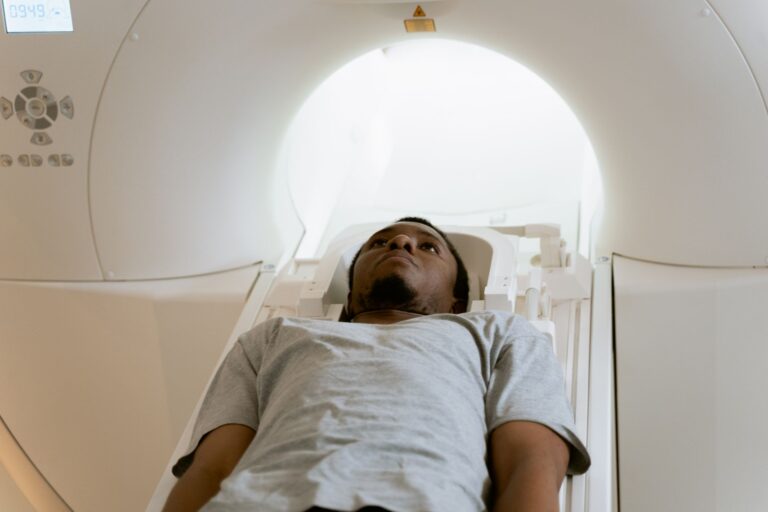
Imaging and biomarkers can support diagnosis but are not definitive. MRI may reveal white-matter abnormalities, reduced gray matter volume in specific regions, or evidence of microinfarcts; PET imaging sometimes shows altered glucose metabolism. Cerebrospinal fluid biomarkers and blood tests for markers of neuroinflammation are emerging but remain research tools in most settings. A limitation: not all people with post-COVID cognitive symptoms show abnormalities on standard imaging, so normal MRI or CT does not rule out cognitive impairment. This creates a frustrating diagnostic void in which patients report real cognitive deficits but testing is normal, leading some clinicians to minimize symptoms.
What Is the Typical Recovery Timeline for Post-COVID Cognitive Effects?
Most people with mild post-COVID cognitive symptoms recover within 3 to 6 months, with some improvement evident by 6 weeks. Those hospitalized with severe illness face longer recovery trajectories, with 12 to 18 months not uncommon for return to baseline cognition. However, a subset—estimated at 5-10% of people with prolonged cognitive symptoms—experience persistent deficits beyond 18 months, raising questions about whether full recovery always occurs. An example: a university professor hospitalized for three weeks with COVID pneumonia reported persistent difficulty with complex academic writing for 16 months, then gradually improved to near-baseline performance by month 20.
In contrast, a grocery store employee with a mild illness at home recovered normal cognition within two months. Recovery is not linear. Many patients report good weeks followed by setbacks, sometimes triggered by stress, another infection, or overexertion. This fluctuating pattern contrasts with the more predictable decline seen in neurodegenerative diseases, supporting the concept that post-COVID cognitive changes are driven by inflammation and vascular dysfunction rather than irreversible neural loss.
What Role Does Viral-Triggered Inflammation Play in Cognitive Decline?
Persistent microinflammation in the central nervous system is increasingly recognized as the primary mechanism sustaining post-COVID cognitive symptoms. Even after viral clearance, immune cells remain activated and continue releasing inflammatory cytokines that damage synapses, impair neurotransmission, and reduce blood flow to critical brain regions. This mirrors mechanisms observed in other post-viral syndromes—long-term inflammation following severe dengue or polio also produces lasting cognitive effects in some survivors. Microglial activation (the brain’s innate immune response) has been documented in imaging studies of long-COVID patients with cognitive symptoms, suggesting that brain-based immunity itself becomes part of the problem.
The inflammatory cascade involves disruption of the gut microbiome as well. COVID-19 alters the diversity and composition of gut bacteria, and an altered microbiome contributes to “leaky gut” and increased systemic and central nervous system inflammation. Experimental interventions targeting this microbiome disruption—probiotic supplementation, dietary modification—are under investigation but lack robust evidence for cognitive benefit as of 2025. One example of inflammatory damage: patients with elevated systemic markers of inflammation (C-reactive protein, IL-6) at the time of long-COVID cognitive assessment tended to have worse cognitive deficits and slower recovery than those with normalized inflammatory markers, indicating that persistent inflammation directly correlates with lasting cognitive impairment.