Reviewed by the Help Dementia Editorial Team — our editors review every article for accuracy against guidance from the National Institute on Aging, the Alzheimer’s Association, and peer-reviewed sources.
Exercise changes dramatically as dementia progresses, shifting from independent gym routines to assisted movement and gentle tactile engagement. In early stages, people with dementia may still take walks or swim independently, though they might need reminders or route simplification. By the middle stages, activities become more structured and require direct supervision, often reducing to walking, dancing, or water-based movement.
In advanced stages, exercise transforms into passive movement, stretching, and hand stimulation during bedside care—yet these gentle interventions still provide documented benefits for circulation, muscle tone, and emotional connection. The core challenge is that dementia affects both the desire to move and the ability to initiate movement. Someone in the early stages might forget they usually exercise, while someone in late-stage dementia may lack the motor control to stand or the cognitive awareness to understand what’s being asked of them. This means caregivers must shift from facilitation (reminding) to direct participation, then to providing movement for someone who cannot move themselves.
Table of Contents
- HOW EARLY-STAGE DEMENTIA CHANGES EXERCISE ROUTINES
- THE PHYSICAL AND COGNITIVE SHIFTS IN MIDDLE-STAGE DEMENTIA
- LATE-STAGE DEMENTIA AND PASSIVE MOVEMENT
- CAREGIVER-LED VERSUS INDEPENDENT EXERCISE
- COMMON OBSTACLES AND BEHAVIORAL CHALLENGES
- SPECIFIC ACTIVITIES THAT WORK ACROSS STAGES
- THE LONGER-TERM OUTLOOK ON DEMENTIA AND PHYSICAL FUNCTION
- Conclusion
HOW EARLY-STAGE DEMENTIA CHANGES EXERCISE ROUTINES
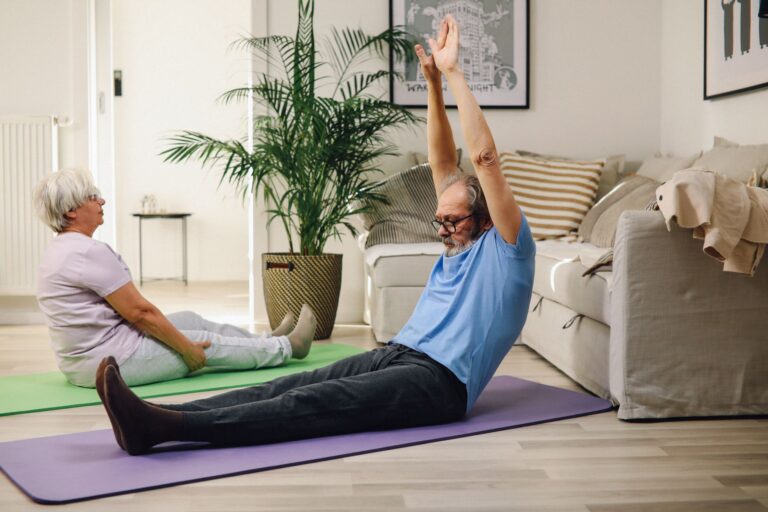
In early-stage dementia, individuals often retain significant physical ability but lose the cognitive scaffolding that makes independent exercise possible. Someone who walked daily for 30 years may forget to go, get lost on familiar routes, or lose interest without understanding why. Supervision and structure become necessary tools—not because the person is physically unable, but because memory loss disrupts the habit loop. Common activities that work well at this stage include walking (with consistent routes or a companion), water aerobics, dancing, tai chi, and gardening. These activities work because they involve familiar movements and external structure.
A person might not remember they exercise, but they may remember walking as something they do when asked, or they may feel motivated by being together with a walking partner. The key difference from their pre-diagnosis routine is that spontaneous self-initiation largely disappears. Someone who “just went for a run” before diagnosis now needs to be reminded, have shoes ready, and have a companion available. A practical limitation: many early-stage individuals become aware they’re losing abilities, which can create anxiety or resistance around exercise. Starting new activities during this stage is harder than maintaining existing ones, because new learning requires memory consolidation that’s already compromised. A person who swam regularly pre-diagnosis can usually continue swimming with supervision, but teaching a new water aerobics class may feel overwhelming or unfamiliar.

THE PHYSICAL AND COGNITIVE SHIFTS IN MIDDLE-STAGE DEMENTIA
Middle-stage dementia brings noticeable physical changes alongside cognitive decline—gait may slow, balance may worsen, and coordination becomes less precise. Simultaneously, comprehension diminishes, so verbal instructions become ineffective. Exercise at this stage requires hands-on guidance: a caregiver physically guiding movement, demonstrating actions, or using simple one-word prompts rather than explaining routines. Walking remains possible in middle-stage dementia, but it often requires different supports. Someone might lose their way quickly, walk into traffic, or wander without destination. Supervised walking in enclosed spaces (shopping malls, gyms, outdoor paths with fencing) becomes more practical than neighborhood walks.
Repetitive, rhythmic activities like stationary cycling or walking on a treadmill (with supervision) work well because they don’t require navigation or decision-making. Dance and music-based movement are particularly effective at this stage because rhythm can cue movement even when verbal instruction fails—a person who can’t follow “lift your left foot” might still step along to a familiar song. A significant limitation emerges here: fatigue increases. Middle-stage dementia involves neurological changes that increase cognitive load for any task. Even simple movement requires more mental effort, which means 20 minutes of activity might exhaust someone who formerly exercised for an hour. Pushing too hard creates burnout, frustration, and avoidance. Shorter, frequent bouts of activity (two 10-minute walks rather than one 20-minute walk) often work better than attempting to maintain pre-diagnosis exercise duration.
LATE-STAGE DEMENTIA AND PASSIVE MOVEMENT
In late-stage dementia, individuals typically lose the ability to initiate or sustain movement. Many cannot walk independently, follow instructions, or communicate exercise preferences. This doesn’t mean exercise stops—it transforms into passive movement, assisted stretching, and hands-on engagement that maintains physical function and provides sensory and emotional benefits. Passive range-of-motion exercises—where a caregiver gently moves the person’s arms, legs, and joints—prevent muscle contracture and maintain circulation. Seated movement, hand massage, and tactile stimulation are forms of exercise at this stage.
Dancing can continue, but now it’s close physical contact: the person seated while a caregiver leads their arm in gentle swaying, or holding hands while moving together to music. Some individuals in late-stage dementia retain surprising responsiveness to familiar songs, and movement paired with music may elicit emotional responses even when speech is gone. An important warning: without movement, late-stage dementia individuals rapidly develop pressure sores, blood clots, and muscle wasting. However, aggressive exercise can also be harmful—a person on certain medications, with uncontrolled pain, or with advanced physical decline may be harmed by too much movement. A healthcare provider should assess what passive movement is safe, as intensity must be carefully calibrated.

CAREGIVER-LED VERSUS INDEPENDENT EXERCISE
The caregiver’s role grows from facilitator to active participant as dementia advances. In early stages, a caregiver might manage scheduling (“Let’s walk now”) and safety awareness (staying on known routes). By middle stages, a caregiver is physically guiding movement, providing one-on-one supervision, and adapting activity moment-to-moment based on the person’s response. In late stages, the caregiver is the primary mover, providing passive motion and handling the person’s body directly. This shift has practical and emotional implications.
Early-stage exercise can sometimes accommodate group settings (dementia-friendly fitness classes exist), which reduces the caregiver burden. Middle-stage often requires one-on-one attention, pulling time away from other responsibilities. Late-stage passive movement can theoretically be done by nursing staff if the person is in facility care, but many family caregivers continue doing this hands-on work, viewing it as connection and care. A tradeoff worth acknowledging: intensive supervision is necessary for safety and effectiveness, but it’s exhausting for caregivers. A caregiver spending an hour guiding their spouse through walking and movement is providing real therapy, but they’re also burning out. Professional support—aide time, facility care, or respite programs—isn’t a luxury at this stage; it’s essential for sustainable care and for the caregiver’s own health.
COMMON OBSTACLES AND BEHAVIORAL CHALLENGES
As dementia progresses, some individuals develop resistance to exercise. They may refuse to get out of chairs, become agitated during standing or walking, or express discomfort that prevents activity. This resistance often stems from real sources: balance fear, pain, confusion about what’s being asked, or the general apathy and amotivation that dementia brings. Forcing exercise against resistance creates trauma and deepens avoidance. Solutions require flexibility. If walking causes agitation, try seated movement.
If the person dislikes being touched, try movement they can see happening (watching a caregiver dance, or the person moving their own arms to music). If they have pain, address pain first—exercise won’t help if a person is hurting. Many caregivers find that exercise works best when it’s integrated into daily activities (walking to meals, climbing stairs to the bathroom) rather than structured as a separate “exercise session.” A person with dementia may refuse “exercise” but participate happily in walking to help prepare dinner. A real warning: some individuals experience increased confusion or agitation after exercise, especially if they’re already fatigued or if the activity was too intense. This doesn’t mean exercise is harmful overall, but it means intensity and duration must be carefully matched to the individual. Pushing a middle-stage person into a 45-minute fitness class because they need exercise may backfire, creating confusion and distress that outweighs physical benefits.

SPECIFIC ACTIVITIES THAT WORK ACROSS STAGES
Certain activities translate across dementia stages better than others. Walking adapts from independent to supervised to passive (moving legs during bedside care). Gardening starts as active digging and planting, becomes watching and touching plants with guidance, then becomes sensory engagement (touching leaves, smelling flowers). Music and dance similarly progress from active participation to swaying, hand-holding, and listening. Water-based activities are exceptionally valuable.
Early-stage individuals often swim or water walk independently with minimal supervision. Water provides buoyancy that reduces joint stress, making movement easier and less painful. Middle-stage individuals can participate in water aerobics with supervision, enjoying the social and physical benefits. Late-stage individuals can sit in warm water while a caregiver gently moves their limbs—the warmth and flotation are themselves therapeutic. The barrier is access: not all facilities have pools, and transport to one can be complicated in advanced dementia.
THE LONGER-TERM OUTLOOK ON DEMENTIA AND PHYSICAL FUNCTION
Research increasingly shows that consistent movement—even gentle, passive movement—correlates with slower physical decline in dementia. People who exercise regularly tend to maintain walking ability longer, have fewer falls, sleep better, and show less behavioral agitation. This isn’t a cure, but it’s a meaningful difference in quality of life and independence duration.
The challenge is sustaining exercise motivation when the person with dementia cannot self-initiate and when caregiving is demanding. Looking forward, specialized dementia fitness programs are growing—gyms offering dementia-friendly classes, facilities with trained staff who understand dementia’s effect on exercise, and research exploring which interventions (tai chi, dancing, aquatic therapy) provide the most benefit. As dementia becomes more prevalent, the standard of care is shifting away from sedentary models toward movement-integrated care, even for advanced dementia.
Conclusion
Exercise across dementia stages is not one approach but a spectrum of adaptation. Early-stage individuals need structure and reminding to maintain activity they’re still capable of. Middle-stage requires hands-on guidance and shorter, more frequent activities. Late-stage transforms exercise into passive movement and sensory engagement, which still benefits the body and the emotional connection between caregiver and care recipient.
In every stage, the goal shifts from fitness to maintaining function, preventing decline, and sustaining dignity and connection. If your family member is living with dementia, starting movement early—even gentle, supervised movement—establishes habits and preserves ability longer. Talk with their doctor about what activities are safe and realistic, adjust expectations as abilities change, and don’t underestimate the power of simple things: walking together, dancing to a favorite song, or gentle hand-stretching during a quiet moment. Exercise in dementia care is as much about relationship and presence as it is about physical activity.
You Might Also Like
- What Housing Options Exist After Dementia Diagnosis?
- Can Dementia Affect Housing Decisions?
- Can Dementia Patients Benefit From Routine Exercise Classes?
For more, see CDC — Alzheimer’s and Dementia.