Reviewed by the Help Dementia Editorial Team — our editors review every article for accuracy against guidance from the National Institute on Aging, the Alzheimer’s Association, and peer-reviewed sources.
Cognitive decline raises voting rights questions because the progressive loss of memory, reasoning, and decision-making abilities challenges a fundamental democratic principle: who has the right to vote and on what basis should that right be removed? Unlike citizenship or age—objective criteria for voting eligibility—cognitive capacity exists on a spectrum, making it difficult to draw a clear legal line. A person with early-stage Alzheimer’s disease might retain the ability to express a voting preference one year but lose it the next, creating uncertainty for voters, their families, poll workers, and election officials about when, if ever, voting rights should be restricted. The legal answer in the United States is straightforward in principle but complicated in practice: cognitive decline alone does not automatically disqualify someone from voting. Under the Voting Rights Act of 1965, the standard for voting capacity is functional—specifically, “the ability to express a preference.” This means that individuals with mild cognitive impairment, early Alzheimer’s disease, or other forms of dementia retain their voting rights as long as they can understand the voting process and indicate their choice, with assistance if needed.
However, this functional standard creates ongoing policy debates about how to assess capacity at different stages of decline, who makes those assessments, and how to protect voting rights while preventing potential exploitation. The tension reflects a broader conflict in elder law and disability rights: balancing autonomy and protection. Families watching a parent’s cognitive abilities fade face agonizing questions about whether their loved one should still vote. Election administrators struggle with limited guidance on how to recognize and support voters with cognitive impairment. And policymakers continue to wrestle with defining precise metrics that would trigger an assessment, knowing that any quantitative threshold could result in disenfranchisement.
Table of Contents
- How Does Cognitive Decline Affect Voting Capacity?
- What Is the Legal Standard for Voting Rights When Cognition Declines?
- What Happens When Voting Capacity Is in Question?
- How Can Families and Caregivers Support Voting Rights?
- What Are the Warning Signs That Voting Capacity May Be Declining?
- What Are the Ongoing Policy Debates?
- Moving Forward: Protecting Voting Rights in an Aging Population
- Conclusion
How Does Cognitive Decline Affect Voting Capacity?
Cognitive decline affects voting capacity along multiple dimensions that don’t decline uniformly. Memory loss, reduced processing speed, difficulty with complex reasoning, problems with attention and concentration, and impaired judgment can all interfere with voting, but not necessarily all at once or at the same rate. A person in the early stages of cognitive impairment might remember candidates’ names and policy positions but struggle with the mechanics of actually casting a ballot. Someone else might understand the voting process perfectly but have difficulty evaluating candidates or retaining information long enough to make a choice at the polls. Research published in 2022 in a peer-reviewed study examined voting capacity in 391 older adults—88 who were cognitively healthy, 150 with Mild Cognitive Impairment, and 153 with Alzheimer’s dementia.
Using the CAT-V assessment tool, researchers found that voting difficulties were significantly associated with cognitive status. Specifically, a CAT-V question related to an MMSE cutoff score of 19.50 showed 92.5% sensitivity and 77.20% specificity in identifying those with voting challenges. The study demonstrates that standardized tools can help clinicians and families understand when cognitive decline may be affecting the ability to vote, though it also shows that no single cutoff score captures everyone accurately. The practical reality is that cognitive decline creates a gray zone. A spouse might notice their partner asking the same questions about candidates repeatedly, or struggling to remember why they wanted to vote for someone an hour after deciding. These observations don’t necessarily mean voting capacity is gone, but they signal the need for a careful conversation about whether assistance is needed at the ballot box.

What Is the Legal Standard for Voting Rights When Cognition Declines?
The legal standard in the United States is functional capacity, not medical diagnosis. This is a critical distinction that protects many people with cognitive conditions. Medical diagnoses—mild cognitive impairment, Alzheimer’s disease, vascular dementia, Lewy body dementia—do not automatically preclude someone from voting. The law does not say, “If you have been diagnosed with dementia, you cannot vote.” Instead, it asks, “Can this person express a voting preference?” If the answer is yes, they retain voting rights. Under the Voting Rights Act of 1965, individuals with cognitive impairment have the right to receive voting assistance from a person of their choice. This might be a family member, a friend, or a trusted aide who can help the voter mark their ballot, operate voting machinery, or understand candidate information.
The voter themselves must still express the preference—the assistant provides support, not substitution. This safeguard is meant to protect voting rights while preventing someone else from imposing their choice onto the voter. However, a significant limitation is that many states and local jurisdictions lack clear, consistent guidelines for assessing functional capacity at the polls. Poll workers may not know what questions to ask or what evidence of incapacity would require intervention. This inconsistency means that protection of voting rights depends partly on where someone lives and whether poll workers are trained to recognize both cognitive impairment and retained capacity. A voter with early dementia might be permitted to vote in one precinct but challenged in another.
What Happens When Voting Capacity Is in Question?
When voting capacity becomes uncertain, the decision often falls to the person themselves, their family, or polling place staff. Some families have proactive conversations before cognitive decline makes decision-making difficult, establishing the voter’s wishes about when and whether they should stop voting. Others face the question only when a caregiver notices confusion or concerning behavior at the polls. In Canada, where voting rights protections were examined specifically during the 2025 election cycle, the approach is to protect voting rights universally for all adult citizens regardless of cognitive status, provided that the person can express a preference. This reflects an international trend toward inclusive voting rights, recognizing that cognitive impairment exists on a spectrum and that the capacity to make a voting choice is separate from the capacity to manage other life decisions.
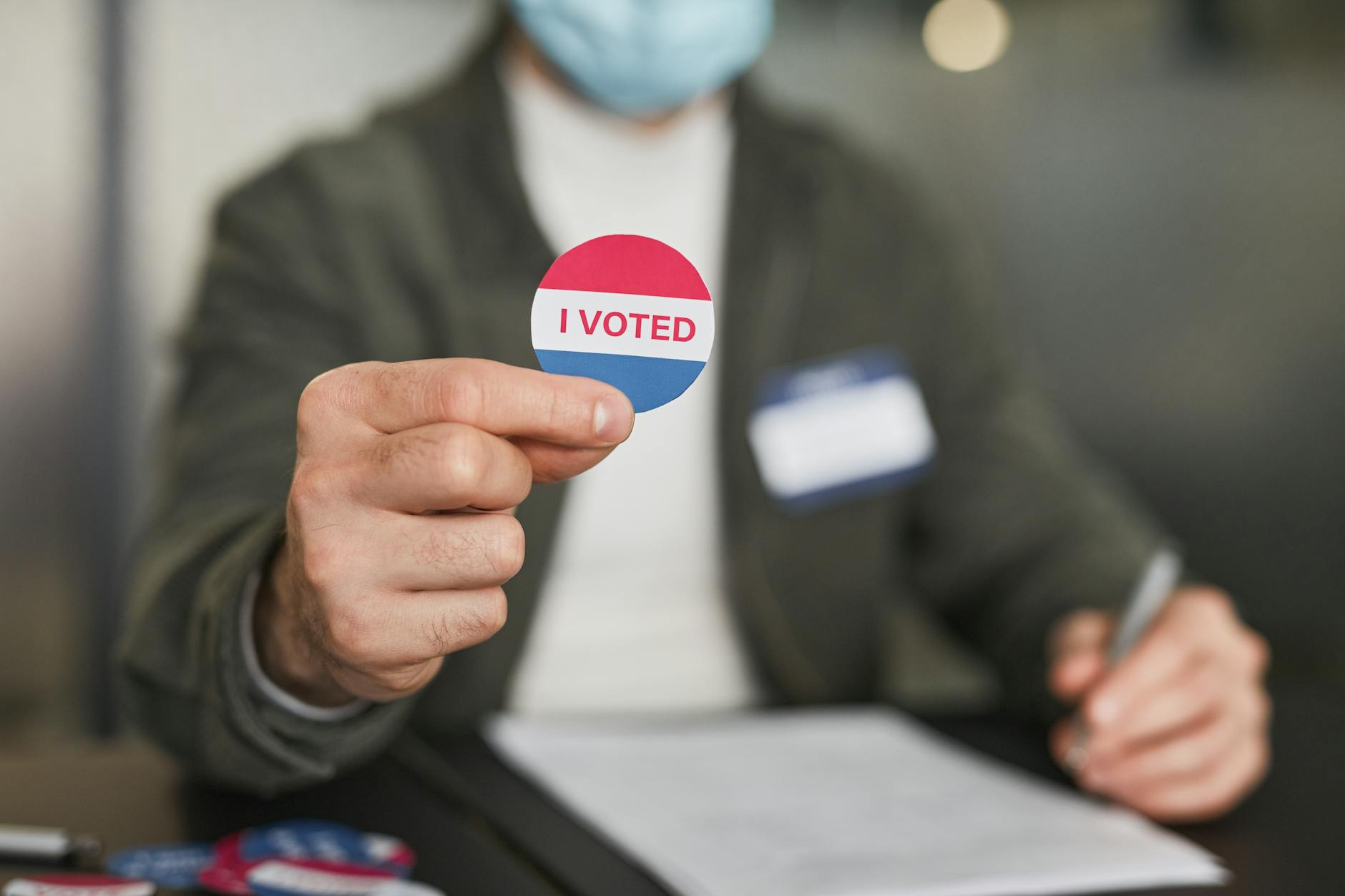
The practical example is common: Margaret, 79, has early Alzheimer’s disease and still lives in her own home with weekly check-ins from her daughter. When the local election approaches, Margaret says she wants to vote. Her daughter accompanies her to the polls and helps her understand the candidates and ballot format, but Margaret makes her own marks and casts her own ballot. The polling place accepts her vote because she demonstrated the ability to express a preference. In this scenario, Margaret’s voting rights are protected and her choice is honored.
How Can Families and Caregivers Support Voting Rights?
Supporting voting rights for someone with cognitive decline requires a compassionate balance between respecting autonomy and preventing potential problems. One approach is to have conversations early, before significant cognitive loss occurs, about whether voting is something the person values and wants to continue. Some people express that voting is important to their identity and want to participate as long as possible; others may be relieved to hand that responsibility to family. These conversations, documented in writing if possible, can guide family decisions later. When someone wants to continue voting despite cognitive decline, caregivers can provide graduated support.
This might start with gathering candidate information and discussing it with the voter at home, allowing them to think about choices over several days rather than making decisions on the spot at the polls. It might include practicing with the ballot at home or visiting the polling place during early voting when lines are shorter and poll workers may have more time to provide assistance. For people with significant impairment, accompany them to the polls as a permitted assistant, helping them navigate the physical and informational demands while allowing them to express their own choices. The comparison is useful here: caregiving for voting is similar to caregiving for other activities. We don’t take away someone’s right to go to restaurants because they have trouble reading menus; we help them read it. Similarly, cognitive decline alone doesn’t eliminate voting rights; it may require accommodation and support, which the law explicitly allows.
What Are the Warning Signs That Voting Capacity May Be Declining?
Warning signs that cognitive decline may be affecting voting capacity include asking repeated questions about candidates (indicating memory loss), expressing confusion about when or where to vote, difficulty following the voting process even with explanation, being easily persuaded to vote contrary to previously stated preferences, or showing signs of being overwhelmed by the amount of information involved. Not all of these signs mean voting should stop; they mean more support may be needed. Another warning is when someone expresses confusion about why they’re voting or seems unable to connect their vote choice to any reasoning. If asked, “Why do you want to vote for this candidate?” and the response is vague, repetitive, or inconsistent with what they said minutes before, it may indicate that cognitive impairment is affecting the ability to make an informed choice.
This is different from voter confusion generally—many voters struggle to articulate their reasoning—but in the context of documented cognitive decline, it’s worth noting. A limitation of these warning signs is that they’re subjective and open to misinterpretation. Family members may overestimate decline out of concern for safety, or underestimate it out of a desire to respect autonomy. The gold standard would be a standardized functional assessment performed by someone trained in cognitive evaluation, but this rarely happens in practice. Most decisions happen based on family observation and instinct.

What Are the Ongoing Policy Debates?
The central policy debate is about how to establish objective metrics for voting capacity without creating barriers that exclude people who still have the ability to vote. Researchers and advocates argue about whether cognitive test scores should trigger automatic assessments, whether specific diagnoses should prompt polling place protocols, and how much cognitive decline is “too much” to allow voting. The fear, well-founded in disability rights history, is that any standardized threshold will be applied too broadly, stripping voting rights from people who could still vote with support. Another debate concerns who should assess capacity.
Should it be medical professionals, family members, poll workers, or some combination? Each option has trade-offs. Medical assessment is objective but expensive and not universally available. Family assessment is practical but potentially biased. Poll worker assessment creates inconsistency and relies on training that most jurisdictions don’t provide.
Moving Forward: Protecting Voting Rights in an Aging Population
As populations age globally and dementia prevalence increases, voting rights protections for people with cognitive decline will become increasingly important. Some countries and jurisdictions are developing better training for poll workers, clearer guidance on functional assessment, and more accessible voting options (like early voting or mail-in voting) that allow people more time and fewer distractions to vote.
Others are exploring how to document voting preferences when someone is still capable, so those wishes can guide decisions later if capacity declines significantly. The future likely lies in meeting people where they are: recognizing cognitive decline on the spectrum it occupies, providing tiered support based on individual needs, and maintaining a strong presumption that voting rights are protected unless there is clear evidence of a complete inability to express a preference. This approach honors both the fundamental right to vote and the reality of cognitive change across the lifespan.
Conclusion
Cognitive decline raises voting rights questions because it challenges the basic legal framework for voting eligibility. The law says that medical diagnosis doesn’t remove voting rights—only loss of the ability to express a preference does. This functional standard protects many people with dementia and cognitive impairment, but it also creates uncertainty about how to assess capacity fairly, who should make those assessments, and how to balance autonomy with protection against coercion or exploitation.
Families, caregivers, and voters themselves must navigate a gray zone where decline is gradual, support is variable, and the stakes are high. The path forward requires clearer guidance, better training for those who work with voters, and a strong commitment to the presumption of voting rights for people with cognitive impairment. For families facing these questions now, the best approach is to have early conversations about what voting means to their loved one, to provide graduated support as cognitive decline progresses, and to remember that assisting someone to vote is not the same as voting for them. Voting rights, for people with cognitive decline as for everyone, rest on the foundation of respecting individual choice—even when that choice requires help to express.