Reviewed by the Help Dementia Editorial Team — our editors review every article for accuracy against guidance from the National Institute on Aging, the Alzheimer’s Association, and peer-reviewed sources.
Planning a dementia-friendly trip means choosing destinations that reduce confusion and overwhelm while maintaining the familiar routines and support systems your loved one depends on daily. Rather than eliminating travel altogether, a dementia-friendly approach adapts destinations, transportation, accommodation, and activities to match the person’s cognitive abilities, medical needs, and emotional comfort level. The goal is not elaborate sightseeing—it’s creating a safe, predictable experience where the person with dementia feels secure and where you can actually enjoy time together without constant crisis management.
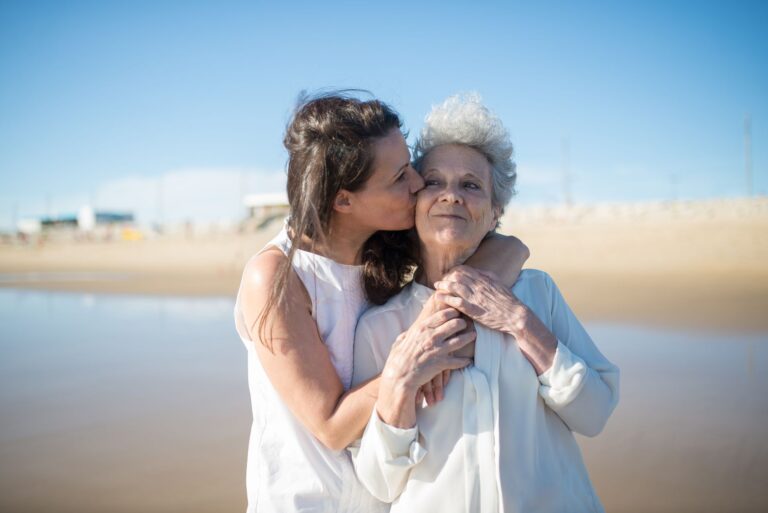
For example, a dementia-friendly trip might look like spending a long weekend at a beach cottage the family has visited before, maintaining morning coffee at 7 a.m., afternoon naps at 2 p.m., and dinner at 5:30 p.m.—rather than booking flights to five European capitals with 2 a.m. arrivals and constant hotel changes. The comfort of familiar rituals, a single location, and a small trusted group often matters far more than novelty or variety.
Table of Contents
- When Should You Start Planning a Dementia-Friendly Trip?
- Choosing a Destination That Won’t Cause Distress
- Who Should Come Along and What Are Their Roles?
- How Do You Maintain Medication and Medical Schedules During Travel?
- What Behavioral Changes Should You Expect and How Do You Prepare?
- Documentation and What to Carry
- Making the Most of Time Together While Traveling
- Conclusion
When Should You Start Planning a Dementia-Friendly Trip?
Begin planning at least 6 to 8 weeks before your travel date. This timeline allows you to assess your loved one’s current cognitive and physical abilities, arrange specialized transportation or equipment if needed, confirm caregiver availability, and secure any medical records or prescriptions required for travel. Starting early also gives you time to make multiple trial runs of shorter outings to gauge how your loved one responds to changes in environment and routine. Early planning is critical because dementia changes rapidly and unpredictably.
Someone who was capable of a week-long trip three months ago may now experience significant confusion or anxiety during travel. You’ll need time to adjust your plans accordingly—shortening the trip, adding a second caregiver, or pivoting to a destination closer to home. Attempting to plan a trip just two weeks out often forces you to make rushed, risky decisions or cancel entirely. The difference between planning ahead and scrambling last-minute can mean the difference between a manageable experience and a traumatic one for both the person with dementia and their caregivers.

Choosing a Destination That Won’t Cause Distress
Select a destination that is geographically close (within 1 to 3 hours), preferably somewhere the person with dementia has been before or has an emotional connection to. Familiar places activate long-term memory and reduce the cognitive load of processing a completely new environment. If you must go somewhere new, choose a place that is quiet, low-stimulation, and smaller rather than a busy urban center or major tourist destination. A major limitation of dementia travel is the person’s reduced ability to cope with high-stimulation environments.
Traveling to a major city like New York or Las Vegas, where there are constant crowds, bright lights, loud noises, and rapid changes in scenery, can trigger anxiety, agitation, sundowning (increased confusion in the evening), and aggressive behavior. A person with mid-stage dementia who remains calm at home may become combative in a bustling airport or hotel lobby. Similarly, weather changes can have profound effects—sudden heat, extreme cold, or significant changes in humidity can cause confusion and behavioral deterioration in people with dementia. A beach trip to a hot, humid climate in summer might be too physiologically stressful for someone whose dementia is already affecting their ability to regulate body temperature perception.
Who Should Come Along and What Are Their Roles?
Plan for at least one dedicated primary caregiver per person with dementia, and consider a second caregiver if the person requires significant assistance with personal care or has a history of wandering or aggressive responses to transitions. This is not a trip where you can divide caregiving duties lightly. Assign specific roles: one person manages logistics and transportation, another stays close to the person with dementia during activities, and ideally a third person handles meal preparation and medication timing. The key advantage of traveling with a familiar caregiver—ideally someone the person sees daily—is that their presence alone can reduce anxiety and disorientation.
However, a serious warning: caregivers themselves become exhausted during travel, and an exhausted caregiver makes poor decisions and misses warning signs of distress. A 60-year-old daughter traveling alone with her mother with dementia may reach a breaking point on the second day when her mother refuses to get out of bed and becomes verbally abusive. Building in a professional caregiver or a second family member isn’t luxury; it’s safety planning. The tradeoff is cost and coordination complexity, but that’s preferable to a crisis.

How Do You Maintain Medication and Medical Schedules During Travel?
Create a detailed medication list that includes the person’s name, each medication, dosage, timing, reason for taking it, and your doctor’s name and contact information. Bring twice as much medication as you’ll need, split between two separate bags in case one is lost. Request a letter from your doctor that explains your loved one’s condition and lists all medications—this is invaluable if you need emergency medical care or if medications are questioned at airport security. Set medication alarms on your phone and keep medications in a weekly pill organizer or automated dispenser if the person cannot self-manage.
The tradeoff here is rigidity versus flexibility: maintaining exact medication timing (e.g., always at 8 a.m., noon, and 8 p.m.) provides safety and consistency, but it also locks you into a schedule that may not align with the person’s sleep patterns during travel. A person who normally wakes at 7 a.m. at home might sleep until 9 a.m. in a new environment. The practical compromise is allowing a 30-minute window around medication times rather than insisting on precision to the minute, which reduces stress for everyone while still maintaining safe dosing intervals.
What Behavioral Changes Should You Expect and How Do You Prepare?
Expect confusion about where the person is, why they’re there, and who is around them. Early morning sundowning becomes more pronounced during travel. Some people with dementia become unusually quiet or withdrawn; others become agitated, accusatory, or sexually inappropriate. Others experience rapid mood swings—calm one moment and furious the next. These aren’t character flaws or intentional misbehavior; they’re direct results of neurological damage and the stress of an unfamiliar environment.
A critical warning: never assume a behavioral change means a medical emergency or that you should cut the trip short unless there’s genuine danger. Someone who is upset and confused in a hotel room might calm down after their familiar caregiver sits with them and uses comfort language. However, you must also recognize genuine red flags—difficulty breathing, chest pain, severe inability to swallow, uncontrolled vomiting, loss of consciousness—which do require immediate emergency care. Many families make the mistake of overreacting to emotional distress or confusion and rushing to the ER, only to learn the person was frightened but medically stable. Others underreact to real warning signs. Communicate with your loved one’s doctor before the trip about what constitutes a medical emergency versus what constitutes normal dementia behavior during stress.

Documentation and What to Carry
Bring copies of insurance cards, a current photo of the person with dementia, a list of emergency contacts, and a summary of their medical history and diagnoses. Keep a written description of the person’s appearance, any distinguishing marks, and their name clearly labeled in a bag or jacket in case they wander or become separated from you. Some families use medical ID bracelets; others use AirTags or GPS devices designed for people at risk of wandering.
For example, one family traveling from Ohio to visit relatives in Pennsylvania kept a laminated card in their mother’s purse with a photo, her name, her home address, phone numbers for two adult children, and a brief description: “I have dementia. Please call [number]. I am confused and need help.” When she wandered away from the cottage for 20 minutes, a neighbor found her confused in his driveway, read the card, and called the family immediately. Without that card, the family would have had a far more frightening situation.
Making the Most of Time Together While Traveling
Focus on simplicity and presence rather than activities or accomplishments. The goal of a dementia-friendly trip is not to “do” things or check off a list—it’s to reduce stress for your loved one and spend calm, connected time together. A successful trip might involve sitting on a porch together, taking a slow walk on a familiar path, listening to music, or looking through old photo albums. These activities are meaningful precisely because they don’t demand complex cognitive function.
As dementia progresses and travel becomes riskier or more distressing, redefine what “travel” means for your family. A trip doesn’t have to involve sleeping away from home. It can be a drive to a park, a visit to a family member’s house nearby, or even carefully planned activities within your own town. Some families create a “staycation” at home that mimics the feeling of travel—rearranging furniture, doing special meals, or temporarily changing routines just enough to feel novel without being overwhelming. The future of dementia travel for many families involves shorter trips, closer destinations, and lower expectations—and that’s not a failure; that’s adaptation.
Conclusion
Planning a dementia-friendly trip is fundamentally about alignment between the person’s cognitive and physical abilities and the demands of the experience. Success looks like a person who feels safe, whose routines are maintained or minimally disrupted, who experiences no medical crises, and who spends calm time with people they trust. This often looks smaller and quieter than family vacations you took before the dementia diagnosis—and that’s the reality you’re adjusting to, not something to resist with denial or guilt.
Start planning 6 to 8 weeks ahead, choose a close and familiar destination, bring enough support staff that no single person is overwhelmed, and expect behavioral changes without panicking. Your loved one with dementia may never say “I’m glad we took this trip,” because memory of it may not stick. But they will feel the difference between a calm day spent in a familiar place with trusted people and the chaos of an inappropriate environment. That’s what you’re actually traveling for—not the memory, but the moment itself.