Reviewed by the Help Dementia Editorial Team — our editors review every article for accuracy against guidance from the National Institute on Aging, the Alzheimer’s Association, and peer-reviewed sources.
Dental problems in people with dementia often present as increased agitation, behavioral changes, or what caregivers interpret as worsening cognitive symptoms—when in reality, the person is experiencing pain they cannot effectively communicate. Tooth decay, infections, ill-fitting dentures, and gum disease create real physical discomfort that manifests through restlessness, anger, verbal outbursts, or withdrawn behavior rather than verbal complaints about a toothache. A 92-year-old woman with moderate dementia whose daughter noticed her becoming increasingly combative during meals was actually responding to a tooth abscess that had gone unnoticed for weeks; once treated, her “behavioral problems” resolved completely.
This confusion between dental pain and dementia-related agitation is one of the most commonly overlooked diagnoses in elder care. Because people with advanced dementia may lose the ability to report oral pain directly, caregivers and medical providers often attribute behavioral escalation to disease progression rather than investigating underlying dental causes. Understanding what dental problems look like when filtered through dementia behavior is essential for preventing unnecessary medication increases and ensuring the person gets appropriate treatment.
Table of Contents
- How Dental Pain Gets Masked by Dementia Communication Loss
- Common Dental Problems That Mimic Behavioral Decline
- The Agitation Pattern That Points to Dental Problems
- Evaluating Dental Health When Behavior Changes Occur
- The Infection Risk and Serious Complications
- Dental Decay and Dementia Progression Connection
- Proactive Dental Care as Part of Dementia Management
- Conclusion
How Dental Pain Gets Masked by Dementia Communication Loss
In people with intact cognition, a toothache triggers a clear complaint: “My tooth hurts.” In someone with dementia, especially moderate to advanced stages, that same problem becomes translated into behavioral output—aggression, refusing to eat, hitting during care, or sudden anxiety spikes. The person’s brain registers pain, but the verbal pathway to describe it has been damaged or disconnected. Pain becomes noise that comes out sideways through behavior. This translation happens because dementia damages the language centers and executive function needed to identify, name, and report internal sensations. Instead of saying “my lower molar is throbbing,” the person might shout, resist care, or become inconsolable.
Family members and staff may interpret this as “dementia is progressing” or “they’re having a bad day,” when the actual cause is acute dental distress. A 75-year-old man with Alzheimer’s who began refusing all meals and became hostile during tooth brushing was found to have three cavities and significant gum recession—conditions that would cause obvious pain in someone able to communicate about them. The challenge deepens because people with dementia often cannot point to where they hurt or cooperate during a dental exam. They may resist a caregiver’s attempt to look inside their mouth, making the problem invisible until it becomes severe. By the time dental disease is discovered, it has often progressed beyond simple treatment to infection or tooth loss.

Common Dental Problems That Mimic Behavioral Decline
Tooth decay and cavities are the most frequent culprits, causing localized pain that worsens with hot, cold, or pressure from chewing. When these conditions develop in someone with dementia, the person cannot tell you about sensitivity; instead, they might refuse warm or cold foods entirely, becoming increasingly frustrated with mealtimes. They might also display pain-related agitation at seemingly random times—the pain spikes, and they lash out or become withdrawn. Ill-fitting or damaged dentures create chronic discomfort and sores inside the mouth. A person wearing dentures that no longer fit properly experiences constant low-level irritation, similar to wearing a shoe that rubs continuously. This background discomfort combines with the frustration of difficulty eating, leading to increased irritability and reduced food intake.
Over time, malnutrition becomes a secondary problem. The limitation here is that denture problems are easy to miss during routine checks; a caregiver assuming the person “just won’t eat” may not realize the dentures need adjustment or replacement. Gum disease and infections can be painfully acute. An abscess—a bacterial infection at the root of a tooth or in the gum—creates throbbing, persistent pain that would prompt anyone to seek immediate help. In a person with dementia, this shows up as extreme agitation, resistance to all care, and sometimes fever without a clear cause. The person might suddenly refuse to touch their mouth, pull away violently during care, or develop new anxiety around eating. A warning: untreated dental infections can spread to the jaw bone or even the bloodstream, becoming a serious medical problem that extends far beyond oral health.
The Agitation Pattern That Points to Dental Problems
Dental pain-related agitation in dementia often follows a pattern distinct from other behavioral issues. The agitation tends to spike during meals, after eating cold foods, or when the mouth is touched—all situations that put pressure on or stimulate the affected tooth. It may also worsen over days or weeks as infection develops, showing a progression rather than random fluctuation. A caregiver who notices a person becoming increasingly angry specifically around mealtimes, or who resists all attempts to help with oral hygiene, should suspect dental pain before assuming the behavior is purely dementia-driven. Another telltale sign is sudden refusal of foods the person previously enjoyed. When someone with dementia who has been eating normally suddenly stops eating, or eats only soft foods on one side of their mouth, that’s a behavioral change with a physical cause worth investigating. The person is unconsciously avoiding the painful tooth, just as you might favor one side if you had a toothache.
Unlike other behavior changes in dementia—which tend to fluctuate unpredictably or stay relatively constant—food refusal tied to dental pain often improves immediately once the dental problem is addressed. Sleep disruption is another pattern. A person with dental pain may become restless at night, wake frequently, or spend hours in what looks like agitation or anxiety. caregivers often attribute this to sundowning or the disease itself, but it frequently resolves once the dental issue is treated. An example: a woman with dementia who started waking at 2 a.m. every night, anxious and combative, was found to have a cracked tooth. After treatment, her sleep returned to its previous baseline.
Evaluating Dental Health When Behavior Changes Occur
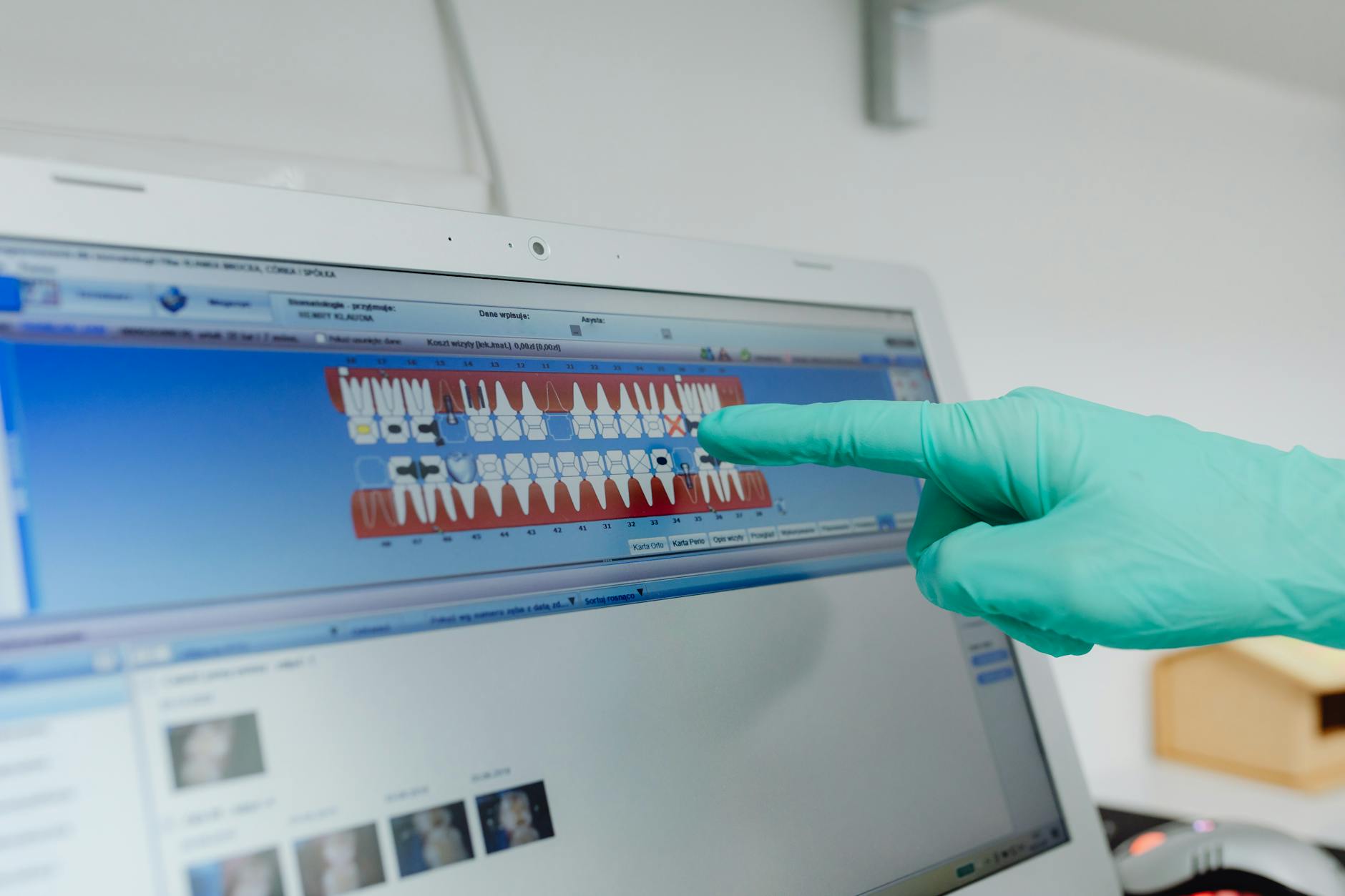
The practical first step is a dental examination whenever significant behavioral changes appear in someone with dementia, especially if those changes correlate with eating difficulties, mouth touching sensitivity, or fever. This should happen before attributing behavior to disease progression or requesting additional psychiatric medications. A dental professional experienced with older adults or people with dementia can often assess the mouth even when the person cannot cooperate fully—looking for obvious decay, swelling, broken teeth, or signs of infection. A comparison: seeking a dental evaluation for behavioral change is similar to checking for urinary tract infections in older adults who suddenly become confused or agitated. UTIs are so common in this population and so frequently mimic psychiatric or neurological symptoms that evaluation is routine.
Dental problems deserve similar systematic attention. The limitation is that not all dentists are equipped to work with people with advanced dementia; finding a provider willing to do so may require some effort. Some dental offices will do basic assessments at the care facility, which can reduce the stress of transportation and environment change. X-rays, when possible, can reveal hidden problems like abscesses or decay beneath the gum line that aren’t visible during a simple exam. For people who cannot tolerate traditional dental equipment, digital x-rays or even simple photographs of the inside of the mouth can provide useful information. If a full exam is not feasible, a primary care doctor can at least examine for obvious signs of infection or damage during a routine visit.
The Infection Risk and Serious Complications
Untreated dental disease in people with dementia carries risks beyond the original discomfort. Bacterial infections from tooth decay or gum disease can spread to the rest of the body, creating sepsis or endocarditis (infection of the heart), especially in older adults with multiple chronic conditions. Someone with dementia may not report worsening symptoms—they cannot tell you they feel sicker—so the infection can progress silently. A warning: if a person with dementia develops fever, becomes more agitated than usual, or shows signs of systemic illness, dental infection must be on the list of possible causes. Another complication is aspiration.
If a person with dementia struggles with swallowing or has loose teeth or infected gums, they are at higher risk of aspirating food, liquid, or even fragments of damaged teeth into the lungs. This can lead to aspiration pneumonia, a serious condition. Maintaining good oral health and having loose or damaged teeth addressed is part of preventing this complication. The limitation is that some people with advanced dementia may not be candidates for complex dental work—extraction or root canal treatment may be too stressful given their medical fragility. However, even in these cases, addressing pain, infection, and preventing complications remains important. Pain management and infection control are reasonable goals even when curative dental treatment is not feasible.

Dental Decay and Dementia Progression Connection
Research suggests a link between oral health and cognitive decline in older adults, though the direction and nature of causation are still being studied. Some evidence points to chronic oral infections contributing to inflammation and cognitive changes; other research shows that dementia-related decline makes people less able to maintain oral hygiene, which then allows disease to develop. Either way, the relationship is real: poor dental health and dementia often coexist and worsen together.
A specific example helps illustrate this: a person in early dementia may lose the ability to brush their teeth or see a dentist regularly because they forget, lose motivation, or have trouble managing the steps involved. Over months, plaque builds, gums become inflamed, and infection develops. The infection causes inflammation throughout the body and may accelerate cognitive decline. Preventing or catching dental disease early becomes a way to potentially slow some aspects of dementia progression, not just to manage current pain.
Proactive Dental Care as Part of Dementia Management
The forward-looking perspective in dementia care is increasingly recognizing oral health as a core part of overall brain health and quality of life. Facilities and families that incorporate regular dental assessments—even simple ones—into dementia care plans tend to catch problems earlier and reduce the behavioral incidents attributed to “just dementia” when a dental cause actually existed.
As the population ages, more dental providers are developing expertise in treating people with cognitive impairment, making evaluation more accessible. Preventive care matters: maintaining whatever oral hygiene is feasible, regular dental check-ups or at-home assessments by a caregiver, and early intervention when problems are spotted can prevent much of the downstream agitation and medical complexity. For someone in early or moderate dementia, staying engaged with dental care while the person can still cooperate somewhat sets them up for better outcomes later when communication becomes more limited.
Conclusion
Dental problems in people with dementia present as behavioral disturbance because the person cannot report pain in words. Agitation, food refusal, resistance to care, and sleep disruption are all common presentations of underlying dental disease, and these symptoms often improve once the dental problem is identified and treated.
Any significant change in behavior or eating in someone with dementia warrants a dental evaluation before assuming it reflects disease progression or requiring behavioral medication changes. Caregivers, family members, and medical providers serve the person with dementia best by maintaining a high index of suspicion for oral health problems, arranging regular dental assessment when feasible, and treating dental disease promptly when found. The quality-of-life improvement—reduced agitation, better nutrition, less suffering—often vindicates the effort required to secure dental care for someone whose ability to ask for help is compromised by dementia.