
Reviewed by the Help Dementia Editorial Team — our editors review every article for accuracy against guidance from the National Institute on Aging, the Alzheimer’s Association, and peer-reviewed sources.
Move beyond sits at the center of this dementia and brain health question.
Alzheimer’s diagnosis is moving into the blood rather than staying confined to expensive brain imaging suites. In May 2025, the FDA cleared the Lumipulse G test—the first blood test specifically designed to aid in Alzheimer’s diagnosis—marking a watershed moment in how doctors can identify this disease. Instead of relying primarily on PET scans, which are costly, time-consuming, and expose patients to radiation, physicians can now order a simple blood test that detects phosphorylated tau and amyloid markers in plasma. This shift is reshaping who can be tested, where testing happens, and how early warnings about Alzheimer’s pathology can reach patients.
The science behind this transition has been building for years. Blood-based biomarkers like phosphorylated tau 217 (pTau217) can be detected years before amyloid buildup shows up on a brain scan—a crucial advantage for catching disease in its earliest stages. A Mass General Brigham study published in April 2026 demonstrated that these blood markers can predict progression of amyloid accumulation even when initial imaging appears normal. The implications ripple outward: patients in rural areas, those without access to specialized imaging centers, and individuals seeking early screening can now get meaningful diagnostic information from a routine blood draw at a primary care clinic.
Table of Contents
- How Blood Tests Are Replacing the Gold Standard of Brain Imaging
- The Five Biomarkers You Need to Understand
- The Finger-Prick Revolution in At-Home Testing
- Accessibility Gains and the Cost Question
- Manufacturing Quality and the Warning in Early Adoption
- Early Detection and Prevention Trials
- The Road Ahead for Blood-Based Diagnostics
- Conclusion
How Blood Tests Are Replacing the Gold Standard of Brain Imaging
For decades, PET scans and cerebrospinal fluid analysis (obtained through lumbar puncture) held the gold standard for confirming Alzheimer’s pathology. A PET scan, however, costs between $3,000 and $10,000, requires specialized equipment available in limited locations, and involves a radiation dose. Lumbar punctures are even more invasive, requiring a needle inserted into the spine to collect fluid—a procedure many patients fear. The Lumipulse G test and its newer competitors sidestep these barriers entirely.
The test shows 92% concordance with amyloid PET when results are positive and 97% concordance when results are negative, meaning it performs remarkably well against the traditional imaging standard. Yet the replacement isn’t absolute. About 20% of blood test results fall into an indeterminate range, still requiring confirmation through PET or CSF analysis. The Elecsys pTau181 plasma test, FDA-cleared as the first blood-based tool specifically designed for primary care settings, offers another route forward by helping doctors rule out amyloid pathology in memory-concerned patients who might otherwise undergo unnecessary imaging. Together, these tests are creating a tiered diagnostic strategy: blood tests serve as accessible gatekeepers, and imaging becomes a secondary tool for borderline or inconclusive cases.
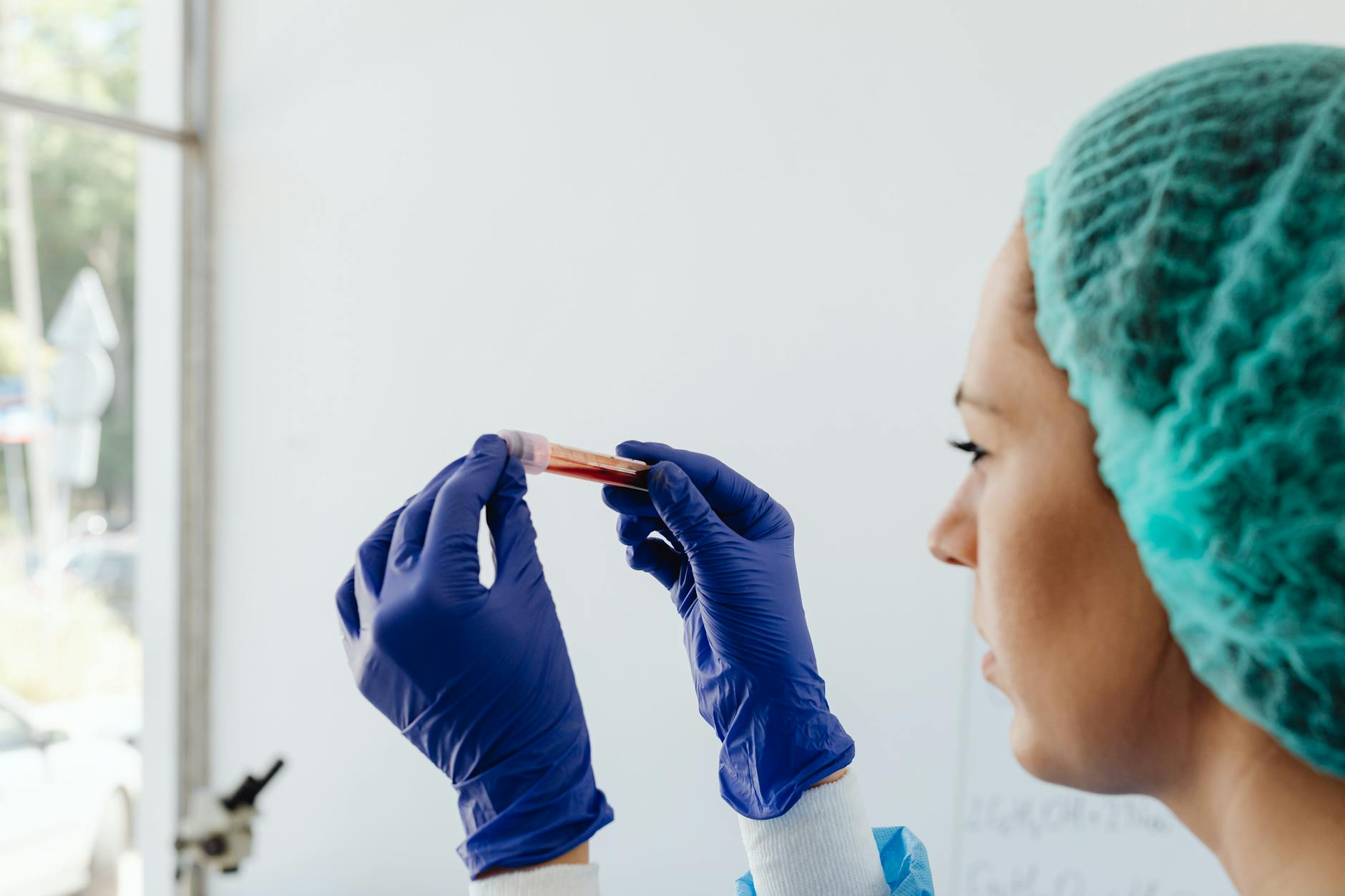
The Five Biomarkers You Need to Understand
The most validated plasma biomarkers in Alzheimer’s detection are phosphorylated tau 217, phosphorylated tau 181, neurofilament light chain (NfL), glial fibrillary acidic protein (GFAP), and the amyloid-beta 42/40 ratio. Of these, pTau217 stands out as the most accurate—it detects amyloid pathology with exceptional specificity and can show abnormalities years before symptoms emerge or conventional scans turn positive. A study published in Nature Reviews Neurology found that plasma GFAP alone can identify early amyloid pathology with 85% sensitivity, sometimes as much as 8–10 years before a person develops clinical symptoms of cognitive decline. Understanding these markers reveals an important limitation: no single blood test tells the whole story.
Different biomarkers capture different aspects of Alzheimer’s pathology. Someone might have elevated phosphorylated tau but normal NfL levels, suggesting early amyloid accumulation without significant neurodegeneration. Another person might show high NfL, pointing to active neuronal damage. Interpreting these results requires clinical context—age, genetic risk factors, cognitive testing scores—not just laboratory numbers. This complexity explains why the Alzheimer’s Association published clinical practice guidelines for blood-biomarker use in specialty settings in 2025, with primary care guidance still in development.
The Finger-Prick Revolution in At-Home Testing
One of the most promising recent developments comes from the DROP-AD project, a collaboration across seven European medical centers that tested finger-prick blood collection in 337 participants. Researchers found that blood collected via a simple finger prick—the kind used in home glucose monitoring for diabetes—could accurately measure the key markers of Alzheimer’s pathology and brain damage. This discovery opens the door to decentralized testing, where patients could collect samples at home and mail them to a lab, or where community health workers could perform testing in underserved areas without access to phlebotomists or specialized clinics. The practical implications are substantial.
A rural patient in Montana no longer needs to drive six hours to the nearest university hospital for diagnostic blood work. A caregiver monitoring a parent’s cognitive changes could arrange annual screening without repeated clinic visits. However, the finger-prick approach remains in research phases, not yet standard clinical practice, and quality assurance protocols must ensure consistent results across diverse collection settings. Some biomarkers may prove more stable from finger-prick samples than others, requiring validation before this method becomes routine.

Accessibility Gains and the Cost Question
Blood tests cost a fraction of PET imaging—typically in the range of $500 to $1,500 compared to PET scans at $3,000 to $10,000. Insurance coverage varies, but the lower price point alone means more patients can afford screening or that health systems can expand testing to more individuals within fixed budgets. For primary care doctors, the ability to order a blood test rather than referring to a specialist imaging center means fewer diagnostic gaps. A primary care physician might identify a 58-year-old with early amyloid pathology and refer them to a cognitive specialist for monitoring, before symptoms ever manifest.
Yet cost advantage comes with a tradeoff: blood tests require more careful interpretation and sometimes more follow-up. A positive result might still need imaging confirmation, negating part of the cost savings. Additionally, the infrastructure for rapidly processing and interpreting these specialized biomarkers is still developing. Some labs can turn results around in days; others take weeks. If a patient needs a blood test, then a PET scan for confirmation, then cognitive testing from a specialist, the total cost and time burden may approach or exceed the old imaging-only pathway in some cases.
Manufacturing Quality and the Warning in Early Adoption
In early 2026, the FDA issued a Class II recall of specific Lumipulse pTau217/Aβ42 lots after data from December 2025 revealed unexpectedly high false-positive rates—in some cohorts reaching as high as 40%—linked to manufacturing defects. This recall highlights a critical risk in the rush to adopt new blood-based diagnostic tools: the tests themselves are new, and manufacturing and quality control processes are still being refined. A false-positive result can send a healthy person into unnecessary anxiety, specialist referrals, and further testing, while a false negative might delay diagnosis in someone with genuine pathology. The recall illustrates why clinical oversight remains essential.
Patients receiving positive results from blood-based Alzheimer’s tests should understand that a single positive result is not a diagnosis—it is a flag for further investigation. The Alzheimer’s Association and major medical centers emphasized this point in their 2025 guidelines. For now, positive blood tests should prompt evaluation by a cognitive specialist and, in many cases, confirmatory imaging before a diagnosis is finalized. Over time, as manufacturing improves and larger clinical datasets accumulate, standalone blood tests may become definitive diagnostic tools, but we are not there yet.

Early Detection and Prevention Trials
The real game-changer is what blood tests enable downstream: early identification of patients eligible for prevention or disease-modifying trials and treatments. If pTau217 or GFAP levels reveal amyloid pathology a decade before symptoms, patients can enroll in prevention studies testing whether lifestyle interventions, novel drugs, or immunotherapy can delay or halt the cascade. Several large prevention trials are already underway, identifying cognitively normal individuals with positive biomarkers and randomizing them to treatment or placebo.
For example, individuals in their 50s with elevated blood biomarkers but normal cognition are now candidates for trials that previously would have excluded them entirely because they had no symptoms. This shifts Alzheimer’s research from treating symptomatic disease—where neurons have already died—to intervening before pathology becomes irreversible. Blood tests are the practical tool making this shift possible.
The Road Ahead for Blood-Based Diagnostics
As more biomarkers are validated and testing algorithms improve, blood tests will likely become the first-line approach for Alzheimer’s screening in primary care, with imaging reserved for edge cases and research purposes. The Alzheimer’s Association is developing guidelines for primary care use, signaling confidence in these tools’ eventual role in routine clinical practice. Finger-prick methods will expand access further, and home-based or community testing may become standard before the decade ends.
The transition from brain scans to blood tests is not a sudden replacement but a gradual reshuffling of the diagnostic toolkit. Blood tests will coexist with imaging for years, especially during this maturation phase. Yet the direction is clear: a disease once diagnosed only in specialty imaging centers can now be detected in a primary care office, and early pathology can be discovered years before symptoms emerge. This shift holds the genuine promise of moving Alzheimer’s disease from a condition people cope with after symptoms arrive to a disease doctors can identify and potentially treat early, when interventions may be most effective.
Conclusion
Alzheimer’s testing is moving beyond brain scans because blood tests are cheaper, less invasive, and capable of detecting pathology years earlier than traditional imaging. The FDA’s clearance of the Lumipulse G test in May 2025 and the Elecsys pTau181 test for primary care represent genuine clinical advances, even as manufacturing lessons learned in early 2026 remind us that these tools are still maturing. The five most validated plasma biomarkers—phosphorylated tau 217, phosphorylated tau 181, NfL, GFAP, and the amyloid-beta ratio—each tell a different part of the Alzheimer’s story, and skilled interpretation requires clinical context and often confirmatory testing.
If you or a family member is concerned about memory changes or cognitive decline, ask your primary care doctor about blood-based biomarker testing. If you have a family history of Alzheimer’s or are simply curious about your amyloid status, these tests offer an accessible, lower-burden entry point to that information. Understand that a positive result is a flag for further evaluation, not a diagnosis, and that clinical guidelines are still evolving. The shift toward blood testing promises to democratize Alzheimer’s screening and enable earlier intervention—a genuine turning point in how we approach this disease.
You Might Also Like
- How Sleep May Help the Brain Clear Alzheimer’s-Linked Toxins
- What Early Midlife Symptoms May Say About Future Brain Health
- How Urine Biomarkers Could Change Brain Health Testing
For more, see CDC — Alzheimer’s and Dementia.





