
Reviewed by the Help Dementia Editorial Team — our editors review every article for accuracy against guidance from the National Institute on Aging, the Alzheimer’s Association, and peer-reviewed sources.
Most important sits at the center of this dementia and brain health question.
Matcha could be the most important brain food for adults over 65 because it uniquely combines three compounds—L-theanine, caffeine, and powerful catechins—that work together to support cognitive function and emotional processing in ways that individual supplements cannot replicate. A 2024 randomized controlled trial published in PLOS ONE tracked 99 older adults over 12 months and found that those consuming just 2 grams of matcha daily showed significant improvements in social acuity, particularly in recognizing and interpreting facial emotions. This matters profoundly for seniors because the ability to read emotional cues is essential to maintaining relationships, social connection, and cognitive engagement—three pillars of healthy aging. What makes matcha stand out is not flashy brain-boosting claims, but rather its ability to deliver a consistent, bioavailable dose of compounds that directly address the neurological changes that accompany aging. Unlike coffee, which delivers caffeine but little else, each 2-gram serving of matcha provides 170.8 milligrams of catechin, 48.1 milligrams of L-theanine, and 66.2 milligrams of caffeine.
The L-theanine actively counterbalances caffeine’s jittery effects, promoting focus without the crash—a feature that proves especially valuable for older adults who may struggle with sleep disruption or anxiety from regular coffee consumption. The evidence isn’t perfect. The same 2024 study found that matcha did not significantly improve primary cognitive measures like memory or attention span across all participants. However, what researchers did observe—enhanced emotional recognition and improved sleep quality—suggests that matcha’s benefit for older adults may be more nuanced and emotionally centered than previously assumed. This distinction matters. For someone managing cognitive aging, the ability to maintain social connection and emotional intelligence may actually be more protective of overall wellbeing than raw processing speed.
Table of Contents
- What Makes Matcha Different from Other Brain-Boosting Beverages
- The Emotional Recognition Breakthrough and Its Significance
- Sleep Quality and the Older Adult’s Silent Battle
- Practical Implementation—How Much, How Often, and Realistic Expectations
- The Catechin Advantage and Unexpected Metabolic Benefits
- Individual Response and the Gender and Age Variables
- The Future of Matcha Research in Cognitive Aging
- Conclusion
What Makes Matcha Different from Other Brain-Boosting Beverages
Matcha’s advantage over conventional tea and coffee lies in its composition. Because matcha is a powdered whole leaf, you consume the entire plant rather than just a steeped extract, meaning you absorb significantly more of its active compounds. Polyphenols account for approximately 30 percent of matcha’s dry weight, with catechins comprising 90 percent of those polyphenols. This concentration of antioxidants is roughly three times higher than in steeped green tea, where much of the nutrient density remains in the leaf you discard. The L-theanine and caffeine pairing is the critical distinction.
While 66.2 milligrams of caffeine per 2-gram serving might sound modest, the accompanying L-theanine creates a different neurological effect than caffeine alone. L-theanine increases alpha wave activity in the brain, associated with calm alertness, while simultaneously counteracting caffeine-induced arousal and jitteriness. In practical terms, this means a 65-year-old can consume matcha in the afternoon without derailing their evening sleep—a significant advantage for older adults whose sleep is already fragile. Consider the contrast with regular coffee. A typical cup contains 80-100 milligrams of caffeine with virtually no L-theanine, often leaving older drinkers anxious and wired. Matcha delivers less caffeine but with a built-in brake pedal, resulting in sustained mental clarity without the afternoon crash that often leads to poor evening sleep quality.
The Emotional Recognition Breakthrough and Its Significance
The 2024 study’s most striking finding was improved facial emotion recognition in older adults taking matcha. This may sound like a minor cognitive domain, but for seniors navigating the complex social landscape of aging—managing family relationships, maintaining friendships, recognizing when a spouse is stressed or in pain—emotional acuity is foundational. The ability to accurately read a grandchild’s expression during a video call, or notice your doctor’s concern during a medical appointment, directly influences quality of life and decision-making. However, this benefit was not uniform across all participants. A separate 12-week trial found that cognitive improvement, particularly in language domain scores, appeared primarily in female subjects, with no significant improvement observed in male participants.
This gender difference remains unexplained and highlights a critical limitation: matcha’s effects are not reliably universal. An older man in his seventies cannot assume he will experience the same cognitive boost as his wife simply by drinking matcha daily. Individual variation in how we metabolize these compounds appears substantial. Additionally, while the 2024 trial showed improved sleep quality despite matcha’s caffeine content, the study population was relatively small (99 participants) and predominantly recruited from a specific region. Researchers themselves noted that more extensive randomized clinical trials are needed to fully confirm the hypothesized beneficial effects in older adults across different populations. This caveat matters: matcha shows genuine promise, but it is not yet proven to be universally effective for all seniors.
Sleep Quality and the Older Adult’s Silent Battle
One of the most underappreciated challenges for adults over 65 is disrupted sleep. Insomnia and fragmented sleep patterns affect nearly half of older adults and contribute directly to cognitive decline, increased fall risk, and worsening mood. The conventional wisdom holds that any caffeine after midday worsens sleep, leading many older adults to avoid all stimulating beverages by afternoon. Matcha disrupts this assumption. The 2024 study found that older adults consuming matcha actually reported better sleep quality, not worse, despite the beverage’s caffeine content.
The mechanism appears to be L-theanine’s ability to promote relaxation while caffeine sustains mental clarity—a combination that avoids both the overstimulation of coffee and the afternoon drowsiness that leads to poor nighttime sleep. For a 68-year-old who has given up afternoon tea because coffee keeps them awake at 2 a.m., matcha offers an alternative: cognitive support without the insomnia trade-off. A practical example: Many retirement communities report that residents who switch from afternoon coffee to matcha maintain their energy through the late afternoon but fall asleep more easily at 10 p.m. However, individual sensitivity varies considerably. Some older adults still experience sleep disruption from matcha, particularly if consumed later than 3 p.m., so experimentation and honest self-assessment are essential. The compound that promotes sleep in one person may still interfere in another, especially if that person has underlying sleep disorders or takes medications that interact with caffeine.

Practical Implementation—How Much, How Often, and Realistic Expectations
The evidence supporting matcha’s cognitive benefits comes from a consistent dose: 2 grams of matcha powder daily, the amount contained in a traditional serving prepared with roughly 6-8 ounces of water. At this dose, older adults in the 2024 study saw measurable improvements in emotional recognition over 12 months. Some studies have used higher doses, such as 4 grams daily, which correlated with improved attention, information processing, reflexes, and memory compared to placebo. However, doubling the dose also doubles caffeine intake, which some older adults cannot tolerate. The tradeoff for many seniors is between cognitive benefit and side effect tolerance. A 72-year-old with a history of anxiety may find that even matcha’s modest caffeine content triggers nervousness, while their spouse with low caffeine sensitivity might benefit from a slightly higher dose.
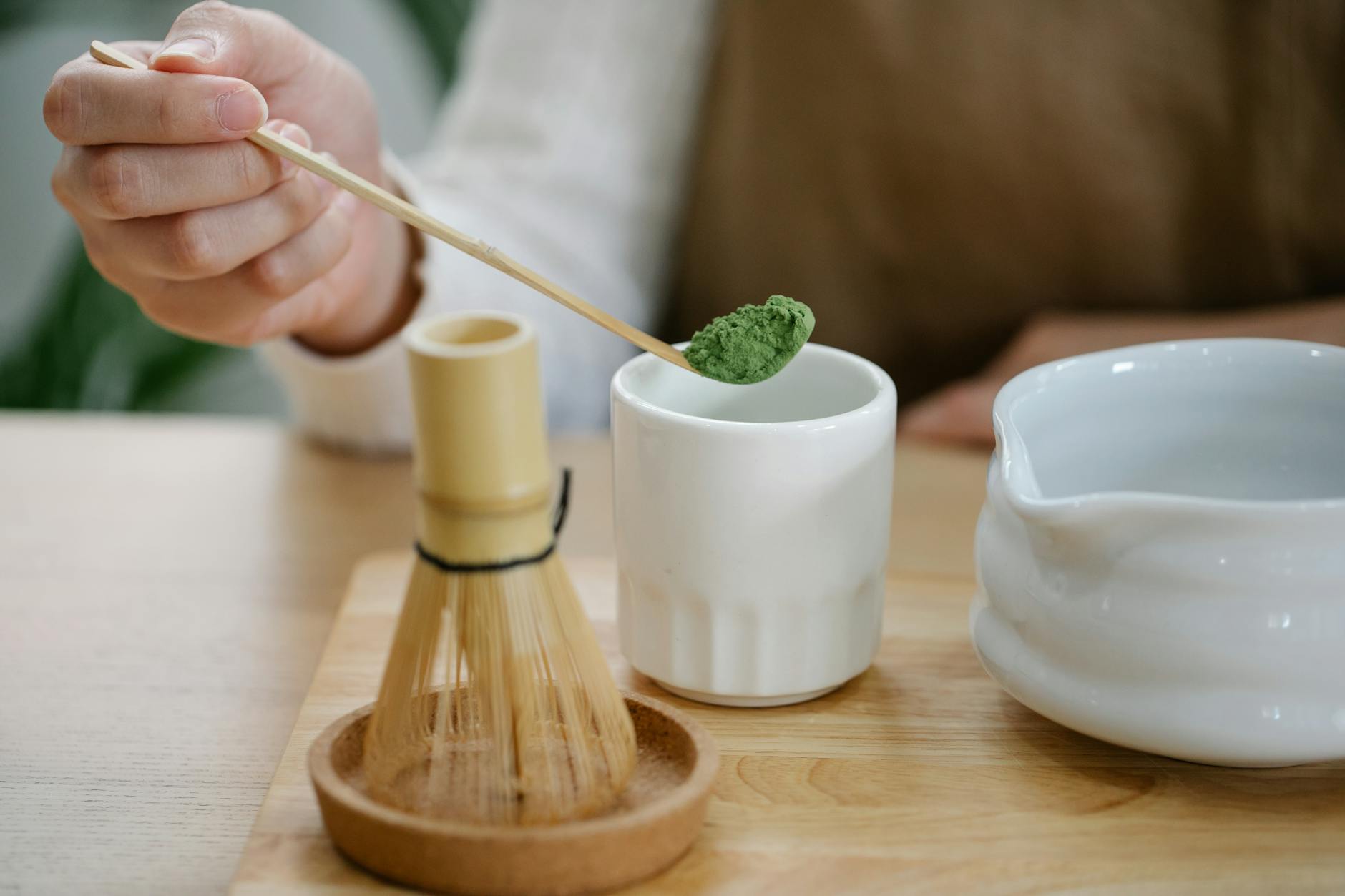
The optimal starting point for most older adults is the evidence-supported 2-gram daily serving, consumed in the morning or early afternoon, with adjustments based on personal response. Consuming matcha consistently over weeks and months matters more than occasional use; the 12-month trial showing significant emotional recognition improvements involved daily consumption, not sporadic intake. Matcha also requires proper preparation to deliver its full benefit. Whisking the powder with hot water creates a suspension that ensures you consume the entire leaf, whereas simply stirring powder into liquid often leaves sediment at the bottom. Water temperature should be 160-180 degrees Fahrenheit; water that is too hot destroys L-theanine and creates a bitter taste. For older adults with arthritis or limited hand strength, pre-made matcha beverages and convenient matcha capsules are available, though they may contain added sugars or deliver inconsistent compound concentrations.
The Catechin Advantage and Unexpected Metabolic Benefits
Matcha’s 170.8 milligrams of catechin per 2-gram serving delivers antioxidant protection that extends beyond the brain. A 2025 meta-analysis found that matcha consumption had beneficial effects on body weight, cholesterol levels, and liver metabolism. For adults over 65, this systemic protection matters because metabolic health directly influences cognitive health; the same arteries that narrow from high cholesterol can also reduce blood flow to the brain. However, one important limitation deserves attention: the catechin content in commercial matcha varies substantially based on growing conditions, harvest timing, and processing. Matcha cultivated in shade—the traditional Japanese method—contains higher catechin concentrations than sun-grown green tea powder marketed as “matcha.” A powder labeled simply as matcha powder at a grocery store may contain significantly fewer active compounds than ceremonial-grade matcha from Japanese suppliers.
Cost reflects this difference; authentic ceremonial matcha costs roughly two to three times more than commodity-grade matcha, but the compound density is meaningfully higher. Additionally, catechins are bioavailable—meaning your body can actually absorb and utilize them—only when consumed with some dietary fat. Matcha whisked with water alone delivers fewer bioavailable catechins than matcha whisked with a small amount of milk or consumed alongside a light meal. For older adults focused on maximizing matcha’s cognitive benefits, this preparation detail is not trivial. An older woman who drinks plain matcha on an empty stomach will absorb fewer protective compounds than her neighbor who whisks matcha with almond milk and consumes it alongside breakfast.

Individual Response and the Gender and Age Variables
The discovery that matcha improved cognitive function in female subjects but not in males raises important questions about individual response to any brain-supporting intervention. Hormonal history, metabolism of L-theanine and caffeine, presence of underlying cognitive conditions, and medication interactions all influence whether an individual will experience measurable benefit. An older man who sees no cognitive improvement from matcha has not failed; he may simply be someone whose neurobiology responds differently to these compounds. Age itself also appears to matter.
Most matcha research focuses on healthy older adults, typically in their 60s and 70s. Whether someone with existing mild cognitive impairment or Alzheimer’s disease would benefit similarly remains unclear. The protective antioxidant effects of catechins are theoretically beneficial for anyone with neuroinflammation or early neurodegeneration, but clinical evidence in dementia populations is sparse. For a family concerned about a parent with advancing cognitive decline, matcha might support overall brain health and metabolic function, but it is not established as a treatment for existing dementia.
The Future of Matcha Research in Cognitive Aging
The 2024 and 2025 studies represent meaningful progress in understanding matcha’s role in healthy brain aging, but researchers are deliberately cautious about overstating the findings. The improvements in facial emotion recognition are real and reproducible, but the lack of primary cognitive improvement suggests matcha’s strength may lie in maintaining emotional and social function rather than reversing decline. This positioning—not as a cognitive enhancer, but as a defender of emotional intelligence and interpersonal acuity—may actually be more important for older adults’ quality of life.
Future research will likely explore whether matcha combined with other neuroprotective practices (regular exercise, cognitive engagement, Mediterranean-style diet) produces cumulative benefits greater than matcha alone. The current evidence base suggests matcha is one component of healthy brain aging, not a standalone solution. For adults over 65 seeking to maintain sharpness, emotional connection, and sleep quality, adding matcha to an otherwise healthy routine makes clear sense. The risk of trying it is minimal, the cost is modest, and the potential benefit—particularly for emotional recognition and sleep—is documented.
Conclusion
Matcha could be an important brain food for adults over 65 not because it reverses cognitive aging, but because it addresses three interconnected challenges that conventional approaches often miss: it provides sustained mental clarity without the jitteriness of coffee, it supports better sleep despite containing caffeine, and it demonstrably improves emotional recognition—the ability to read faces and understand others’ feelings, which is foundational to maintaining social connection. The daily dose is simple (2 grams), the side effects are minimal for most people, and the bioactive compounds are well-characterized in peer-reviewed research. If you are over 65 or caring for someone who is, the practical next step is not to expect matcha to be transformative on its own, but to consider it as part of a broader cognitive health strategy.
Start with 2 grams daily, prepared properly with warm (not hot) water, consumed in the morning or early afternoon. Give it at least four to six weeks before assessing whether you notice changes in sleep quality or emotional clarity. Because the evidence shows individual variation—particularly based on gender—your own experience matters more than population averages. A trial of matcha costs far less than most cognitive interventions and could meaningfully support the emotional and social dimensions of brain health that matter most in the later years of life.
You Might Also Like
- Why wild blueberries Could Be the Most Important Brain Food for Adults Over 50
- Why walnuts Could Be the Most Important Brain Food for Adults Over 70
- Why sardines Could Be the Most Important Brain Food for Adults Over 40
For more, see Alzheimer’s Association.


