Reviewed by the Help Dementia Editorial Team — our editors review every article for accuracy against guidance from the National Institute on Aging, the Alzheimer’s Association, and peer-reviewed sources.
Air quality sits at the center of this dementia and brain health question.
Air Quality Index should be part of brain health conversations because there is now robust scientific evidence linking air pollution—particularly fine particulate matter (PM2.5)—directly to dementia, Alzheimer’s disease, and cognitive decline. For decades, we’ve talked about air pollution as a respiratory issue. But research published in 2025 and 2026 makes clear that pollution reaches the brain itself, causing measurable changes in brain structure and function that accelerate neurological disease. In high-pollution areas, where residents breathe degraded air year-round, the cumulative risk becomes impossible to ignore. Consider this: researchers at Emory University analyzing 27.8 million Medicare beneficiaries aged 65 and older over 18 years estimated that PM2.5 exposure could account for approximately 188,000 dementia cases annually in the United States alone. That’s not a theoretical risk—it’s a population-level estimate based on documented health records.
For every single microgram per cubic meter increase in PM2.5, the risk of worse Alzheimer’s amyloid and tau buildup in the brain increases by 19%. These are not speculative numbers. They reflect a causal relationship that neuroscientists and epidemiologists now consider proven. Yet most brain health conversations—at doctors’ offices, family discussions, and even in dementia prevention programs—still focus on diet, exercise, cognitive stimulation, and cardiovascular health. Air quality is rarely mentioned, even though it may be as modifiable and important as any traditional risk factor. For people living in high-pollution areas, this represents a critical oversight.
Table of Contents
- How Does Air Pollution Travel from Your Lungs to Your Brain?
- The Cognitive Impact Extends Far Beyond Dementia
- Who Faces the Highest Risk in High-Pollution Areas?
- Monitoring Air Quality and Taking Protective Action
- Why Air Quality Is Rarely Part of Clinical Conversations
- High-Pollution Areas Face a Compounding Burden
- The Emerging Research Frontier and What’s Coming Next
- Conclusion
How Does Air Pollution Travel from Your Lungs to Your Brain?
The mechanism is no longer mysterious. Particulate matter doesn’t stay confined to the respiratory system. PM2.5 particles are so tiny that they can cross the blood-brain barrier—the protective membrane that usually keeps harmful substances out of the brain—and accumulate directly in brain tissue. Once there, they trigger chronic inflammation, oxidative stress, and neurodegeneration. This isn’t happening in laboratory animals; it’s happening in human brains in real time. Brain imaging studies provide the visual proof.
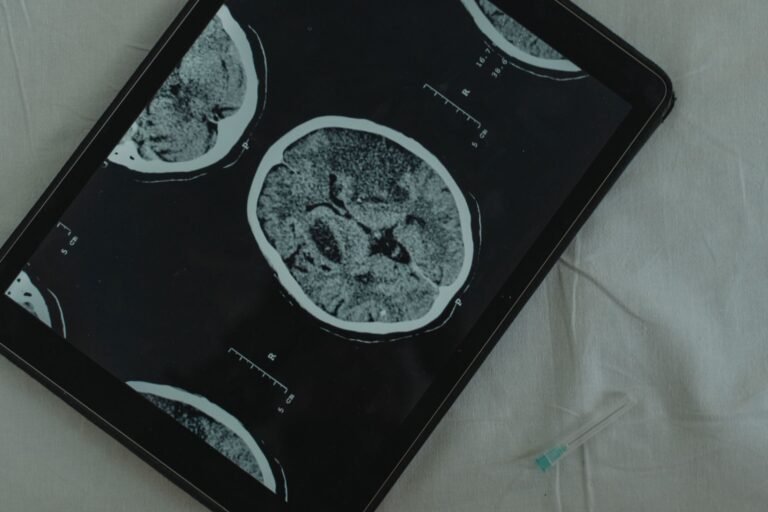
MRI research published in 2024 in the Stroke Journal documented that increased PM2.5 exposure is associated with measurable brain atrophy in older adults—a shrinking of total brain volume. Other studies show damage to white matter, the neural pathways that allow different brain regions to communicate. Essentially, air pollution is aging the brain faster. A person living in a high-pollution area for 20 years may have structural brain changes that resemble someone 5 or 10 years older. The troubling part: there is no safe threshold. Research published in Scientific Reports in 2024 showed that all air pollutant constituents had largely linear concentration-response relationships at low concentrations, meaning even modest pollution levels contribute to harm. You cannot say “a little air pollution is fine.” Every microgram of improvement matters.

The Cognitive Impact Extends Far Beyond Dementia
While dementia receives the most attention, air pollution’s effects on the brain are broad. A meta-analysis of 28 longitudinal cohort studies found that PM2.5 exposure is associated with at minimum a 14% increased risk for dementia onset. But the research literature connects air pollution to Parkinson’s disease, stroke, depression, anxiety disorders, autism spectrum disorder, and ADHD. These are not separate, unrelated conditions—they share common pathways of neuroinflammation triggered by air pollution. Children’s developing brains are particularly vulnerable.
Growing evidence shows exposure to PM2.5 is linked to reduced cognitive performance and lower IQ, with effects beginning before birth and continuing across the lifespan. A quantitative systematic review found PM2.5 pollution to be neurotoxic, threatening children’s neurobehavioral development and resulting in measurable reductions in cognitive function. A child growing up in a high-pollution city may start school with a cognitive disadvantage that compounds over years. The limitation here is important to acknowledge: most studies show association and correlation, and researchers continue to work to establish the full causal chain. However, the consistency of the findings across dozens of independent studies, populations, and countries, combined with documented biological mechanisms, has moved this from hypothesis to established risk factor in the scientific consensus.
Who Faces the Highest Risk in High-Pollution Areas?
Vulnerability is not random. Research shows that people with prior stroke history face even greater Alzheimer’s disease risk from PM2.5 exposure. People with certain genetic profiles and people who experience respiratory infections show amplified harmful effects when combined with air pollution. In high-pollution areas, these vulnerable populations shoulder an outsized burden. Older adults in cities with chronically poor air quality—think Los Angeles, Delhi, Beijing, or parts of industrial regions—carry decades of accumulated exposure. Their brains have absorbed years of inflammatory insult.
For caregivers of people with dementia living in these areas, air quality becomes not just an environmental concern but a direct factor in disease progression. Some research suggests that pollution may accelerate cognitive decline in people already diagnosed with Alzheimer’s disease. Socioeconomic factors compound the risk. Low-income neighborhoods are often located near highways, industrial facilities, and other pollution sources. Residents in these areas have less ability to escape—they cannot simply move to a cleaner neighborhood or spend the day indoors in a well-filtered space. This creates a public health equity problem: those with the fewest resources face the greatest exposure and the greatest brain health risk.

Monitoring Air Quality and Taking Protective Action
The Air Quality Index provides a practical tool, but only if people understand it and act on it. The AQI ranges from 0 to 500+. An AQI below 50 is considered good; 51-100 is moderate; 101-150 is unhealthy for sensitive groups; above that, it becomes unhealthy for the general population. For someone with dementia or strong family history of dementia, moderate air quality (51-100) may warrant precaution. On days when the AQI exceeds 100, limiting outdoor exposure becomes medically advisable, not just a preference. This creates a practical tradeoff. Regular outdoor physical activity is protective for brain health and helps manage dementia risk.
But on high-pollution days, breathing degraded air for the sake of a walk may be counterproductive. The solution is flexible: indoor exercise on poor air days, timing outdoor activities for better air quality (often early morning or after rain), and using HEPA air filters in the home. For people with dementia, caregivers need to balance the benefits of outdoor stimulation against air quality hazards. Some areas have invested in community air quality monitoring and real-time alerts. Others rely on smartphone apps and the EPA’s AirNow website. But awareness alone is insufficient. People in high-pollution areas need practical support—indoor recreation options, access to air filters, information about safe exposure limits, and acknowledgment from healthcare providers that air quality is a brain health risk factor worth discussing.
Why Air Quality Is Rarely Part of Clinical Conversations
Despite the evidence, most neurologists, geriatricians, and primary care doctors do not ask patients about air quality or advise them based on pollution exposure. This is partly because the causal evidence was still building even as recently as 2023. It’s also because air quality feels like an environmental or public health issue, not a clinical one. Patients expect doctors to discuss medication, diet, and lifestyle—not to say “where you live and what you breathe matters for your brain.” There is also the uncomfortable reality that air quality improvement requires systemic change—policy, regulation, investment in clean technology, industry accountability. It’s easier for a healthcare provider to recommend a specific diet or supplement than to address pollution.
For people already living in high-pollution areas, the risk can feel inescapable and overwhelming, so the temptation is not to raise it at all. However, the evidence base has shifted. Publications in The Lancet Planetary Health and Nature in 2025 confirmed a rapidly growing consensus: air pollution is an established modifiable risk factor for dementia. Some emerging research suggests cognitive impacts may occur even at pollution levels currently considered “safe” under EPA standards. This means the conversation needs to change. Neurologists and primary care teams caring for aging populations or people at risk for dementia should be asking about air quality exposure and advising accordingly.

High-Pollution Areas Face a Compounding Burden
Regions with chronic air quality problems—often industrial areas, dense cities with heavy traffic, or regions downwind of power plants—see higher rates of neurodegenerative disease. Research by the World Health Organization and the Global Burden of Disease Study estimated that approximately 4.9 million people died from air pollution worldwide in 2017, with PM2.5 accounting for about 60% of those deaths. Many of those deaths were cardiovascular and respiratory, but an increasing share are being attributed to neurological disease.
A 65-year-old living in a city with consistently poor air quality over the past two decades has absorbed far more PM2.5 than a peer in a cleaner region. The structural brain changes are cumulative. This is not just about immediate acute effects—it’s about the long-term, low-grade accumulation of neuroinflammation over years and decades. In some regions, air quality improvement would likely reduce dementia incidence as much as any pharmaceutical intervention.
The Emerging Research Frontier and What’s Coming Next
The science is moving fast. Between 2022 and 2026, there has been a significant upturn in peer-reviewed publications establishing air pollution as a dementia risk factor. Researchers are now investigating questions that seemed unimportant five years ago: Does the type of pollution (traffic exhaust vs.
wildfire smoke vs. industrial) matter differently for brain health? How much of the dementia burden in high-pollution regions is attributable to air quality? Can cognitive decline be slowed or reversed if pollution exposure is reduced? Early answers suggest that pollution type does matter, that traffic-related pollution may be especially harmful, and that real-world pollution reduction programs show measurable cognitive benefits. The trajectory is clear: air quality will move from a peripheral concern in brain health conversations to a central one. For dementia prevention programs, clinical guidelines, and family discussions, this shift is already beginning.
Conclusion
Air Quality Index should be part of brain health conversations because the science now demands it. People living in high-pollution areas face measurable increases in dementia risk, cognitive decline, and brain structural changes. The evidence is not speculative—it’s based on population studies, brain imaging, and biological mechanisms that researchers have documented and replicated. Ignoring air quality in the context of dementia prevention means ignoring a major, modifiable risk factor that affects millions of people, particularly those in vulnerable communities already bearing disproportionate health burdens. For individuals, families, and healthcare providers, the path forward is to integrate air quality into brain health conversations the same way we discuss cardiovascular risk, cognitive stimulation, and sleep.
Check the AQI on days when outdoor activity is planned. Invest in air filtration for the home. Ask your doctor how air quality in your region might affect your dementia risk. Advocate for policy changes that reduce pollution. And recognize that for people in high-pollution areas, brain health protection is not possible without addressing the air they breathe every day.
You Might Also Like
- Why Brain Health Should Be Added to Every Annual Wellness Visit According to 200 Leading Neurologists
- Why Maintaining Muscle Mass After 60 Is Now Considered a Brain Health Strategy Not Just a Physical One
- The Brain Health Implications of Long COVID That Researchers Are Still Studying 6 Years Later
For more, see Alzheimer’s Association — caregiving.