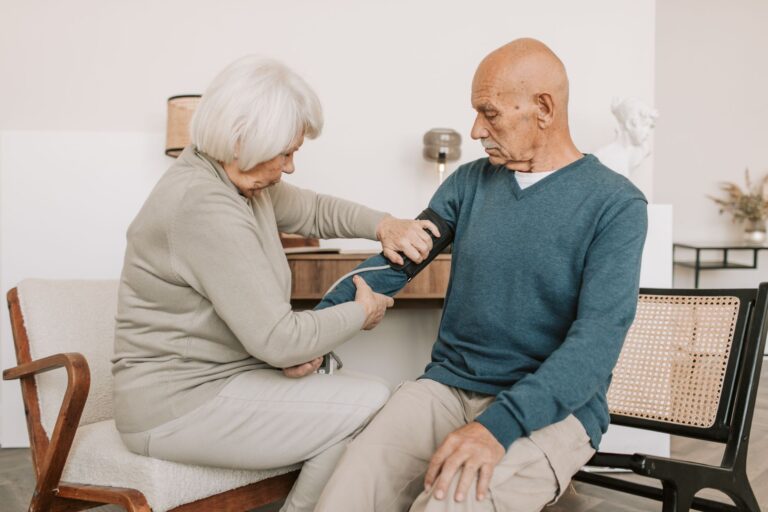
Vision problems in your 50s may be one of the earliest warning signs that your brain health needs attention. According to research from the National Institute on Aging, vision impairment is associated with a 47% increased risk of dementia, and an estimated 100,000 U.S. dementia cases are linked to vision problems. This connection is significant enough that a conversation with your doctor should happen when you notice changes in your sight—not just with an optometrist, but with your primary care physician as well.
A 50-year-old who suddenly struggles to read fine print or notices reduced contrast sensitivity in low light may be experiencing more than just normal aging; these could be signals worth exploring in the context of long-term brain health. This article explains why the vision-dementia connection matters, which types of vision problems carry the greatest risk, what doctors are now recommending, and most importantly, what you can do right now to protect yourself. The good news: approximately 90% of vision loss is treatable with existing, cost-effective interventions, and corrected vision eliminates the increased dementia risk entirely. Understanding this connection gives you a concrete, actionable way to reduce your dementia risk.
Table of Contents
- How Vision Problems in Your 50s Connect to Dementia Risk
- Which Vision Problems Carry Real Dementia Risk—and Which Don’t
- Why Vision Loss Accelerates Cognitive Decline—The Mechanisms
- Why Your Doctor Conversation Matters More Than Just an Eye Exam
- The Critical Discovery: Corrected Vision Eliminates the Risk
- Beyond Eyeglasses—When Vision Changes Require a Doctor’s Deeper Look
- The Prevention Window—Why Your 50s Matter for Your 70s and Beyond
- Conclusion
How Vision Problems in Your 50s Connect to Dementia Risk
The link between vision impairment and dementia risk is no longer speculative—it’s backed by substantial research. A 2024 analysis in JAMA Ophthalmology examined data from U.S. adults aged 71 and older and found that 5% to 19% of prevalent dementia cases could be statistically attributed to measurable vision impairments, particularly reduced contrast sensitivity. What makes this finding remarkable is that it holds across different types of vision problems, suggesting the relationship isn’t incidental but fundamental to how our brains age. Research spanning 14 prospective studies has consistently shown that people with uncorrected vision problems have nearly 1.5 times the risk of developing dementia compared to those with normal vision. The reason this matters in your 50s is timing.
Dementia doesn’t develop overnight; it’s a process that can take 10 to 20 years to become clinically apparent. Vision problems in your 50s may be reflecting underlying brain changes or, alternatively, triggering a cascade of lifestyle changes—social withdrawal, reduced physical activity, less mental stimulation—that accelerate cognitive decline. Either way, they deserve attention now, not later. A concrete example: a 55-year-old woman notices that reading restaurant menus has become difficult even with her old glasses prescription. She assumes it’s just presbyopia—the normal age-related loss of focusing ability—and orders reading glasses online. But she doesn’t get her eyes formally examined, so no one screens for cataracts, diabetic retinopathy, or contrast sensitivity loss. Ten years later, as her cognitive function declines, that uncorrected vision problem may have contributed to her dementia risk the entire time.

Which Vision Problems Carry Real Dementia Risk—and Which Don’t
Not all vision problems increase dementia risk equally. Cataracts are associated with a 17% increased risk of dementia, while diabetic retinopathy carries a 34% increased risk—more than double the standard dementia risk. This distinction matters because it tells you which vision problems demand urgency. If you have diabetes and you haven’t had a dilated eye exam in the past year, this statistic should accelerate that appointment. Conversely, two common eye conditions—glaucoma and age-related macular degeneration (AMD)—have not shown associations with increased dementia risk in comparative studies. This is important to know because it means you shouldn’t assume every eye condition puts your brain at risk.
The dementia connection appears strongest with conditions that reduce overall visual clarity and contrast perception: cataracts, diabetic retinopathy, and generalized visual acuity loss. This suggests the mechanism may involve cognitive load from processing degraded visual information, rather than specific damage to particular parts of the eye. A limitation to keep in mind: these associations are statistical, not deterministic. Having a cataract doesn’t mean you will develop dementia; it means your statistical risk is elevated. However, when you add this to other dementia risk factors—sedentary lifestyle, social isolation, hearing loss, or diabetes—the cumulative risk becomes more significant. This is why the conversation with your doctor should frame vision as one piece of a larger dementia prevention strategy.
Why Vision Loss Accelerates Cognitive Decline—The Mechanisms
The relationship between vision loss and dementia risk operates through several interconnected pathways. The most direct mechanism involves social isolation: people with untreated vision problems are more likely to avoid social situations, reduce their mobility, and disengage from their environment. All three of these outcomes are well-established dementia risk factors. A person who can’t read comfortably stops attending book clubs. Someone who struggles with contrast sensitivity avoids driving at night, then stops driving altogether, becoming dependent on others. The cognitive reserve that comes from active social and community engagement evaporates. There’s also a direct cognitive processing burden.
When your brain receives degraded or unclear visual input, it must work harder to interpret the world—a form of constant cognitive strain that may leave fewer resources available for memory consolidation, learning, and other cognitive functions. Over time, this chronic processing burden may contribute to neurological changes associated with dementia. Additionally, vision loss can trigger or worsen depression and anxiety, both of which are independent dementia risk factors. A practical example: a 58-year-old retired teacher notices that reading medical articles and keeping up with current events has become frustrating with her declining vision. Rather than continuing her lifelong habit of reading and staying mentally engaged, she switches to audiobooks and passive television watching. The reduction in visual processing demand might sound like relief, but cognitively, she’s lost an important source of mental stimulation. Combined with the reduced social engagement that often follows vision decline, her dementia risk increases—not because of the vision loss itself, but because of the life changes the vision loss triggered.

Why Your Doctor Conversation Matters More Than Just an Eye Exam
Many people visit an optometrist or ophthalmologist when they notice vision changes, and that’s appropriate. But the conversation you need to have with your primary care physician is different. A primary care doctor can help you understand your dementia risk profile, consider your other risk factors (genetics, lifestyle, cardiovascular health, hearing, cognitive reserve), and create a comprehensive prevention strategy that includes but extends beyond vision correction. This conversation is also where medication interactions and systemic health conditions come into play. For example, if you have diabetes, untreated diabetes is itself a dementia risk factor—and diabetic retinopathy signals that your diabetes management may need adjustment.
If you’re experiencing vision decline due to medication side effects, your doctor can discuss whether alternatives exist. Your primary care doctor can also recommend additional preventive screenings and interventions based on your overall health picture. The 2024 update to the Lancet Commission’s dementia risk factors added untreated vision loss as a modifiable risk factor for the first time. This makes vision correction one of the top preventive actions for reducing Alzheimer’s and related dementia risk. That’s not something an eye care specialist alone would necessarily frame—but your primary care doctor can and should. The conversation positions vision correction not as a quality-of-life convenience, but as a concrete dementia prevention strategy.
The Critical Discovery: Corrected Vision Eliminates the Risk
Here’s the most important fact in this article: vision loss only increases dementia risk when it remains uncorrected. People whose vision is corrected through eyeglasses, contact lenses, or cataract surgery do not show the increased dementia risk associated with uncorrected vision loss. This changes everything. It means the solution is often straightforward and affordable. Approximately 90% of vision loss can be treated with existing, cost-effective interventions: updated glasses, cataract surgery, treatment for diabetic retinopathy, or other standard eye care.
The barrier to dementia prevention, in many cases, isn’t lack of medical options—it’s awareness that the problem exists and willingness to address it. Some people delay vision correction because they don’t perceive it as a major health issue, or because they’re used to gradually declining vision and don’t realize correction is possible. This also means that the window for intervention in your 50s is a genuine opportunity. At 50, vision correction can meaningfully protect your brain health for the next few decades. Waiting until 70, when dementia is more likely to be clinically apparent, is waiting too long. The protective effect comes from maintaining corrected vision throughout the decades of life when cognitive reserve is still building and preventive measures are most effective.
Beyond Eyeglasses—When Vision Changes Require a Doctor’s Deeper Look
Vision problems that develop suddenly or involve specific symptoms—flashing lights, floaters, loss of peripheral vision, or blurred vision in one eye—require urgent eye care. These can signal retinal detachment, stroke, or other serious conditions that need immediate attention. Even if your dementia risk isn’t the pressing concern, these symptoms warrant evaluation. There’s also the matter of contrast sensitivity, which is often overlooked by people who think their vision is “fine” based on standard eye charts.
Contrast sensitivity is your ability to distinguish objects from their background, particularly in low light. It deteriorates with age and with conditions like cataracts, and it’s one of the strongest vision-related predictors of dementia risk. If you notice difficulty navigating dimly lit restaurants, trouble reading white text on light backgrounds, or increased difficulty driving at dusk, mention these specifically to your eye doctor. Contrast sensitivity isn’t always formally tested, but it’s worth asking about.
The Prevention Window—Why Your 50s Matter for Your 70s and Beyond
Dementia develops slowly, over decades. The choices you make in your 50s about vision correction, physical activity, social engagement, and cognitive stimulation accumulate into your 60s, 70s, and beyond. By the time dementia becomes noticeable, the window for primary prevention has largely closed. This makes your 50s a critical decade for intervention.
The research suggests that if vision problems were universally corrected in older adults, dementia cases worldwide could potentially decrease by approximately 2%. That’s not a cure-all, but it’s a concrete, actionable contribution to brain health. Combine corrected vision with other modifiable dementia risk factors—maintaining cardiovascular health, staying socially connected, engaging in cognitive activities, managing hearing loss, and staying physically active—and the cumulative effect becomes significant. Your conversation with your doctor in your 50s about vision isn’t just about seeing better now; it’s an investment in who you’ll be cognitively 20 years from now.
Conclusion
Vision changes in your 50s are worth taking seriously in the context of long-term brain health. The research connecting uncorrected vision loss to increased dementia risk is substantial and growing, and it’s significant enough that major health organizations now recommend vision correction as one of the top preventive measures against Alzheimer’s and related dementia. The encouraging part is that the solution is often within reach: approximately 90% of vision loss is treatable, and corrected vision eliminates the increased dementia risk entirely.
Your next step is straightforward: schedule a comprehensive eye exam if you haven’t had one recently, especially if you’ve noticed changes in your vision. Go prepared to discuss not just eyeglasses or contact lenses, but whether you might have cataracts, diabetic changes, or contrast sensitivity loss. Then bring those findings to your primary care doctor and frame the conversation around dementia prevention, not just vision convenience. That conversation, combined with addressing other modifiable dementia risk factors, gives you a concrete way to protect your cognitive future starting right now, in your 50s.