Pelvic instability creates eight distinct symptoms that frequently get misdiagnosed as sciatica because both conditions produce leg pain, numbness, and tingling. A woman might experience radiating pain down her buttock and thigh, assume it’s a pinched sciatic nerve, and spend months getting imaging tests or physical therapy designed for sciatica—when the real problem is sacroiliac joint dysfunction, pelvic floor muscle tension, or piriformis syndrome. The confusion happens because the pelvis and sciatic nerve anatomy overlap; pain from an unstable sacroiliac joint or tight pelvic muscles can mimic nerve compression so closely that even experienced clinicians sometimes miss it on first evaluation. This article walks through the eight most commonly mistaken symptoms, explains why they’re not true sciatica, and shows you how to tell the difference.
The stakes matter. Treating pelvic instability as sciatica means wasting time on approaches that won’t work. A patient might do sciatic nerve stretches or take nerve pain medication when they actually need pelvic floor physical therapy or sacroiliac joint stabilization. With 32% of women experiencing at least one pelvic floor disorder, and many more dealing with sacroiliac joint dysfunction, this misdiagnosis is far from rare.
Table of Contents
- Radiating Pain in the Buttock and Thigh—But Not Down the Calf
- Numbness and Tingling When Sitting or Standing—The Positional Clue
- Deep Pelvic Aching That Feels Like It’s Inside Your Body
- Weakness or Instability in the Leg—The “Giving Way” Sensation
- Pain in the Hip, Groin, or Inner Thigh—The Wider Pelvic Referral Pattern
- Urinary or Bowel Symptoms Alongside Leg Pain
- The Sitting-Specific Pain That Improves With Movement or Positional Changes
- Normal or Unremarkable Imaging But Real Pain Symptoms
- Conclusion
- Frequently Asked Questions
Radiating Pain in the Buttock and Thigh—But Not Down the Calf
The pain pattern is what trips up both patients and doctors. True sciatica follows the sciatic nerve pathway, typically radiating from the lower back through the buttock and down the back of the calf to the foot. Pelvic instability, however, creates pain that stops at the thigh or extends into the groin area without that characteristic lower-leg progression. A 45-year-old woman might feel a deep ache in her buttock that radiates partway down her thigh when she sits too long, assume it’s sciatica, and be surprised when her doctor finds no nerve involvement on imaging.
The problem is that the sacroiliac joint sits right next to where the sciatic nerve exits the pelvis, and tight muscles in the pelvic floor—particularly the piriformis and obturator internus—can send referred pain down the posterior thigh in a pattern that looks like sciatica to the untrained eye. The key difference: in true sciatica, the pain typically progresses all the way down the leg and into the foot, while pelvic instability pain often clusters around the buttock, hip, or upper thigh and doesn’t cross into lower leg dermatomes. This distinction matters for treatment. A patient with true sciatica needs nerve-specific interventions; a patient with pelvic pain needs joint stabilization or myofascial release. Getting this wrong can mean months of ineffective treatment while the actual problem worsens.

Numbness and Tingling When Sitting or Standing—The Positional Clue
Many patients report tingling or numbness in the leg when they sit for more than 20 minutes or stand for extended periods—another symptom easily confused with sciatica. With true sciatica, these sensations usually follow a specific dermatome pattern (the sciatic nerve’s territory). With pelvic instability, the numbness and tingling are often triggered or worsened by posture because the unstable sacroiliac joint or tight pelvic floor muscles compress nearby nerves when you assume certain positions. However, this positional component is actually a useful diagnostic clue.
If your numbness and tingling resolve completely when you change positions—standing up after sitting, shifting your weight, lying down—that’s a strong signal you’re dealing with mechanical pelvic dysfunction rather than true nerve compression. True sciatica tends to persist across different positions, though it may change in intensity. A patient noticing “my tingling goes away when I stand up for five minutes” is likely experiencing pelvic muscle compression, not nerve root irritation. The limitation here is that some people with both sciatica and pelvic dysfunction can exist simultaneously, making interpretation tricky. Distinguishing between the two requires a provider trained to recognize these patterns through physical examination and, if needed, diagnostic imaging or injections.
Deep Pelvic Aching That Feels Like It’s Inside Your Body
One of the most overlooked symptoms of pelvic instability is a deep, diffuse aching sensation inside the pelvis itself—not superficial pain but a feeling like something is unstable or loose internally. Patients often describe it as an ache in the lower abdomen, the very base of the spine, or a sensation of heaviness in the pelvic region. This symptom almost never appears with true sciatica because the sciatic nerve doesn’t innervate the deep pelvic structures; it only creates pain along its path in the leg. This deep pelvic ache often comes from the sacroiliac joints, which are covered with pain-sensitive ligaments and can develop inflammation when they’re moving too much (hypermobility) or not moving properly (dysfunction).
The ligaments supporting these joints become irritated, and the brain perceives it as a deep, vague sensation rather than the sharp, radiating quality of nerve pain. Many women mistake this for gynecological problems or think something is wrong with their reproductive organs, leading them down an entirely different diagnostic path. The importance of recognizing this symptom is that it points directly toward pelvic mechanical dysfunction rather than nerve compression. If your pain lives inside the pelvis rather than radiating outward into the leg, your treatment plan should focus on pelvic stability and support, not sciatica interventions.

Weakness or Instability in the Leg—The “Giving Way” Sensation
Some patients with pelvic instability report a disturbing sensation that their leg feels weak, wobbly, or like it might buckle or “give way” beneath them. This can feel like neurological weakness—the kind that would come from a pinched nerve—but it’s often actually proprioceptive loss. The sacroiliac joints provide critical input to your brain about where your body is in space; when these joints are unstable or dysfunctional, your nervous system loses that feedback and the leg feels unreliable. This is different from true sciatica weakness, which comes from actual nerve root irritation preventing muscles from firing properly.
You might have a patient with pelvic instability who can still move their leg normally and perform strength tests fairly well, but reports that the leg feels inherently unstable during walking or standing. That proprioceptive confusion is actually a sign that your body is registering the sacroiliac joint problem, not a compressed nerve. A practical example: a 52-year-old woman starts feeling like her leg will buckle during a morning walk, fears she has serious nerve damage, and gets an MRI that shows no disc herniation. The MRI is negative not because she’s making it up but because her problem isn’t neurological—it’s mechanical and proprioceptive. Once her sacroiliac joint is stabilized with proper physical therapy, the wobbly sensation typically resolves.
Pain in the Hip, Groin, or Inner Thigh—The Wider Pelvic Referral Pattern
Pelvic floor muscles extend across multiple regions—the piriformis wraps around the hip, the obturator internus covers the inside of the pelvic bowl, and the adductors run along the inner thigh. When these muscles develop trigger points (tight, irritated spots), they refer pain not just to the buttock but across a much wider pattern: into the hip joint, the groin, the inner thigh, and sometimes even into the testicles or vulva. Sciatica, by contrast, follows the sciatic nerve path and doesn’t typically cause groin or inner-thigh pain unless it’s from a very high lumbar disc herniation. If your pain involves the groin or inner thigh prominently, that’s a red flag suggesting pelvic myofascial dysfunction rather than sciatica. This distinction is important because it changes your entire treatment approach.
Sciatica treatment focuses on nerve decompression and mobility; pelvic dysfunction treatment focuses on muscle relaxation, trigger point release, and joint stabilization. A patient getting sciatic nerve mobilization exercises for what is actually obturator muscle tension will get frustrated as their pain persists. The referred pain pattern from these pelvic muscles can be surprisingly extensive. Tight pelvic floor muscles can create pain that spreads across the lower abdomen, the pubic area, the entire hip region, and partway down the thigh—a much larger territory than sciatica typically covers. Recognizing this wider pattern helps point the diagnosis in the right direction.

Urinary or Bowel Symptoms Alongside Leg Pain
One of the clearest distinguishing features of pelvic instability is the presence of urinary or bowel symptoms alongside the leg pain. Pelvic floor dysfunction often brings urinary urgency, frequency, incomplete voiding, or constipation. The sciatic nerve doesn’t control urination or bowel function, so true sciatica almost never causes these problems.
If a patient reports “my leg pain comes with needing to urinate constantly” or “my buttock pain started around the same time my constipation got worse,” that’s a strong signal pointing toward pelvic floor dysfunction. These additional symptoms exist because the pelvic floor muscles are essential for urinary and bowel control. When they’re dysfunctional or too tight, they affect continence and defecation while simultaneously creating the leg pain through muscle tension and referred pain patterns. This clustering of symptoms—leg pain plus urinary dysfunction or constipation—is almost pathognomonic for pelvic dysfunction and should prompt referral to a pelvic health physical therapist rather than a neurologist.
The Sitting-Specific Pain That Improves With Movement or Positional Changes
Pelvic instability pain has a very specific mechanical quality: it worsens or intensifies with prolonged sitting and often improves dramatically with movement, position changes, or lying down. This happens because sitting places direct pressure on the sacroiliac joints and stretches the pelvic floor muscles; when you change positions or move, you release that pressure and the pain subsides. True sciatica can also worsen with sitting, but the improvement with movement is often less dramatic or less consistent.
Some patients with true nerve compression experience persistent symptoms despite changing positions. The mechanical responsiveness of pelvic pain is actually a positive sign diagnostically. It means your body is telling you exactly what it needs—movement, position changes, pelvic stability work—rather than suffering from structural nerve damage that won’t respond to position alone. If your pain improves by 50-80% within minutes of changing how you sit or standing up and walking around, you’re likely dealing with pelvic mechanics rather than true nerve compression.
Normal or Unremarkable Imaging But Real Pain Symptoms
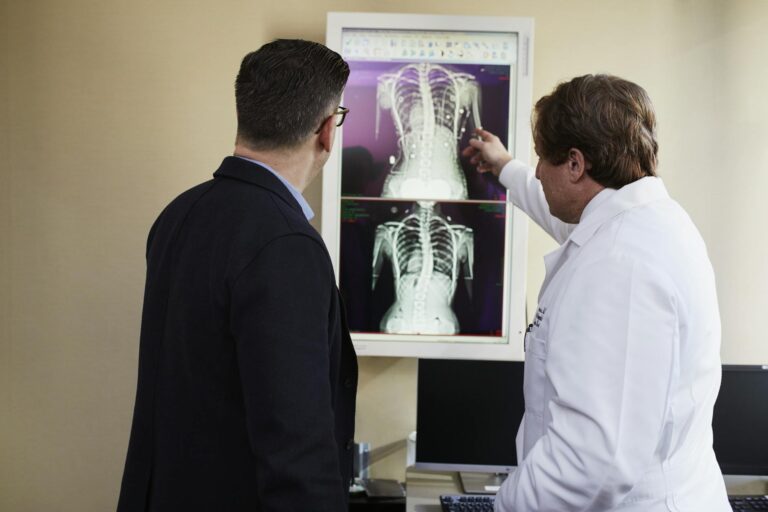
This is perhaps the most frustrating symptom of all: patients report genuine, disabling leg and pelvic pain, but their MRI, CT, or X-rays come back normal or show only mild degenerative changes that don’t match the severity of their symptoms. This is classic for pelvic instability and sacroiliac joint dysfunction because standard imaging doesn’t reliably reveal SI joint dysfunction. The Mayo Clinic and other major medical centers note that MRI, CT, and bone scans do not reliably determine whether the SI joint is the source of pain; they may rule out other diagnoses but often miss SI joint problems entirely. The gold standard for diagnosis of SI joint pain is image-guided diagnostic injections, where a provider injects local anesthetic directly into the sacroiliac joint and observes whether the patient’s symptoms resolve. If your pain disappears after the injection, you know the SI joint is the source.
This is far more reliable than structural imaging. Many patients suffer for months or years because they received a normal MRI and assumed either that their pain wasn’t real or that they needed increasingly aggressive interventions—when in fact they needed specialized SI joint evaluation and treatment. The lesson: a normal MRI doesn’t mean you don’t have a real problem. Pelvic instability, sacroiliac joint dysfunction, and pelvic floor myofascial pain are real mechanical problems that won’t show up on standard imaging. If your pain is real but your imaging is normal, ask your doctor about SI joint-specific tests or pelvic floor evaluation rather than assuming the problem is in your head.
Conclusion
The eight symptoms of pelvic instability—radiating buttock and thigh pain, positional numbness and tingling, deep pelvic aching, leg weakness and instability, hip and groin pain, urinary or bowel changes, mechanical pain that responds to position changes, and normal imaging despite real symptoms—create a recognizable pattern that distinguishes pelvic dysfunction from true sciatica. The good news is that once you know what to look for, the distinction becomes clearer, and treatment can finally target the actual problem.
If you’re experiencing leg pain that’s been attributed to sciatica but isn’t responding to standard treatment, ask your healthcare provider about sacroiliac joint dysfunction and pelvic floor dysfunction. A referral to a pelvic health physical therapist or a specialist trained in SI joint evaluation can provide the targeted assessment you need. Many patients spend months or years getting the wrong diagnosis; with the right one, effective treatment and recovery are often quite achievable.
Frequently Asked Questions
Can you have both sciatica and pelvic instability at the same time?
Yes, absolutely. Some patients have a disc herniation compressing the sciatic nerve along with concurrent sacroiliac joint dysfunction or pelvic floor tension. This is why comprehensive evaluation is important—your provider needs to assess both the spine and the pelvis to identify what’s contributing to your symptoms.
Why do doctors miss pelvic instability so often?
Standard imaging doesn’t show it well, and many providers are trained to look for structural nerve compression (sciatica) rather than mechanical pelvic dysfunction. Pelvic floor dysfunction and SI joint dysfunction require specific hands-on examination skills and familiarity with referral pain patterns that not all providers have. Seeing someone specialized in pelvic health or SI joint disorders often yields better diagnosis.
How long does it take to recover from pelvic instability?
Recovery timelines vary widely based on how long the dysfunction has existed and how consistent treatment is. Some patients feel improvement within weeks of starting pelvic floor physical therapy; others need several months of consistent work. The good news is that pelvic instability is highly treatable once properly diagnosed.
Can pelvic instability cause permanent nerve damage?
Pelvic instability itself doesn’t damage nerves permanently, but severe or prolonged compression from untreated dysfunction theoretically could. The key is getting proper diagnosis and treatment early rather than letting the problem persist for years.
What physical therapy exercises help pelvic instability?
Specific exercises depend on whether the pelvic floor muscles are too tight (needing relaxation) or too weak (needing strengthening). A pelvic health physical therapist will assess your individual pattern and prescribe accordingly. This is not a situation where standard core strengthening exercises work—you need pelvic-specific treatment.
Should I see a gynecologist, neurologist, or physical therapist for pelvic instability?
Ideally, a pelvic health physical therapist is your best first step because they specialize in exactly this problem. Many gynecologists are trained in pelvic dysfunction as well. You may also benefit from initial evaluation by your primary care doctor or a specialist in SI joint dysfunction to confirm the diagnosis before committing to treatment.