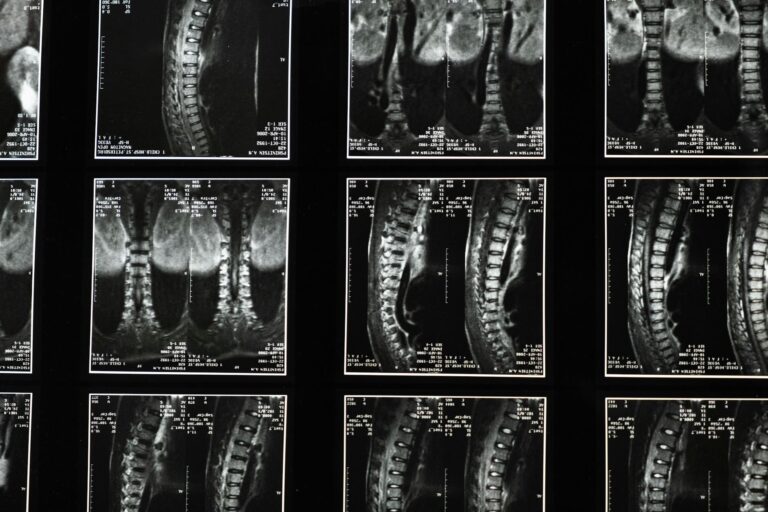
SI joint inflammation, known clinically as sacroiliitis, announces itself through a predictable cluster of warning signs that too many people dismiss as ordinary back pain. The eight most common signs include lower back and buttock pain concentrated on one side, pain triggered by transitional movements like climbing stairs, discomfort from prolonged sitting or standing, morning stiffness in the lower back and pelvis, numbness or tingling radiating into the leg, a sensation of the leg buckling or giving way, sleep disturbance caused by positional pain, and a distinctive burning feeling in the pelvis. If several of these sound familiar, you are far from alone. The SI joint is the source of pain in an estimated 15 to 30 percent of patients with chronic low back pain, according to research published in NCBI StatPearls, yet the condition remains widely underdiagnosed.
For readers of a brain health and dementia care site, this topic carries particular relevance. Chronic pain conditions like sacroiliitis can accelerate cognitive decline in older adults by disrupting sleep architecture, limiting physical activity, and increasing reliance on medications that carry their own neurological risks. Consider a 72-year-old woman caring for a spouse with Alzheimer’s who chalks up her worsening hip and back pain to “just getting older.” She stops walking daily because it hurts, sleeps poorly because she cannot find a comfortable position, and gradually becomes more sedentary and isolated. Understanding the signs of SI joint inflammation is a practical step toward preserving both physical mobility and cognitive function. The sections below walk through each of the eight signs in detail, explain how diagnosis works, and outline when it is time to see a specialist.
Table of Contents
- What Does SI Joint Inflammation Actually Feel Like, and Why Is It Mistaken for Other Conditions?
- Morning Stiffness and Prolonged Sitting — The Inflammation Pattern That Points to Your SI Joint
- Numbness, Tingling, and the Leg That Feels Like It Might Give Way
- How Sleep Disruption and Chronic Pain Create a Vicious Cycle for Brain Health
- The Burning Sensation and Why SI Joint Pain Is So Often Misdiagnosed
- SI Joint Inflammation in Caregivers — A Population at Particular Risk
- Advances in Diagnosis and What to Expect Going Forward
- Conclusion
- Frequently Asked Questions
What Does SI Joint Inflammation Actually Feel Like, and Why Is It Mistaken for Other Conditions?
The hallmark of sacroiliitis is pain in the lower back and buttocks, but the character of that pain varies enough to send people down the wrong diagnostic path for months or even years. Some patients describe a deep, dull ache that sits low on one side of the spine, just above the tailbone. Others report sharp, stabbing pain that flares without warning when they shift weight from one foot to the other. The pain frequently radiates into the lower hip, groin, or upper thigh, which is precisely why it gets confused with hip arthritis, lumbar disc problems, or sciatica. A retired teacher might spend six months treating a supposed herniated disc before a clinician finally identifies the SI joint as the real source. What makes SI joint pain distinctive is how it responds to movement. According to the Mayo Clinic, pain from sacroiliitis tends to worsen with prolonged standing, walking, or stair climbing. Transitional movements are the biggest triggers.
Getting out of a car after a long drive, rising from a low chair, or pivoting to reach something behind you can produce a sudden spike in pain that stops you mid-motion. Running and forward bending are also common aggravators. This pattern differs from lumbar disc pain, which often worsens with sitting and improves with walking, and from hip osteoarthritis, which tends to produce a more constant ache in the groin. Paying attention to exactly when and how the pain behaves is one of the most useful things you can do before a medical appointment. The diagnostic confusion matters because treatment for SI joint dysfunction differs substantially from treatment for disc or hip problems. Point prevalence of SI joint pain is estimated at roughly 25 percent in adult patients with chronic low back pain, meaning a quarter of people being treated for generic “low back pain” may actually have a sacroiliac problem that requires targeted intervention. Misdiagnosis does not just delay relief. It can lead to unnecessary imaging, ineffective physical therapy protocols, or even surgeries that never addressed the actual pain generator.

Morning Stiffness and Prolonged Sitting — The Inflammation Pattern That Points to Your SI Joint
One of the more telling signs of SI joint inflammation is stiffness in the lower back and pelvis that greets you first thing in the morning. You swing your legs over the side of the bed and the lower spine feels locked, as though someone poured concrete around the base of your back while you slept. Walking to the bathroom is slow and guarded. Within 20 to 45 minutes of moving around, the stiffness loosens and the pain recedes to a tolerable background hum. This pattern of morning stiffness that improves with activity is characteristic of inflammatory joint conditions and is also a hallmark of ankylosing spondylitis, a disease closely associated with sacroiliitis. Prolonged sitting produces a similar flare cycle. Long car rides, extended desk work, or sitting through a two-hour medical appointment can leave the SI joint stiff and aching. Patients often report that they unconsciously shift their weight to one side, sitting lopsided to take pressure off the inflamed joint.
They may cross and uncross their legs repeatedly or stand up and pace when the discomfort becomes too much. This is not restlessness or anxiety. It is the body’s attempt to unload a joint that is sending distress signals. However, morning stiffness alone does not confirm SI joint inflammation. Lumbar spinal stenosis, rheumatoid arthritis, and fibromyalgia can all produce similar symptoms. The distinguishing factor is location and laterality. SI joint stiffness tends to concentrate on one side, low in the back near the dimples just above the buttocks, and it responds to movement rather than rest. If your stiffness is bilateral, affects the mid or upper back, or does not improve with gentle activity, the source is likely something other than the SI joint, and the diagnostic workup should reflect that difference.
Numbness, Tingling, and the Leg That Feels Like It Might Give Way
Among the more unsettling signs of SI joint inflammation are neurological symptoms in the legs. Patients describe numbness, tingling, or a pins-and-needles sensation that runs down one leg, often mimicking sciatica so closely that clinicians initially investigate the lumbar spine for a herniated disc. According to Weill Cornell Neurological Surgery, these sensations can make diagnosis tricky because the symptom overlap between SI joint dysfunction and lumbar radiculopathy is significant. A 68-year-old man who feels tingling in his left thigh every time he stands up from dinner may undergo an MRI of his lumbar spine that shows age-related disc changes, get treated for a disc problem he does not actually have, and wonder why nothing improves. Perhaps more alarming is the sensation that the leg may buckle or give out while walking. According to Cedars-Sinai, this instability or “giving way” sensation is a recognized symptom of SI joint dysfunction and can meaningfully affect gait and balance. For older adults, particularly those already navigating the physical demands of caregiving, this symptom raises fall risk substantially.
A caregiver who feels her leg buckle while helping a loved one transfer from bed to wheelchair is in a dangerous situation for both of them. The instability is not caused by actual muscle weakness in most cases. Rather, it appears to be a reflexive inhibition response, where the nervous system temporarily shuts down muscle activation to protect the inflamed joint. The practical takeaway is this: if you are experiencing leg symptoms alongside low back or buttock pain, do not assume it must be a disc problem. Ask your clinician specifically about the SI joint. A targeted physical examination using provocation tests, where the examiner applies specific stresses to the SI joint to reproduce your pain, can help differentiate between lumbar and sacroiliac sources. Getting the right diagnosis first time matters enormously for older adults, who have less tolerance for prolonged diagnostic detours and the cumulative effects of untreated pain.

How Sleep Disruption and Chronic Pain Create a Vicious Cycle for Brain Health
SI joint inflammation commonly disrupts sleep, and this is where the condition intersects most directly with cognitive health. Patients report that lying on the affected side produces sharp pain that wakes them repeatedly through the night. Finding a comfortable position becomes a nightly ordeal of pillow rearrangement, leg repositioning, and resigned trips to the recliner at three in the morning. The pain is positional, meaning it changes depending on how body weight is distributed across the pelvis, and a standard mattress offers no targeted relief. The consequences of chronic sleep disruption extend well beyond daytime fatigue. Research has consistently linked fragmented sleep to accelerated amyloid-beta accumulation in the brain, a protein implicated in Alzheimer’s disease. For someone already at elevated risk for dementia due to age, genetics, or cardiovascular factors, adding months or years of pain-disrupted sleep is compounding that risk.
Compare two scenarios: a person whose SI joint pain is identified and treated within three months versus a person who endures two years of poor sleep before getting a correct diagnosis. The second person has not just suffered more pain. They have potentially experienced measurable changes in sleep-dependent brain clearance processes. There is a tradeoff worth acknowledging here. Some of the medications used to manage SI joint pain, including opioids, gabapentinoids, and muscle relaxants, can themselves impair cognition, increase fall risk, and cause daytime sedation. For older adults, particularly those with mild cognitive impairment, the pharmaceutical approach to pain management must be weighed carefully against non-pharmacological options like physical therapy, SI joint belts, corticosteroid injections, and ergonomic modifications. The goal is not just to reduce pain but to do so in a way that does not trade one risk to brain health for another.
The Burning Sensation and Why SI Joint Pain Is So Often Misdiagnosed
A burning feeling in the pelvic region is one of the less commonly discussed but very real signs of SI joint inflammation. The Cleveland Clinic notes that sacroiliitis causes pain in the lower back, buttocks, or legs, and this pain can manifest as a burning or hot sensation distinct from the sharp or aching patterns most people expect from a joint problem. Patients sometimes describe it as feeling like a sunburn deep inside the pelvis, a sensation that does not respond to ice or topical treatments because the source is internal and inflammatory. This symptom often leads to diagnostic confusion. A burning sensation in the pelvis might prompt investigation for urological problems, gynecological conditions, or peripheral neuropathy before anyone considers the SI joint. Sacroiliitis is frequently associated with ankylosing spondylitis and other inflammatory spondyloarthropathies, conditions that may take years to diagnose definitively.
Diagnosis of SI joint dysfunction itself often involves a combination of physical provocation tests, MRI imaging to look for inflammation or joint changes, and confirmatory diagnostic anesthetic injections into the SI joint. If an injection of local anesthetic into the SI joint under fluoroscopic guidance eliminates or dramatically reduces the pain, that is strong evidence that the joint is the pain generator. A limitation worth noting: imaging alone is not always reliable. MRI may show SI joint abnormalities in people who have no pain, and it may appear normal in people whose SI joints are clearly the source of their symptoms. This is why the diagnostic process typically requires multiple lines of evidence rather than a single test. If your clinician is relying solely on an X-ray or MRI to rule out SI joint problems, it may be worth asking about provocation testing or a diagnostic injection.

SI Joint Inflammation in Caregivers — A Population at Particular Risk
The physical demands of dementia caregiving place enormous stress on the sacroiliac joint. Lifting, transferring, bending to assist with bathing and dressing, and the sustained postures required to manage a loved one’s daily needs all load the SI joint repeatedly. A caregiver who spends two years helping her husband transfer from bed to chair multiple times a day, often using imperfect body mechanics because the situation does not allow for textbook lifting technique, is at elevated risk for SI joint dysfunction. When that caregiver starts noticing one-sided low back pain, morning stiffness, and a leg that occasionally feels unsteady, the connection to her caregiving activities may not be immediately obvious to her or her doctor.
Caregivers also tend to delay seeking treatment for their own symptoms, prioritizing the care recipient’s medical needs. This delay allows inflammation to become entrenched and compensatory movement patterns to develop, making eventual treatment more complex. If you are a caregiver experiencing any combination of the signs described in this article, treating the problem early is not self-indulgent. It is essential to your ability to continue providing care safely.
Advances in Diagnosis and What to Expect Going Forward
The field of SI joint diagnosis and treatment has improved considerably over the past decade. Minimally invasive SI joint fusion procedures have become more standardized, and the evidence base supporting their use in carefully selected patients has grown. Physical therapy protocols specifically targeting SI joint stability, rather than generic low back exercises, are more widely available than they were even five years ago. For older adults, the development of image-guided injection techniques has made diagnostic and therapeutic injections safer and more accurate.
Looking ahead, the intersection of chronic pain management and cognitive health is receiving more research attention. Clinicians are increasingly aware that untreated musculoskeletal pain in older adults is not merely a quality-of-life issue but a modifiable risk factor for cognitive decline. As this understanding matures, we can expect more integrated care models where pain specialists and neurologists collaborate rather than working in parallel silos. For now, the most important step anyone can take is recognizing the signs early and pursuing a specific diagnosis rather than accepting vague labels like “low back pain” or “arthritis.”.
Conclusion
SI joint inflammation produces a recognizable pattern of symptoms: one-sided lower back and buttock pain, pain triggered by transitional movements and prolonged positioning, morning stiffness that loosens with activity, neurological symptoms in the legs, instability, sleep disruption, and a burning pelvic sensation. With SI joint dysfunction accounting for an estimated 15 to 30 percent of chronic low back pain cases, the condition is common enough that it should be on every clinician’s differential diagnosis list, yet it remains frequently overlooked. For older adults and dementia caregivers, the stakes of misdiagnosis or delayed treatment extend beyond pain itself. Chronic pain disrupts sleep, limits physical activity, increases medication burden, and compounds cognitive risk.
If the signs described in this article match your experience, bring them to your doctor with specificity. Describe when the pain occurs, where it is located, and how it has changed your daily function. Ask about SI joint provocation testing. Getting the right diagnosis is the first step toward protecting both your mobility and your long-term brain health.
Frequently Asked Questions
Can SI joint inflammation cause sciatica-like symptoms?
Yes. SI joint dysfunction can produce numbness, tingling, and radiating leg pain that closely mimics sciatica caused by a lumbar disc herniation. According to Weill Cornell Neurological Surgery, this overlap makes diagnosis tricky. The key difference is that SI joint-related leg symptoms typically do not follow a specific nerve root pattern and are often accompanied by pain directly over the SI joint itself, near the dimples of the lower back.
How is SI joint inflammation diagnosed?
Diagnosis usually involves three elements: a clinical exam using physical provocation tests that stress the SI joint to reproduce pain, imaging such as MRI to look for signs of inflammation, and in many cases a confirmatory diagnostic anesthetic injection directly into the SI joint. If the injection substantially reduces pain, the SI joint is confirmed as the source. No single test is definitive on its own.
Is SI joint inflammation the same as ankylosing spondylitis?
Not exactly. Sacroiliitis, or inflammation of the SI joint, is one of the earliest and most common manifestations of ankylosing spondylitis, but it can also occur independently due to mechanical stress, injury, pregnancy, or degenerative changes. Ankylosing spondylitis is a systemic inflammatory disease that affects the entire spine over time, while isolated SI joint inflammation may remain localized.
What makes SI joint pain worse?
According to the Mayo Clinic, SI joint pain tends to worsen with prolonged standing, walking, and stair climbing. Transitional movements such as getting out of a car, rising from a chair, or rolling over in bed are particularly aggravating. Long periods of sitting, especially on hard surfaces, also commonly flare the condition.
Should I be concerned about SI joint inflammation affecting my brain health?
Indirectly, yes. Chronic SI joint pain disrupts sleep, reduces physical activity, and may increase reliance on medications that affect cognition. All of these factors have been linked to elevated dementia risk in older adults. Treating the pain effectively and maintaining mobility are practical steps toward protecting long-term cognitive function.