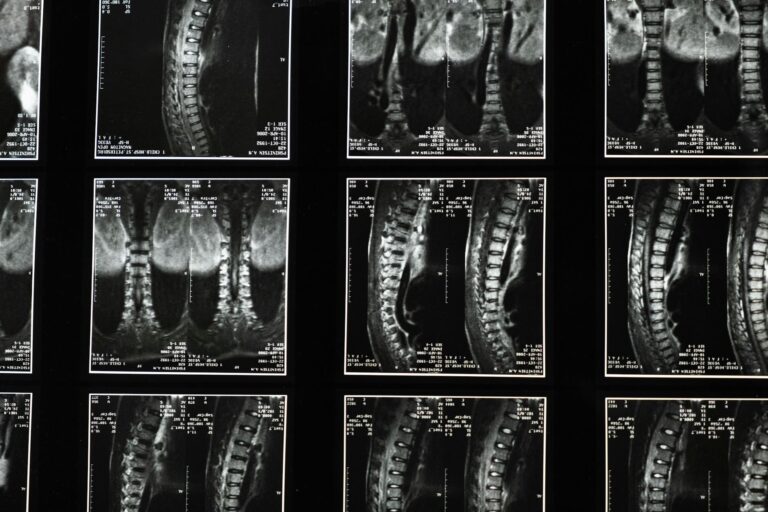
The eight signs of a lumbar spine injury are lower back pain, radiating leg pain (sciatica), muscle spasms, stiffness and reduced range of motion, numbness or tingling in the legs and feet, leg weakness, loss of bladder or bowel control, and difficulty standing upright. Some of these signs are inconveniences that resolve with rest and physical therapy. Others, particularly loss of bladder or bowel control, constitute a medical emergency that demands immediate surgical intervention. Knowing the difference can mean the gap between a full recovery and permanent nerve damage. Consider a 72-year-old woman who bends down to pick up a grandchild and feels a sudden, sharp catch in her lower back. Over the next few hours, the pain deepens. By evening, her left foot feels numb.
She assumes it will pass. What she does not realize is that the numbness signals nerve compression at the lumbar vertebrae, and waiting too long could allow the damage to become irreversible. This scenario plays out in emergency rooms every day, across every age group. Low back pain is the leading cause of disability worldwide, affecting an estimated 619 million people globally in 2020, with projections suggesting that number will climb to 843 million by 2050, according to a Global Burden of Disease Study published in The Lancet. This article walks through each of the eight warning signs in detail, explains why some matter more urgently than others, and outlines exactly when to seek emergency care. For families managing dementia care, lumbar spine injuries carry additional complications. A person with cognitive decline may not be able to articulate where the pain is, describe tingling sensations, or report changes in bladder function. Caregivers need to recognize these signs through observation and behavioral changes rather than relying on verbal reports alone.
Table of Contents
- What Are the First Warning Signs of a Lumbar Spine Injury?
- Sciatica and Radiating Leg Pain as a Lumbar Injury Indicator
- Numbness, Tingling, and Weakness in the Legs After a Lumbar Injury
- When a Lumbar Spine Injury Becomes a Medical Emergency
- Age-Related Differences in Lumbar Spine Injuries
- Stiffness, Posture Changes, and Subtle Signs Caregivers Should Watch For
- The Road Ahead for Lumbar Spine Injury Recognition and Care
- Conclusion
- Frequently Asked Questions
What Are the First Warning Signs of a Lumbar Spine Injury?
The most common initial sign is straightforward lower back pain. It can arrive as a sharp, stabbing sensation during a specific movement or settle in as a dull, persistent ache that worsens over days. According to the Cleveland Clinic, roughly 80 percent of adults experience low back pain at some point in their lives, making it one of the most universal medical complaints. The pain typically centers between the bottom of the rib cage and the top of the legs, and it may intensify with bending, lifting, or prolonged sitting. The second early sign is muscle spasms. After a strain or injury, the muscles surrounding the lumbar spine can contract involuntarily and with surprising force. Johns Hopkins Medicine notes that these spasms can be severe enough to make it impossible to stand, walk, or shift position in bed.
Spasms are the body’s protective mechanism, an attempt to splint the injured area and prevent further damage. They are also agonizingly painful in their own right, and people sometimes mistake the spasm itself for the primary injury rather than recognizing it as a response to underlying damage. What separates a routine bout of back pain from a genuine lumbar spine injury is persistence, progression, and accompanying symptoms. A muscle strain from weekend yard work that improves steadily over a few days is a different clinical picture from pain that worsens, spreads into the legs, or arrives alongside numbness. The distinction matters because the treatment paths diverge sharply. A strain may need nothing more than ice, gentle movement, and over-the-counter anti-inflammatories. A disc herniation compressing a nerve root may require imaging, specialist referral, and potentially surgery.
Sciatica and Radiating Leg Pain as a Lumbar Injury Indicator
Radiating pain that travels from the lower back through the buttock and down the back of one or both legs is known as sciatica, and it is one of the clearest indicators that a lumbar injury involves nerve compression. The Mayo Clinic identifies this pattern as distinct from localized back pain because it follows the path of the sciatic nerve, the longest nerve in the body. The pain can feel like a burning line drawn from the hip to the ankle, and it often worsens with coughing, sneezing, or sitting for extended periods. However, not all leg pain connected to the back is true sciatica. Referred pain from tight muscles, sacroiliac joint dysfunction, or hip arthritis can mimic the pattern without involving the sciatic nerve at all.
The clinical difference matters because treatment for genuine nerve compression may include epidural steroid injections or surgical decompression, while referred pain from muscular sources responds better to physical therapy and manual treatment. If leg pain follows a specific nerve distribution, worsens with certain spinal positions, and comes with numbness or tingling in a predictable pattern, the likelihood of true sciatica increases significantly. For older adults and those with dementia, sciatica presents a particular challenge. A person who cannot clearly describe the location or quality of their pain may simply refuse to walk, become agitated when moved, or guard one leg during transfers. Caregivers who notice a sudden change in mobility or a reluctance to bear weight on one side should consider the possibility of lumbar nerve involvement, especially if the change follows a fall or awkward movement.
Numbness, Tingling, and Weakness in the Legs After a Lumbar Injury
Signs five and six, numbness or tingling in the legs and feet and leg weakness, represent a significant escalation in severity. These symptoms indicate that the injury has progressed beyond soft tissue damage to involve the spinal nerves themselves. According to SpinalCord.com and the National Institute of Neurological Disorders and Stroke, injuries at the L3 through L5 vertebrae can affect the hips and legs, producing numbness or tingling that extends all the way to the feet. When these symptoms appear in both legs simultaneously, it is a red flag for serious nerve compression that requires urgent evaluation. Leg weakness is particularly alarming. The Cleveland Clinic and Mayo Clinic both identify weakness in one or both legs as a warning sign of potential nerve root compression or spinal cord involvement. A person might notice that their foot slaps the ground when walking, that they cannot rise from a chair without using their arms, or that one leg simply gives out during standing.
This is not muscular fatigue. It is a neurological deficit, and it signals that the nerve supply to the leg muscles is being interrupted. A specific example illustrates the stakes. A 68-year-old man with moderate Alzheimer’s disease begins dragging his right foot. His caregiver assumes it is related to his cognitive decline, perhaps a new phase of motor deterioration. In reality, he has a lumbar disc herniation compressing the L4 nerve root, and the foot drop is entirely treatable if caught early. Weeks of delay, attributed to the dementia rather than a new spinal problem, can result in permanent weakness. This is why any new neurological symptom in a person with dementia deserves a fresh medical evaluation rather than automatic attribution to the existing diagnosis.

When a Lumbar Spine Injury Becomes a Medical Emergency
The seventh sign, loss of bladder or bowel control, transforms a lumbar spine injury from an orthopedic concern into a surgical emergency. Johns Hopkins Medicine and the Mayo Clinic describe this presentation as cauda equina syndrome, a condition in which the bundle of nerves at the base of the spinal cord becomes severely compressed. Without emergency decompression surgery, the damage to these nerves can become permanent, leading to lifelong incontinence, sexual dysfunction, and leg weakness. The tradeoff that patients and families face is between watchful waiting and decisive action. Most lumbar injuries improve with conservative treatment, and the vast majority of people with back pain never need surgery. This creates a reasonable bias toward patience. But cauda equina syndrome is the exception that punishes patience.
The window for surgical intervention is narrow, often measured in hours rather than days. The practical rule is this: if back pain is accompanied by new difficulty urinating, loss of bowel control, or rapidly progressive numbness spreading down both legs, go to the emergency department immediately. Do not wait for a scheduled appointment. Do not assume it will resolve overnight. For dementia caregivers, recognizing this emergency is complicated by the fact that many people with advanced dementia already experience incontinence. The key indicator is change. A person who has been continent and suddenly loses control, or a person whose existing incontinence pattern shifts dramatically alongside new back pain or leg symptoms, needs emergency evaluation. Documenting baseline continence patterns makes it possible to identify these changes when they occur.
Age-Related Differences in Lumbar Spine Injuries
The type of lumbar spine injury a person is likely to sustain varies significantly with age, and this affects both recognition and treatment. According to StatPearls, published through the National Center for Biotechnology Information, younger individuals more commonly experience acute muscular strain, ligamentous injury, or disc herniation. These injuries tend to have clear onset events, such as a sports injury, lifting accident, or car crash, and they produce dramatic, hard-to-ignore symptoms. Older adults face a different profile of injury. Degenerative disc disease, osteoporotic compression fractures, and spinal stenosis are the more likely culprits. These conditions often develop gradually, with symptoms that creep in over weeks or months rather than arriving suddenly. A compression fracture in an osteoporotic spine can occur during an activity as mundane as stepping off a curb, and the resulting pain may be attributed to general aging rather than a specific injury.
The limitation of relying on a clear injury event as a diagnostic clue is that many lumbar spine injuries in older adults have no such event. The absence of a memorable incident does not mean the absence of a real injury. The epidemiological data underscores how common these injuries are across the population. While traumatic lumbar spine injury occurs at a rate of approximately 1.64 per million population, according to a 2024 meta-analysis published in BMC Medicine, the broader category of low back pain affects hundreds of millions. In 2021, approximately 14.5 million people worldwide were living with spinal cord injuries of varying severity, according to the Global Burden of Disease Study. These are not rare events. They are among the most prevalent sources of disability on the planet.

Stiffness, Posture Changes, and Subtle Signs Caregivers Should Watch For
The fourth and eighth signs, stiffness with reduced range of motion and difficulty maintaining an upright posture, are among the subtler indicators of lumbar spine injury. The Cleveland Clinic notes that people with lumbar injuries often struggle to get up from a seated position, requiring significant effort and sometimes needing to push off from armrests or nearby surfaces. Their posture may shift, leaning forward or to one side as the body instinctively avoids positions that increase nerve compression or muscle pain.
In a dementia care setting, these signs may manifest as resistance to transfers, increased agitation during dressing, or a new tendency to lean heavily to one side in a wheelchair. A person who previously walked independently but now grips furniture with white knuckles while crossing a room may be compensating for lumbar pain and instability rather than experiencing a decline in cognitive-motor function. Caregivers who document posture, gait patterns, and transfer behaviors over time create a baseline that makes these changes visible when they occur.
The Road Ahead for Lumbar Spine Injury Recognition and Care
The projected rise in low back pain cases, from 619 million in 2020 to an estimated 843 million by 2050, reflects both an aging global population and the cumulative toll of sedentary lifestyles, occupational strain, and longer life expectancy. For the dementia care community, this trend means that lumbar spine injuries will become an increasingly common comorbidity, one that complicates mobility, increases fall risk, and can accelerate functional decline if left untreated. Improved screening protocols for nonverbal or cognitively impaired patients represent one of the most important frontiers in this area.
Pain assessment tools designed for people who cannot self-report, combined with caregiver education on the eight warning signs, can close the gap between injury occurrence and diagnosis. The goal is not to turn every caregiver into an orthopedic specialist. It is to ensure that the signs that matter most, particularly those that signal nerve compression or cauda equina syndrome, are recognized quickly enough to preserve the window for effective treatment.
Conclusion
The eight signs of lumbar spine injury range from the common and manageable, such as lower back pain and muscle stiffness, to the rare and urgent, such as loss of bladder or bowel control. Understanding this spectrum allows patients, families, and caregivers to respond proportionally. Most back pain improves with conservative care. But the signs that involve the nervous system, including radiating leg pain, numbness, tingling, and especially leg weakness or incontinence, require prompt medical evaluation because the consequences of delay can be permanent.
For those caring for a person with dementia, the challenge is doubled. The person most affected may be the least able to describe what they are feeling. Learning to read behavioral changes, documenting baseline mobility and continence patterns, and maintaining a low threshold for seeking medical evaluation when something shifts are the practical steps that translate knowledge of these eight signs into better outcomes. When in doubt, pursue evaluation. The cost of an unnecessary doctor visit is trivial compared to the cost of a missed cauda equina syndrome.
Frequently Asked Questions
Can a lumbar spine injury cause permanent damage?
Yes. Prolonged nerve compression, particularly in cases of cauda equina syndrome, can cause permanent incontinence, sexual dysfunction, and leg weakness if not treated surgically within hours. Most lumbar injuries, however, resolve with conservative treatment and do not result in lasting damage.
How is a lumbar spine injury diagnosed?
Diagnosis typically begins with a physical examination and medical history, followed by imaging studies such as X-rays, MRI, or CT scans. MRI is particularly useful for visualizing soft tissue structures like discs and nerves. Nerve conduction studies may be ordered if there is uncertainty about which nerve is involved.
What is the difference between a lumbar strain and a herniated disc?
A lumbar strain involves damage to muscles or ligaments and generally heals within weeks. A herniated disc involves the soft material inside a spinal disc pushing outward and potentially compressing a nerve, which can produce radiating leg pain, numbness, and weakness. Strains cause localized pain; herniations more commonly cause symptoms that travel down the legs.
Should I go to the emergency room for back pain?
Most back pain does not require emergency care. However, the Mayo Clinic and Cleveland Clinic recommend seeking immediate medical attention if back pain is accompanied by loss of bladder or bowel control, weakness in both legs, numbness spreading down both legs, or if the pain follows a traumatic event like a fall or car accident.
Are older adults more susceptible to lumbar spine injuries?
Older adults are more prone to specific types of lumbar injury, including osteoporotic compression fractures, degenerative disc disease, and spinal stenosis. These conditions often develop gradually and may lack a clear triggering event, which can delay diagnosis.