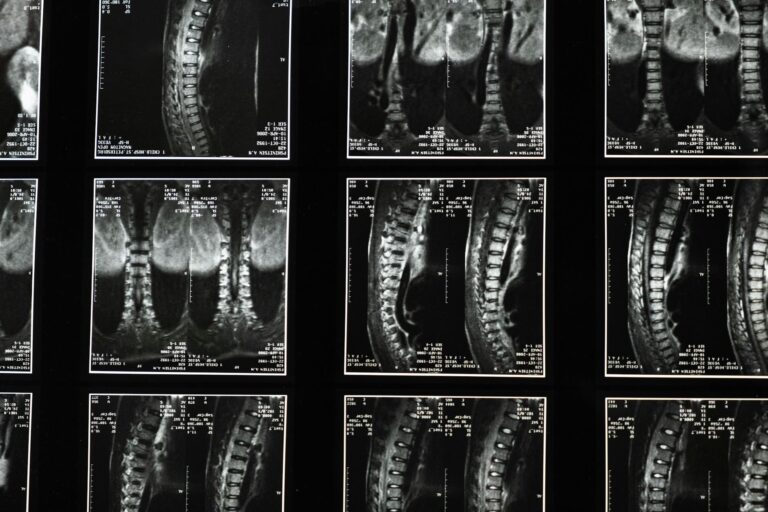
Lumbar disc degeneration is one of the most common age-related changes doctors observe in the spine, yet many people are surprised to learn it’s often not about wear-and-tear from daily life. Research shows that genetics and natural aging account for the majority of disc degeneration cases—not occupational stress or lifestyle factors as once believed. The process begins early: by your 20s, roughly 30% of people already show some degree of disc deterioration, and by age 80, over 96% have significant degeneration.
Understanding the eight primary causes doctors see with age is essential for anyone experiencing back pain or concerned about spinal health as they age. This comprehensive guide breaks down each cause—from genetic predisposition to water loss in the discs to smoking’s impact on spinal blood flow—and explains why some people develop symptoms while others remain pain-free despite identical imaging findings. We’ll also explore how occupational factors, body weight, and previous injuries contribute to the process, and why the lowest lumbar vertebrae are particularly vulnerable.
Table of Contents
- Why Age Alone Doesn’t Fully Explain Disc Degeneration
- Water Loss in the Discs—The Foundation of Degeneration
- Genetic Factors—The Strongest Predictor of Disc Health
- Smoking’s Direct Impact on Disc Health and Healing
- Occupational and Repetitive Stress—A More Limited Role Than Previously Thought
- Obesity and Its Effect on Spinal Load
- Disc Injury and Repetitive Stress From Daily Activities
- Conclusion
Why Age Alone Doesn’t Fully Explain Disc Degeneration
Age is the most obvious risk factor, yet the relationship is more complex than simply “older spine equals damaged disc.” Almost everyone over 40 shows some level of disc degeneration on imaging, even without any symptoms or history of injury. What’s remarkable is that this degeneration begins far earlier than most people realize. By age 50, over 70% of men and 77% of women have disc degeneration; after age 50, that number climbs above 90% in both genders. The progression follows a predictable timeline, but the presence of degeneration on an MRI doesn’t automatically mean pain or disability.
The key distinction is between asymptomatic and symptomatic disc degeneration. Two 65-year-olds might have identical imaging findings, yet one experiences chronic pain while the other has no symptoms whatsoever. This discrepancy points to a crucial reality: the structural changes of aging are nearly universal, but how they manifest depends heavily on other factors—genetics, previous injuries, lifestyle, and individual disc composition. Simply reaching a certain age doesn’t doom your spine; it means you’re statistically more likely to show degeneration on imaging.

Water Loss in the Discs—The Foundation of Degeneration
Spinal discs are approximately 80% water at birth, and this hydration level is critical to their function. They act as shock absorbers between vertebrae, and that water content gives them flexibility and resilience. As you age, these discs gradually lose moisture—a process called desiccation—reducing their ability to cushion impact and maintain flexibility. This water loss is one of the primary structural changes doctors identify when they diagnose disc degeneration, visible on MRI as a disc that appears darker and less vibrant than a healthy disc.
The loss of disc hydration creates a cascade effect. As the disc loses water, it becomes less able to absorb stress from daily movement. The outer layer (annulus fibrosus) develops small tears more easily, and the inner gel-like core (nucleus pulposus) becomes less pliable. However, understanding this mechanism matters for practical reasons: hydration can be influenced by lifestyle factors like exercise and movement. While you cannot reverse decades of age-related water loss, staying active and maintaining good spinal mechanics may slow the process compared to prolonged immobilization or sedentary behavior.
Genetic Factors—The Strongest Predictor of Disc Health
Genetics emerges as the single strongest predictor of whether you’ll develop disc degeneration, according to medical research. Specific variations in collagen genes—the structural proteins that give discs their strength and elasticity—directly influence disc stability and vulnerability to breakdown. Some people inherit genes that make their discs more resistant to degeneration, while others inherit variants that predispose them to earlier or more severe deterioration, regardless of their lifestyle choices.
These genetic variants work in two main ways: some directly impair the structural integrity of the disc itself, while others trigger immune responses that cause inflammation and accelerate water loss from the disc. This explains why occupational factors, once considered primary causes of degeneration, are now understood to play a much smaller role than genetics. A construction worker with protective genes might have minimal disc degeneration in their 60s, while a sedentary person with less favorable genetic variants develops significant degeneration by their 50s. If you have a family history of back problems or disc disease, you’re at higher genetic risk—but this means being proactive about prevention becomes even more important.

Smoking’s Direct Impact on Disc Health and Healing
Smoking damages spinal discs through a mechanism that extends beyond general health decline: it reduces blood flow to the discs, impairing their ability to heal after injury and accelerating degeneration. The lumbar discs appear particularly vulnerable to smoking’s effects, showing greater damage in smokers compared to smokers’ effects on other spinal regions. This matters because discs have limited blood supply to begin with, and anything that further compromises circulation makes repair more difficult.
The practical implication is that smokers face a double disadvantage: they’re more likely to develop degenerative changes in the first place, and if they do sustain a disc injury, their discs heal more slowly and incompletely. For people concerned about spinal health, smoking cessation becomes especially important not just for general health, but specifically for disc preservation. A 50-year-old smoker with early disc degeneration has additional incentive to quit, knowing that continued smoking will likely accelerate deterioration, while quitting may slow progression.
Occupational and Repetitive Stress—A More Limited Role Than Previously Thought
Careers involving heavy lifting, repeated bending, twisting motions, or prolonged vibration exposure (such as driving trucks or operating heavy machinery) do increase the risk of disc damage and degeneration. Construction workers, nurses who lift patients, warehouse workers, and others in physically demanding jobs face occupational stress on their spinal discs daily. However, recent medical research has fundamentally shifted how doctors understand this risk factor.
Where doctors once believed occupational stress was a primary driver of disc degeneration, current evidence shows it plays a much smaller role compared to genetics and aging. This doesn’t mean occupational stress is irrelevant—a worker with unfavorable genetic variants and a demanding job faces higher risk than someone with the same genetics in a sedentary profession. But it does mean that two people doing identical work may experience very different outcomes based on genetic predisposition. For workers in high-risk occupations, proper body mechanics, core strengthening, and regular movement breaks remain valuable preventive strategies, even though genetics likely matters more overall.

Obesity and Its Effect on Spinal Load
Excess body weight increases mechanical stress on the lumbar spine, and research confirms that obesity is associated with disc degeneration across all spinal regions. The relationship is biomechanical: greater body weight increases the load on the discs and supporting structures, potentially accelerating degenerative changes. A person carrying an extra 50 pounds distributes that weight across their spine with every step, every lift, and every seated moment.
Weight management becomes one of the few lifestyle factors that directly addresses a known cause of disc degeneration. For someone with genetic risk factors and early signs of disc degeneration, weight loss offers a tangible opportunity to reduce ongoing mechanical stress and potentially slow progression. This isn’t about achieving an “ideal” weight but rather reducing the load placed on already-compromised discs.
Disc Injury and Repetitive Stress From Daily Activities
Even ordinary activities can cause small tears in the disc’s outer layer—the annulus fibrosus. A sudden awkward movement while lifting, a fall, or repetitive minor trauma from sports or exercise can create these tears. Once the outer layer is damaged, the process of degeneration can accelerate, as the compromised disc becomes more vulnerable to further breakdown and water loss.
People often underestimate how seemingly minor events can contribute to disc degeneration. A lifting injury at 35 that caused temporary pain might set the stage for accelerated degeneration by 50. This highlights why proper body mechanics, core strengthening, and avoiding unnecessary strain matter throughout life. The goal isn’t to eliminate all physical activity—movement is essential for spinal health—but rather to protect the discs from preventable trauma.
Conclusion
Lumbar disc degeneration results from a combination of factors, with genetics and natural aging playing the dominant roles. While you cannot change your genes or stop aging, understanding these eight causes clarifies which factors you can influence.
Quitting smoking, maintaining a healthy weight, protecting your discs from unnecessary injury, and staying active all contribute to preserving disc health despite genetic predisposition. If you’re experiencing back pain or have been diagnosed with disc degeneration, working with a healthcare provider to address modifiable risk factors—particularly smoking and weight management—offers the most practical path forward. Regular movement, proper body mechanics, and targeted strength training can help manage symptoms and potentially slow progression, regardless of your age or genetic background.