When doctors suspect a herniated disc, they follow a systematic diagnostic process that typically includes seven key evaluations: a detailed patient history, a physical examination with specific movement tests, a neurological exam checking reflexes and sensation, straight leg raise testing, MRI imaging, nerve conduction studies when needed, and sometimes CT scans or discograms for complex cases. No single test confirms a herniated disc on its own — doctors piece together findings from multiple assessments to reach an accurate diagnosis and rule out other conditions that mimic similar symptoms. Consider a 52-year-old woman who visits her doctor with shooting pain down her left leg that started after lifting a heavy box.
Her doctor won’t simply order an MRI and call it a day. Instead, the physician will walk through a careful sequence of clinical evaluations, each one narrowing the possibilities and building a clearer picture of what’s happening in her spine. For readers on a brain health and dementia care site, understanding spinal diagnostics matters more than you might expect — chronic pain from undiagnosed disc problems can worsen cognitive function, disrupt sleep, and complicate dementia caregiving. This article walks through each of the seven diagnostic steps, what doctors are actually looking for, and what the results mean for treatment decisions.
Table of Contents
- What Does a Doctor Look for in Your Medical History When Diagnosing a Herniated Disc?
- How Physical Examination Tests Reveal Disc Herniation Signs
- Why the Neurological Exam Is Critical for Pinpointing Nerve Damage
- What the Straight Leg Raise Test Tells Your Doctor About Disc Problems
- When MRI and Advanced Imaging Become Necessary for Disc Diagnosis
- How Nerve Conduction Studies and Electromyography Aid Diagnosis
- The Role of CT Scans, Discograms, and Emerging Diagnostic Tools
- Conclusion
- Frequently Asked Questions
What Does a Doctor Look for in Your Medical History When Diagnosing a Herniated Disc?
The diagnostic process starts before anyone touches your spine. A thorough patient history is the first and arguably most important step, because it tells the doctor where to focus the rest of the evaluation. Physicians ask about when the pain started, what triggered it, where exactly it radiates, whether it’s worse with sitting or standing, and if there’s any numbness or tingling in the extremities. They also want to know about previous back injuries, occupational hazards, and family history of spinal problems. A patient who describes pain that shoots from the lower back down through the buttock and into the calf is painting a very different clinical picture than someone with dull, generalized lower back ache.
What many patients don’t realize is that the pattern of symptoms often tells the doctor which specific disc is likely affected before any imaging is ordered. Pain radiating to the outside of the foot, for instance, suggests the L5-S1 disc, while pain along the front of the thigh points toward higher lumbar levels. However, this symptom mapping isn’t foolproof — about 30 percent of patients present with atypical pain patterns that don’t neatly correspond to a single disc level. For older adults, the history-taking phase is especially important because age-related degeneration means MRIs frequently show disc abnormalities that aren’t actually causing the patient’s current symptoms. The clinical history helps the doctor distinguish between incidental findings and the real culprit.

How Physical Examination Tests Reveal Disc Herniation Signs
The hands-on physical exam is where the doctor begins testing hypotheses formed during the history. Physicians assess your posture, gait, and range of motion in the spine, watching for asymmetries or guarded movements that suggest nerve irritation. They’ll ask you to bend forward, backward, and to each side, noting which movements reproduce your pain. A patient who can’t bend forward without sharp radiating leg pain is showing a classic sign of a posterior disc herniation pressing on a nerve root.
Palpation along the spine identifies areas of muscle spasm and tenderness, though this finding alone is nonspecific. The more telling part of the physical exam involves functional tests — asking you to walk on your heels and toes, for example, which tests the strength of specific muscle groups innervated by different spinal nerve roots. However, if a patient has pre-existing conditions like peripheral neuropathy from diabetes or balance problems related to cognitive decline, these functional tests become harder to interpret. Doctors caring for older adults or patients with dementia must account for baseline functional limitations that have nothing to do with the spine, which is one reason why disc diagnosis in elderly patients is particularly challenging and often requires more reliance on imaging.
Why the Neurological Exam Is Critical for Pinpointing Nerve Damage
The neurological examination is a focused subset of the physical exam that zeroes in on nerve function. Doctors test three things: reflexes, sensation, and muscle strength in specific distributions that correspond to individual nerve roots. A diminished ankle reflex, for example, points to S1 nerve root involvement, while a weakened knee reflex suggests L3 or L4 compression. The doctor taps your tendons with a reflex hammer not for show, but because reflex changes are among the most objective findings in disc diagnosis — unlike pain, which is subjective, a diminished reflex is measurable and reproducible. Sensory testing involves touching the skin with a pin or light brush in a dermatomal pattern — strips of skin each supplied by a single nerve root.
A patient who can’t feel a pinprick on the top of the foot but has normal sensation elsewhere is giving the doctor a reliable roadmap to the affected nerve. Muscle strength testing uses a standardized grading scale from zero to five, with the doctor applying resistance while the patient pushes or pulls against it. One specific example: a doctor might ask you to pull your big toe upward against resistance. Weakness here specifically implicates the L5 nerve root and the disc between L4 and L5 vertebrae. This level of precision is what separates a thorough neurological exam from a cursory once-over, and it directly influences which imaging studies get ordered and where radiologists focus their attention.

What the Straight Leg Raise Test Tells Your Doctor About Disc Problems
The straight leg raise, or Lasègue’s test, is one of the most well-known clinical tests for lumbar disc herniation, and it’s remarkably simple. You lie flat on your back while the doctor lifts one leg, keeping the knee straight. If raising the leg between 30 and 70 degrees reproduces your radiating leg pain — not just back pain or hamstring tightness, but the actual shooting nerve pain — the test is considered positive. The test works because lifting the straight leg stretches the sciatic nerve and its contributing nerve roots, and if a herniated disc is compressing one of those roots, the added tension reproduces symptoms. The tradeoff with this test is sensitivity versus specificity.
The straight leg raise is highly sensitive, meaning it catches most true herniations — studies show sensitivity around 91 percent. But its specificity is only about 26 percent, meaning many people without herniations also test positive. A positive straight leg raise tells the doctor a herniation is likely but doesn’t prove it. Conversely, the crossed straight leg raise — where lifting the unaffected leg reproduces pain in the symptomatic leg — is far more specific (about 88 percent) but much less sensitive. So if the crossed test is positive, the doctor can be fairly confident a herniation exists, but a negative crossed test doesn’t rule one out. Clinicians weigh these complementary tests together rather than relying on either alone, which is why diagnostic accuracy improves when multiple clinical findings converge.
When MRI and Advanced Imaging Become Necessary for Disc Diagnosis
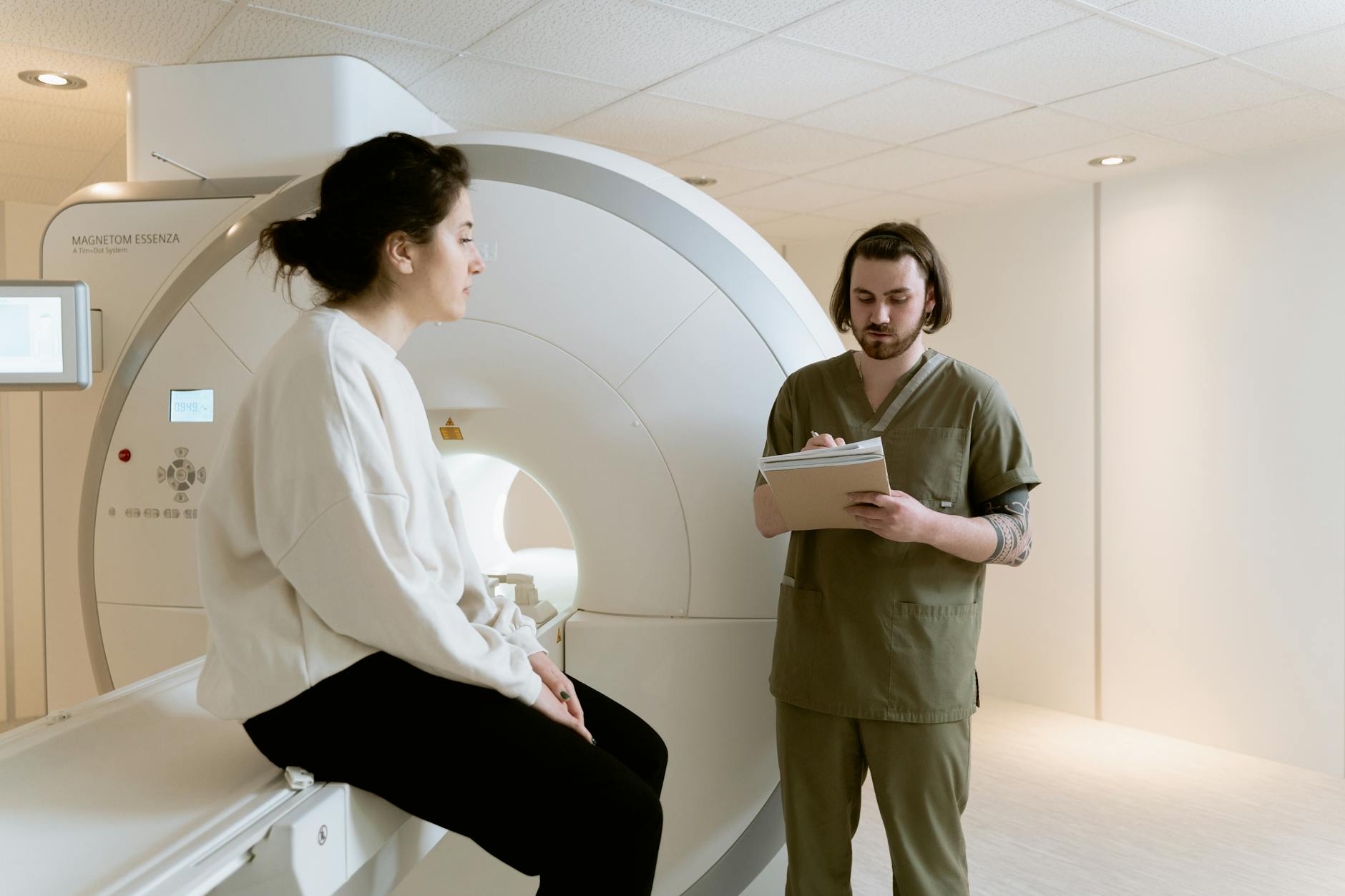
MRI is the gold standard imaging study for herniated discs because it shows soft tissues — including discs, nerves, and the spinal cord — with excellent detail and without radiation exposure. However, most clinical guidelines recommend against ordering an MRI in the first four to six weeks of symptoms unless the patient has red flag findings like progressive neurological deficits, bowel or bladder dysfunction, or suspicion of cancer or infection. The reason for this waiting period is that many herniations improve on their own, and early imaging often leads to unnecessary interventions. Here’s a critical limitation that every patient should understand: MRI findings frequently don’t match symptoms. A landmark study published in the New England Journal of Medicine found that 64 percent of adults with no back pain at all had disc abnormalities on MRI.
This means an MRI showing a bulging or herniated disc doesn’t necessarily explain your pain. Doctors must correlate the imaging findings with the clinical picture — the location of the herniation on MRI should match the nerve root distribution suggested by the physical and neurological exams. When the clinical findings and imaging agree, confidence in the diagnosis is high. When they don’t, the doctor faces a harder decision about whether the disc finding is incidental or meaningful. For older adults, this discrepancy is even more common because age-related disc degeneration is nearly universal, making it essential that the ordering physician reviews the images in context rather than treating the MRI report as a standalone answer.
How Nerve Conduction Studies and Electromyography Aid Diagnosis
When clinical findings are ambiguous or the doctor needs to differentiate a herniated disc from other nerve conditions like peripheral neuropathy, nerve conduction studies and electromyography come into play. EMG involves inserting thin needles into muscles to measure electrical activity, while nerve conduction studies use surface electrodes to test how quickly electrical signals travel along nerves. Together, these tests can confirm whether a nerve root is being compressed and how severely, and they can distinguish radiculopathy from conditions like carpal tunnel syndrome, diabetic neuropathy, or motor neuron disease.
A practical example: a 68-year-old patient with diabetes presents with leg numbness that could be diabetic neuropathy, a herniated disc, or both. The EMG and nerve conduction studies can parse out whether the pattern of nerve damage follows a peripheral distribution, consistent with diabetes, or a root-level distribution consistent with disc herniation. This distinction matters enormously for treatment planning. These tests aren’t ordered routinely — they’re reserved for diagnostic uncertainty, presurgical planning, or cases where symptoms have persisted beyond six weeks without a clear explanation.
The Role of CT Scans, Discograms, and Emerging Diagnostic Tools
CT scans offer an alternative when MRI is unavailable or contraindicated, such as in patients with certain pacemakers or metal implants. CT myelography — where contrast dye is injected into the spinal canal before scanning — provides detailed images of nerve compression and remains useful in complex cases or for surgical planning. Discography, a more invasive test where dye is injected directly into a disc to see if it reproduces the patient’s pain, has fallen out of favor in many practices due to concerns about accuracy and the risk of accelerating disc degeneration.
It’s now generally reserved for cases where multiple disc levels appear abnormal on MRI and the surgeon needs to identify which specific disc is the pain generator before operating. Looking ahead, research into advanced MRI techniques like diffusion tensor imaging and quantitative MRI may eventually allow doctors to assess not just the structure of a disc herniation but the functional health of compressed nerve fibers themselves. Early studies suggest these tools can detect subtle nerve damage before it shows up on standard testing, which could be particularly valuable for elderly patients where distinguishing age-related changes from clinically significant herniations remains one of the hardest diagnostic challenges in spine care.
Conclusion
Diagnosing a herniated disc is not a single-test process. It requires a doctor to systematically work through patient history, physical examination, neurological assessment, provocative tests like the straight leg raise, and often advanced imaging like MRI — with nerve conduction studies and CT scans reserved for more complex presentations. Each step narrows the possibilities and adds confidence to the diagnosis. The most important takeaway is that no finding in isolation — not even an MRI showing a clear herniation — is sufficient without clinical correlation.
If you or someone you’re caring for is experiencing back pain with radiating leg symptoms, documenting the symptom pattern before the appointment helps the diagnostic process considerably. Note when the pain started, what makes it worse, where exactly it travels, and whether there’s any numbness or weakness. For caregivers of individuals with dementia, be prepared to provide this history on their behalf, as the patient history component is crucial and cognitive impairment can make self-reporting unreliable. Early and accurate diagnosis leads to better outcomes, whether that means conservative treatment, targeted injections, or surgical intervention when warranted.
Frequently Asked Questions
How long does it take to diagnose a herniated disc?
An initial clinical diagnosis can often be made in a single office visit based on history and physical exam findings. However, if imaging is needed, most guidelines recommend waiting four to six weeks unless red flags are present. The full diagnostic workup, including any advanced testing, typically takes a few weeks to a couple of months.
Can a herniated disc be diagnosed without an MRI?
Yes. Many herniations are diagnosed clinically based on history, physical exam, and neurological findings alone. MRI confirms and localizes the herniation but isn’t always necessary, particularly when symptoms are classic and respond well to conservative treatment.
Are herniated disc findings on MRI always meaningful?
No. Studies show that a significant percentage of people with no back pain have disc herniations visible on MRI. This is why doctors must match imaging findings to the clinical presentation before attributing symptoms to a disc seen on the scan.
Does a herniated disc diagnosis mean I need surgery?
Not usually. The majority of herniated discs — estimates range from 80 to 90 percent — resolve with conservative treatment including physical therapy, activity modification, and pain management. Surgery is typically considered only when there are progressive neurological deficits or symptoms persist despite several months of nonsurgical care.
Can dementia affect the accuracy of a herniated disc diagnosis?
It can complicate it. Patients with cognitive impairment may struggle to describe their symptoms accurately, report pain inconsistently, or have difficulty cooperating with physical exam maneuvers. Caregivers play a vital role in providing symptom history, and doctors may rely more heavily on objective findings like reflex changes and imaging in this population.