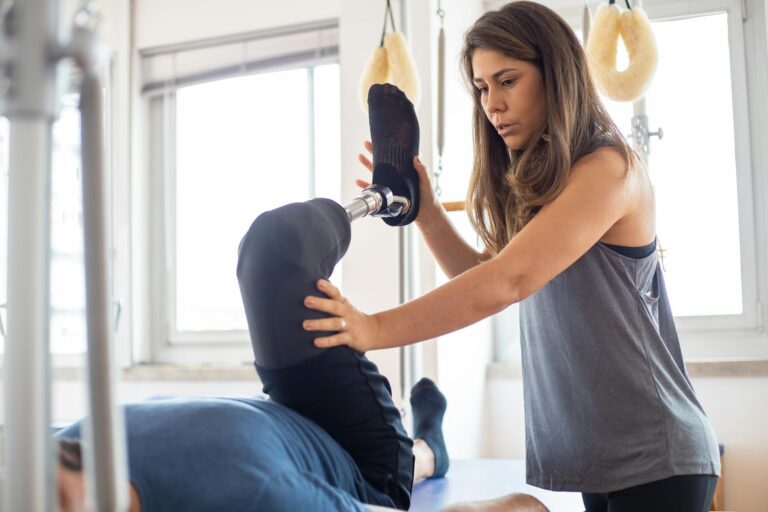
The seven core stability exercises most frequently recommended for improving core strength are planks, bird dogs, dead bugs, bridges, standing marches, Pallof presses, and superman holds. These exercises target the muscles that stabilize your spine and pelvis—your deep abdominal muscles, obliques, and lower back—which are critical for preventing falls, maintaining posture, and preserving independence as we age. For people with dementia or cognitive decline, a strong core becomes even more important because it compensates for balance issues and proprioceptive deficits that often accompany neurological changes. Core stability matters especially in dementia care because falls are one of the leading causes of injury and loss of independence in this population.
A weak core forces your body to rely more heavily on balance reflexes and visual feedback, both of which may be compromised in dementia. When your core muscles are strong, your body can catch itself before a fall happens, or at least reduce the severity of impact. Beyond injury prevention, core work also engages multiple parts of the brain simultaneously—it requires coordination, body awareness, and focus—which can provide cognitive benefits alongside physical ones. This article breaks down each of the seven core exercises, explains how to perform them safely, describes what makes them valuable for dementia care, and covers important considerations for different ability levels and health conditions.
Table of Contents
- Why Core Stability Matters More Than Most People Realize
- The Foundation Exercise—Planks and How They Build Endurance
- Bird Dogs—Coordination and Balance Combined
- Dead Bugs—The Safest Option for Vulnerable Populations
- Bridges and Glute Activation
- Standing Marches—Balance and Functional Movement
- Pallof Presses and Anti-Rotation Strength
- Superman Holds—Back Extensors and Full Spine Support
- Conclusion
- Frequently Asked Questions
Why Core Stability Matters More Than Most People Realize
core stability is often misunderstood as being about visible abdominal muscles or a “six-pack,” but the exercises that build true core stability work the internal muscles that most people never see. These deep stabilizer muscles—particularly the transverse abdominis and multifidus—act like a natural corset around your spine, keeping it aligned and protected during movement. When these muscles weaken, your spine has to compensate, leading to poor posture, back pain, and increased injury risk. For someone experiencing cognitive decline, core weakness creates a particular vulnerability.
Memory and cognitive issues can impair the automatic balance corrections your brain normally makes without conscious thought. If your core is weak, your body has fewer tools to catch itself before a fall occurs. Someone with mild to moderate dementia might forget to hold the handrail or might not consciously think about their posture as they stand, making a strong core the difference between a stumble and a serious injury. Research on falls in elderly populations consistently shows that core strength and balance training significantly reduces fall risk, even in people with neurological conditions.

The Foundation Exercise—Planks and How They Build Endurance
The plank is the most fundamental core stability exercise because it requires your deep core muscles to maintain tension against gravity while keeping your spine neutral. A standard forearm plank involves holding yourself in a push-up position on your forearms while keeping your body in a perfectly straight line from head to heels. This single position teaches your core to stabilize your entire body weight, which translates directly to real-world situations like standing on a bus or bending down to pick something up.
The challenge with planks is that they require significant upper body and shoulder endurance, which may be unrealistic for someone with limited strength or mobility issues. For these individuals, a modified plank performed on your knees—or even a standing plank against a wall with hands on the wall—provides the same core engagement without the overwhelming upper body demand. Starting with 15-30 seconds and gradually building to 60 seconds is more realistic than the popular fitness culture claims of 3-minute planks. However, even 20 seconds of proper planking provides meaningful core activation, and consistency matters far more than duration.
Bird Dogs—Coordination and Balance Combined
The bird dog exercise requires you to kneel on all fours, then extend your opposite arm and leg simultaneously while maintaining a stable torso. This movement pattern strengthens your core while also demanding coordination and balance—both critical for fall prevention in dementia. The exercise is also scalable; someone with limited balance can perform it while holding onto a sturdy chair or counter, or even while kneeling with one hand on the floor and simply extending the opposite leg.
A specific limitation to understand: bird dogs require the cognitive ability to coordinate opposite-side limbs, which may be challenging for someone with significant dementia or proprioceptive deficits. In these cases, starting with single-leg extensions while holding onto support is more appropriate. The movement should be slow and controlled, holding each position for 2-3 seconds, rather than a fast, bouncing motion. Many people who are new to core training swing their leg quickly and end up relying on momentum rather than muscle control, which reduces the effectiveness of the exercise.

Dead Bugs—The Safest Option for Vulnerable Populations
The dead bug is performed lying on your back with your arms extended straight up and your knees bent at 90 degrees, hips and knees forming right angles. From this position, you lower one arm overhead while straightening the opposite leg, then return to the starting position. This exercise is exceptionally safe because your spine is supported by the floor, making it nearly impossible to injure yourself. It’s also invisible—someone in a wheelchair or bed could perform a version of dead bugs if instructed properly.
The dead bug teaches core control in a movement pattern your body uses naturally: lying down and transitioning between positions. This functional approach means the strength you build translates directly to everyday activities. However, the exercise requires enough cognitive clarity to coordinate opposite limbs, so it may need significant modification or cueing from a caregiver for someone with advanced dementia. A simpler version involves just lowering one arm while keeping the legs still, or lowering one leg while keeping the arms still, isolating the movement into one component at a time.
Bridges and Glute Activation
The bridge exercise involves lying on your back with knees bent and feet on the floor, then pushing through your heels to lift your hips off the ground until your body forms a straight line from knees to shoulders. This movement engages your glutes strongly while also requiring core stability to prevent your lower back from over-arching. Strong glutes support posture and balance, which is why bridges are valuable in dementia care beyond just core strength alone.
A critical warning about bridges: many people allow their lower back to hyperextend at the top of the movement, turning it into a lower-back exercise rather than a glute and core exercise. For someone learning the movement, lying on a yoga mat or carpet with hands at sides can help them feel when their lower back is lifting too much. The movement should come from the glutes pushing the hips upward, not from arching the back. For someone with very limited mobility, even lifting the hips one inch off the ground and holding for 2-3 seconds provides meaningful activation; the height of the bridge matters far less than the muscle engagement.

Standing Marches—Balance and Functional Movement
Standing marches involve standing upright (ideally while holding onto support like a counter or chair) and slowly lifting one knee toward the chest, then lowering it and lifting the other knee. This simple movement requires active core engagement because lifting your leg changes your center of gravity, and your core must work to keep your body stable. Standing marches also improve proprioception and balance in a standing position, which is the position where most falls occur.
For someone with significant balance deficits or dementia, standing marches performed while holding onto a sturdy counter with both hands, or while standing with a walker, can be done safely. The speed should be slow enough to maintain perfect balance; if someone is unsteady, they’re moving too quickly. One practical example: an elderly person learning to use a walker during physical therapy often performs standing marches as part of their routine because the movement pattern is identical to walking with assistance.
Pallof Presses and Anti-Rotation Strength
The Pallof press is an exercise where you hold a resistance band or cable attached to a side at chest height, then press it straight forward while resisting the rotation that the sideways pull creates. This exercise uniquely targets anti-rotation stability—the ability of your core to prevent unwanted twisting. In real life, anti-rotation strength prevents injuries when you reach to one side while standing or when you step over an obstacle at an angle.
For dementia care populations, Pallof presses can be adapted significantly. Using a light resistance band or even just pretending to hold resistance while performing the pressing motion engages the same muscles. The key is the intent to prevent rotation and the conscious engagement of the core during the movement. However, this exercise requires significant balance and focus, so it’s primarily appropriate for people with mild cognitive decline or as an advanced progression after mastering other exercises.
Superman Holds—Back Extensors and Full Spine Support
Superman holds involve lying face-down and lifting your arms and legs simultaneously off the ground, creating a body position that resembles Superman flying. This exercise targets the erector spinae and other back extensor muscles that work together with your anterior core to stabilize your spine. While planks work the front of your core, supermans target the back, creating a complete core stability system.
Superman holds require caution in dementia care because they demand awareness of proper form and can strain the neck if performed incorrectly. A safer modification involves lying face-down and lifting only your chest and shoulders off the ground while keeping your legs on the floor, which removes the neck strain risk. Another option is lifting only your legs while supporting your upper body with your forearms, similar to a reverse plank. These modifications provide the back-extensor engagement with reduced injury risk for vulnerable populations.
Conclusion
The seven core stability exercises—planks, bird dogs, dead bugs, bridges, standing marches, Pallof presses, and superman holds—can be adapted for nearly any ability level and fitness background. The key to their effectiveness in dementia care is consistent practice, proper form over speed or duration, and thoughtful modifications that match each individual’s ability while maintaining enough challenge to produce strength gains.
Starting with the safest options like dead bugs and bridges, then progressing to more complex movements like bird dogs and standing marches, allows your core to build strength systematically. A physical therapist or occupational therapist can assess which exercises are most appropriate for your specific situation, but even brief sessions of 10-15 minutes two to three times per week can produce measurable improvements in strength, balance, and fall prevention within 4-6 weeks.
Frequently Asked Questions
How often should someone with dementia do core stability exercises?
Two to three times per week is ideal for building strength while allowing recovery time. Sessions don’t need to be long; even 10-15 minutes is effective. More frequent sessions with lighter intensity (shorter holds, fewer repetitions) are better than occasional intense sessions that might lead to injury.
Can core exercises help prevent falls?
Yes, research consistently shows that core and balance training reduces fall risk by 20-40% in older adults. The benefit increases when core training is combined with balance work and functional movement practice.
What should someone do if they feel pain during a core exercise?
Sharp or shooting pain means stop immediately and don’t repeat that exercise without professional assessment. Mild muscle fatigue or gentle burning is normal and expected, but pain is a warning signal that something isn’t right.
Are there core exercises someone with very advanced dementia can still do?
Yes, very gentle movements like lying on their back and slowly extending one leg, or sitting upright and leaning slightly side to side can engage core muscles. Even small movements provide benefit, and the act of performing movement under caregiver guidance can provide cognitive engagement.
How long does it take to see results from core exercises?
Most people notice improvements in balance and posture within 2-3 weeks, with measurable strength gains visible by 4-6 weeks. However, fall prevention benefits often appear gradually as confidence and stability improve over months.
Can core exercises be done while sitting?
Yes, seated core exercises are very valuable for people with limited mobility. Seated marches, torso twists, and seated reaches all engage core muscles and are safer for people who can’t stand safely.