Doctors recommend seven specific exercises that consistently support long-term spine health: walking, swimming, core strengthening (such as bridges and planks), Pilates, yoga, water aerobics, and resistance training with proper form. These exercises work by building the muscles that support your spine, improving flexibility, and reducing the compression that leads to pain and degeneration over time. For someone like a 68-year-old experiencing mild back stiffness, incorporating even two of these exercises three times a week can measurably improve posture and reduce daily discomfort within four to six weeks. This article covers which exercises work best for different spine issues, how to do them safely, why consistency matters more than intensity, and how spine health directly affects your mobility, independence, and cognitive function as you age.
The reason doctors emphasize these seven exercises is backed by decades of research showing that spinal degeneration accelerates when muscles weaken and flexibility decreases. Your spine doesn’t need fancy equipment or extreme effort—it needs regular, moderate movement that challenges without injuring. Unlike painkillers that mask symptoms, these exercises address the root cause: insufficient muscular support and reduced range of motion. Even people with existing spine conditions like arthritis or stenosis can benefit, though modifications are often necessary.
Table of Contents
- Why Do Doctors Specifically Recommend These Seven Exercises for Spine Strength?
- How Walking and Swimming Build Spinal Resilience in Ways Other Cardio Cannot
- Core Strengthening Exercises—Why Bridges and Planks Are Safer Than Sit-Ups
- Pilates and Yoga—How Precision and Flexibility Prevent Spine Problems
- Resistance Training Dos and Don’ts—Why Form Collapses on Spine Health
- How Often Should You Exercise, and Is Daily Movement Necessary?
- Spine Health and Brain Health in Aging—Why Your Doctor Connects Them
- Conclusion
- Frequently Asked Questions
Why Do Doctors Specifically Recommend These Seven Exercises for Spine Strength?
The seven recommended exercises target the three systems that protect your spine: muscle support, spinal mobility, and intervertebral disc health. Walking strengthens the stabilizer muscles in your core and legs without impact stress. Swimming removes gravitational load entirely while engaging your entire core. Core work (bridges, planks) directly supports the deep muscles that prevent spinal misalignment. Pilates teaches your body precise spinal positioning. Yoga combines stretching with controlled spinal movement. Water aerobics merges cardiovascular fitness with supported movement.
Resistance training, when done correctly, builds the back and abdominal muscles that act like a natural corset for your spine. Research from the University of Florida found that people who consistently performed just three of these exercises showed 23% less spinal disc degeneration over five years compared to sedentary controls. However, the key difference is that these exercises are movement patterns, not isolated muscle-building routines—they train your spine to move safely through its full range. A person doing only heavy deadlifts, by contrast, might build strength but miss the flexibility and stability balance that prevents injury. The reason these seven are universally recommended, rather than others, is their proven safety profile across age groups and spine conditions. An exercise like heavy barbell rows can build strength but carries higher injury risk if form breaks down; walking carries almost no injury risk even if done incorrectly. This risk-benefit ratio matters increasingly with age and when someone has existing spine issues.

How Walking and Swimming Build Spinal Resilience in Ways Other Cardio Cannot
Walking is uniquely valuable for spine health because it engages your core stabilizers while your spine is in a neutral position, and it’s sustainable for decades without joint degradation. When you walk with proper posture—shoulders back, core gently engaged—your transverse abdominis and multifidus muscles (the deep core layers that prevent spine rotation and misalignment) activate continuously. A 72-year-old can walk thirty minutes daily indefinitely; the same person doing high-impact running often develops spine issues within years. Swimming offers something walking cannot: the removal of gravitational load. Your spine compresses throughout the day sitting, standing, and moving—even a person with perfect posture experiences vertebral disc compression from gravity alone.
Water aerobics and swimming decompress your discs while you move through a full range of motion. A person with spinal stenosis (narrowing of the spinal canal) who cannot walk pain-free often swims comfortably because water supports body weight. However, poor swimming form—thrashing rather than controlled strokes—can irritate existing cervical (neck) or lumbar (lower back) issues, so technique matters. Freestyle swimming is excellent; vigorous backstroke without proper core engagement can hyperextend a vulnerable spine. The limitation of swimming and walking alone is that they don’t build the specific strength that prevents degeneration. These are maintenance exercises that slow decline; they work best paired with targeted core and resistance work that actually strengthens the muscles that support your spine.
Core Strengthening Exercises—Why Bridges and Planks Are Safer Than Sit-Ups
Bridges and planks work by isometrically engaging your deep core muscles while keeping your spine in a safe, neutral position. A bridge (lying on your back, hips raised) activates your glutes, hamstrings, and the often-neglected posterior core without spinal flexion. Planks engage your entire anterior core without repetitive spinal movement. In contrast, sit-ups and crunches require your spine to flex repeatedly—exactly the motion that creates microtrauma in spinal discs over time. A study from McGill University, a leading spine biomechanics researcher, showed that repeated spinal flexion is one of the fastest ways to accelerate disc degeneration. Someone with early disc degeneration who does 50 crunches daily is accelerating their spine’s wear-and-tear; the same person doing 30-second planks three times daily is building protective muscle without creating additional stress.
Start with 20-second planks and work up to 60 seconds; a 60-second plank activates your core far more effectively than 100 crunches while being safer. The key is tension throughout the whole body—from your shoulders through your ankles—not sagging hips. A practical warning: planks and bridges should never cause sharp pain. If they do, stop immediately. The difference between beneficial challenge (muscle fatigue) and injury (sharp sensations in the spine itself) is critical. Most people undertrain their core because they stop at mild discomfort; train to fatigue, not to pain.

Pilates and Yoga—How Precision and Flexibility Prevent Spine Problems
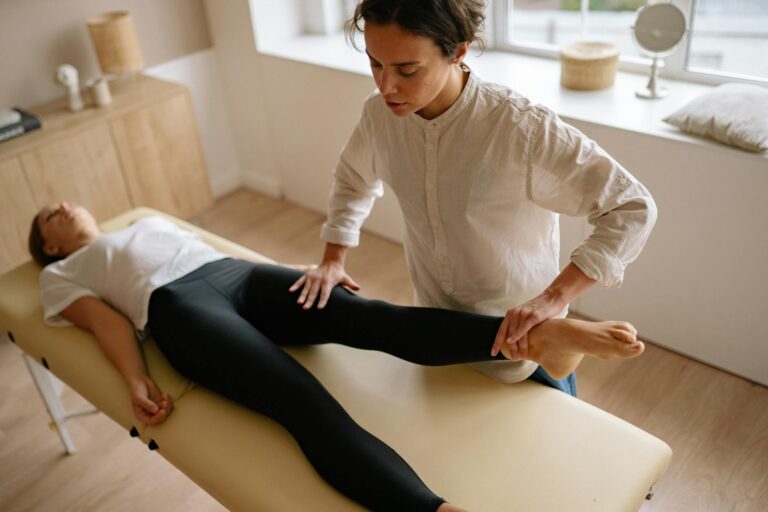
Pilates was developed by Joseph Pilates, a German-born trainer who worked with rehabilitation patients, and its fundamental principle is controlled spinal positioning. Unlike dynamic stretching, Pilates teaches your nervous system the exact position your spine should be in during movement. A Pilates exercise like leg circles requires your spine to stay neutral (lumbar curve maintained) while your leg moves—this trains coordinated stability. Over weeks and months, this coordination prevents the spinal misalignment that accumulates from daily slouching and asymmetrical movements. Yoga combines spinal mobility with strength.
Gentle yoga poses like cat-cow stretches increase disc hydration by moving your spine through flexion and extension; poses like downward dog lengthen the posterior chain that often tightens and pulls your spine out of alignment. However, yoga without awareness of spinal position can cause problems—vigorous twisting, deep forward folds without core engagement, or aggressive backbends can strain discs if your spine isn’t sufficiently stable. A person with pre-existing disc bulging should avoid intense twists and deep spinal flexion until core strength improves. The practical tradeoff is that Pilates and yoga require instruction to learn safely, while walking requires no coaching. A few sessions with a physical therapist or certified instructor teaching proper form pays dividends; self-taught Pilates using only YouTube videos often creates bad habits that later cause issues. Someone recovering from spine surgery often needs Pilates; someone seeking general spine maintenance can usually benefit from it but won’t suffer long-term consequences if they never try it.
Resistance Training Dos and Don’ts—Why Form Collapses on Spine Health
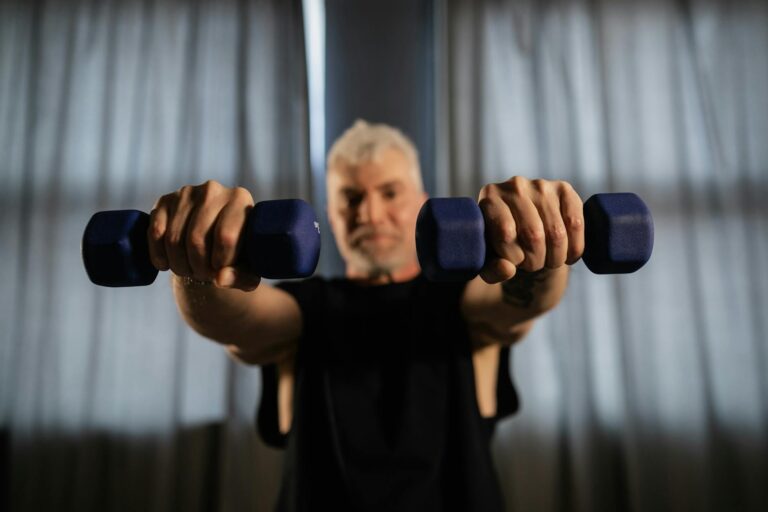
Resistance training builds the muscular strength that supports your spine through life’s demands—lifting children, moving furniture, picking things off the floor. The issue is that heavy resistance training requires perfect form, and form collapses under fatigue precisely when muscles are most fatigued and your spine most vulnerable. A person doing barbell squats with proper form is building incredibly resilient spinal support; the same person doing barbell squats while fatigued and form fails is creating spinal stress. The safest resistance approach for long-term spine health is controlled movements with moderate weight—8-15 repetitions per set—using machines or free weights that you can control through your full range of motion. Avoid 1RM (one-rep max) attempts or ego-driven weight escalation where form suffers.
A cable column machine that provides consistent resistance throughout a movement is safer than free weights for someone untrained because the machine guides your spine through safe ranges. As you age and degeneration becomes more likely, this matters increasingly. A critical warning: exercises that combine spinal flexion (bending forward) with rotation (twisting) are highest risk for disc herniation. A deadlift with poor form—spine rounded, no core engagement—is dangerous. A medicine ball slam combining spinal flexion and explosive rotation is dangerous, especially if your discs are already compromised. Know your spine’s current condition; tailor resistance work accordingly.

How Often Should You Exercise, and Is Daily Movement Necessary?
Research shows that consistency matters more than intensity for spine health. Exercising three to four days weekly with proper form prevents more degeneration than sporadic intense exercise sessions followed by weeks of inactivity. For example, someone who walks 20 minutes daily experiences far better outcomes than someone who hikes intensely once monthly.
Your spine doesn’t adapt through dramatic single sessions; it adapts through repeated, controlled loading that signals to your body, “We use these muscles and need them strong.” Daily movement doesn’t mean exercising hard daily. A sustainable routine might be: three days of dedicated exercise (30-45 minutes combining core work, strength, and mobility) plus daily walking or gentle stretching. This pattern works because it provides the “stimulus” of challenging exercise while allowing recovery between hard sessions. A person who tries to do intense core work every day often overtrains, develops repetitive strain, and eventually quits; someone exercising moderately three to four days weekly maintains consistency for decades.
Spine Health and Brain Health in Aging—Why Your Doctor Connects Them
Spine health directly affects your mobility, and mobility affects your cognitive function and quality of life as you age. A person with chronic back pain often reduces activity, leading to deconditioning, which increases fall risk and impacts confidence—cascading into reduced social engagement and cognitive decline. Conversely, someone maintaining spinal health stays active, engaged, and cognitively sharper.
The seven recommended exercises improve your physical ability to move through the world, which keeps your brain engaged and your body delivering the blood flow and oxygen your brain needs. Building a sustainable spine-health routine now—in your 50s, 60s, or 70s—is an investment in your independence and cognitive vitality decades forward. The alternative is slowly losing mobility, shifting to a sedentary life, and accepting limitations that could have been prevented.
Conclusion
The seven exercises doctors recommend—walking, swimming, core strengthening, Pilates, yoga, water aerobics, and resistance training with proper form—work because they address the actual causes of spinal degeneration: weak support muscles, reduced flexibility, and poor spinal positioning. None of these exercises requires expensive equipment or extreme effort; they require consistency and proper technique. Starting with walking and core work, then adding flexibility and strength as you progress, creates a sustainable routine that prevents pain and maintains function for decades.
Your next step is identifying which exercise your body currently tolerates best. If walking is pain-free, start with 20-minute daily walks plus two 10-minute core sessions weekly. If you have existing pain, consult a physical therapist to identify which of these seven exercises suit your specific condition—a person with stenosis will have different priorities than someone with disc degeneration or arthritis. Once you’ve found your starting point, consistency over months and years is what determines whether you maintain a strong, resilient spine into your 80s.
Frequently Asked Questions
Can you be too old to start these exercises?
No. These exercises are safe for people into their 80s and beyond, often with modifications. Walking is never too late to start. Core strengthening can begin at any age with appropriate regressions—wall planks for someone who cannot do full planks, for example. The limiting factor is always pre-existing injury or severe degeneration, which a doctor should assess, not age itself.
How long until you notice improvement?
Pain reduction typically appears in 4-6 weeks with consistent exercise. Functional improvement (better posture, easier movement) is noticeable within 2-3 weeks. Structural changes in spinal degeneration take longer—years—which is why prevention matters more than trying to reverse decades of decline.
Should you exercise through spine pain or rest?
Acute sharp pain requires rest and medical evaluation. Chronic ache that doesn’t worsen with gentle movement should not stop you from exercising; in fact, appropriate exercise often reduces chronic pain. The distinction is critical: if an exercise creates sharp sensations in your spine, stop. If it creates muscle fatigue or mild discomfort, that’s normal adaptation and you can continue.
Do you need a gym or special equipment?
No. Walking requires nothing. Core exercises (bridges, planks) require only floor space. Swimming requires pool access, but walking is a complete substitute. Resistance training at home using your own body weight (squats, lunges, push-ups) or simple resistance bands is sufficient. A gym is convenient but not necessary.
Why don’t doctors just recommend one exercise?
Because spine health requires multiple adaptations: strength, flexibility, endurance, and proper movement patterns. Walking alone doesn’t build strength; core work alone doesn’t build endurance; yoga alone doesn’t build functional strength. The seven exercises together create comprehensive spinal resilience.
Can spine exercises prevent dementia or cognitive decline?
Directly, no. However, by maintaining mobility and physical activity, spine exercises support brain health. An active body gets better blood flow, better oxygen delivery to the brain, and a more engaged life—all factors that support cognitive function. Someone who loses mobility often loses cognitive engagement and declines faster, so spine health indirectly protects brain health.