The seven daily habits that doctors say can best protect your lumbar spine from disc injuries are core strengthening exercises, staying properly hydrated, maintaining good posture, taking regular movement breaks, practicing safe lifting techniques, managing your weight and nutrition, and optimizing your sleep position while keeping stress in check. None of these require expensive equipment or radical lifestyle changes. A 42-year-old office worker, for instance, who begins doing ten minutes of core stabilization exercises each morning and stands up from her desk every half hour may see a meaningful reduction in the chronic low back stiffness that had been creeping up since her mid-thirties. Low back pain affected 619 million people globally in 2020, and that number is projected to climb to 843 million by 2050, according to the Global Burden of Disease Study 2021.
In the United States alone, roughly 39 percent of adults reported back pain in the past three months, and Americans spend between 86 and 100 billion dollars annually on treatment. Lumbar disc herniation specifically affects one to three percent of the global population, concentrated in people between the ages of 30 and 50, though incidence in younger adults aged 18 to 35 is showing a significant upward trend due to increasingly sedentary lifestyles. These are not just statistics about discomfort. Low back pain causes 186.7 million lost workdays per year in the U.S., making it one of the leading causes of disability worldwide. This article walks through each of the seven habits in detail, drawing on published research and clinical guidance, so you can understand not just what to do but why it works at the level of your spinal anatomy.
Table of Contents
- Why Does Core Strengthening Top the List of Daily Habits That Protect Your Lumbar Spine?
- How Hydration Affects Your Spinal Discs, and What Happens When You Fall Short
- What Sitting Does to Your Lumbar Disc Pressure, and How Posture Can Counter It
- Movement Breaks Versus Marathon Sitting — What the Evidence Says About Timing
- Safe Lifting Technique and the Limits of “Lift With Your Legs”
- How Weight, Nutrition, and Smoking Each Affect Disc Health
- Sleep Position, Stress, and the Overlooked Overnight Recovery Window
- Conclusion
Why Does Core Strengthening Top the List of Daily Habits That Protect Your Lumbar Spine?
Your lumbar spine does not hold itself up. It depends on a corset of deep muscles, particularly the multifidus along the back of the spine and the transverse abdominis wrapping around the front and sides of your trunk, to absorb and distribute the forces of everyday movement. When these muscles are weak or poorly coordinated, the intervertebral discs bear a disproportionate share of compressive and shearing loads, and that is when herniations happen. The research supports this with real numbers. A meta-analysis published in PMC found that core stabilization exercises targeting the multifidus and transverse abdominis produced a mean pain reduction score of 3.08, compared to 1.71 for general physical therapy, in patients with existing low back pain. Stabilization exercises also demonstrated greater reduction of functional disability and fear of movement compared to general exercise programs.
Importantly, these results held across age ranges, with similar outcomes observed in patients in their mid-twenties and mid-forties. So whether you are a 28-year-old who sits at a computer all day or a 47-year-old who does physical labor, the principle is the same. However, core strengthening is not the same as doing crunches or sit-ups. Those movements primarily target the rectus abdominis, which is the outer “six-pack” muscle, and they involve repeated spinal flexion that can actually increase disc pressure. The exercises that matter most for spinal protection are isometric holds like planks, bird-dogs, and dead bugs, which train the deep stabilizers to brace without moving. If you have an existing disc injury or significant pain, start with a physical therapist who can assess your specific movement patterns before loading up on exercises you found online.
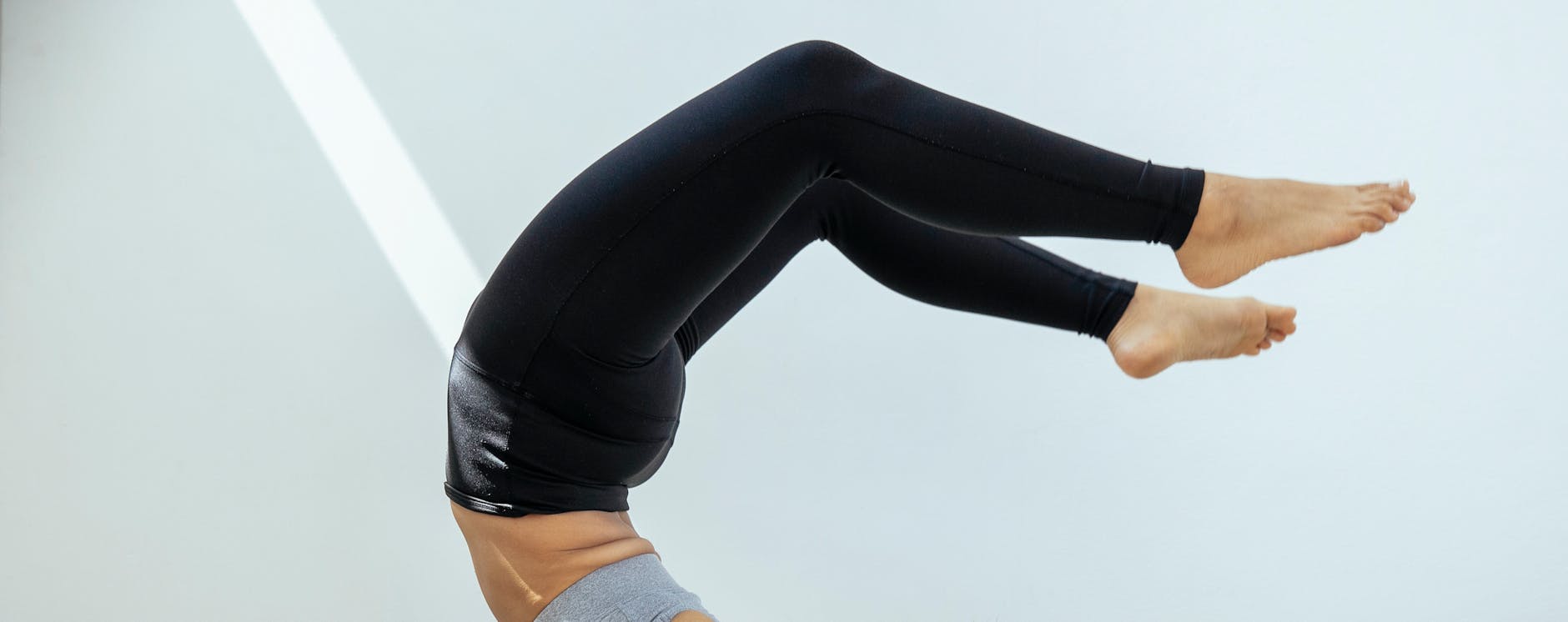
How Hydration Affects Your Spinal Discs, and What Happens When You Fall Short
Most people associate hydration with kidney function or athletic performance, but your intervertebral discs are among the most water-dependent structures in your body. A healthy disc’s nucleus pulposus, the gel-like center that acts as a shock absorber, contains up to 88.8 percent water. At birth, spinal discs are roughly 85 percent water, and that percentage decreases naturally with age. This is one of the reasons why disc problems become more common as we get older: the discs are literally drying out. What many people do not realize is that discs lose and regain water on a daily cycle. Humans lose up to 20 percent of the water from their spinal discs over the course of a single day due to the compressive loading of being upright and active. This is why you are measurably shorter in the evening than when you wake up.
Overnight, in a recumbent position with reduced loading, the discs rehydrate through osmosis. Unlike most tissues, spinal discs have no direct blood supply. They rely entirely on osmotic exchange with surrounding tissues to pull in water and nutrients. Chronic dehydration disrupts this process, accelerating wear and tear and increasing the risk of bulges, herniations, and degenerative disc disease. Here is the limitation worth knowing: simply drinking more water will not reverse an existing herniation or undo years of disc degeneration. Hydration supports the ongoing maintenance process, not repair. And if you have kidney disease, heart failure, or other conditions that require fluid restriction, do not override your doctor’s instructions in the name of spinal health. For most healthy adults, though, consistent water intake throughout the day, rather than gulping large amounts at once, gives your discs the best chance to maintain their structural integrity over time.
What Sitting Does to Your Lumbar Disc Pressure, and How Posture Can Counter It
The landmark intradiscal pressure studies conducted by Nachemson, spanning more than 100 subjects over 20 years, gave us some of the most important numbers in spine science. Unsupported sitting increases lumbar disc load by 40 percent compared to standing. Forward flexion combined with rotation increases disc pressure by 400 percent. These findings have been confirmed by modern in vivo measurements showing that lying prone generates about 0.1 megapascals of pressure, relaxed standing produces 0.5 megapascals, and standing while flexed forward pushes that to 1.1 megapascals. Consider what this means in practical terms. A person who sits hunched over a laptop for eight hours a day, leaning forward to peer at the screen, is subjecting their lumbar discs to sustained loads far greater than if they were standing or reclining.
Nachemson’s work also showed that reclining reduces disc pressure by 50 to 80 percent compared to upright standing. This is why many ergonomic chairs are designed with a slight recline, typically around 100 to 110 degrees, rather than the rigid 90-degree angle people often assume is correct. A real-world example: a graphic designer who switched from a standard desk chair to one with lumbar support and a 110-degree recline, paired with a monitor arm that brought the screen to eye level, might not feel dramatic improvement in the first week. But over months, the cumulative reduction in disc loading adds up. The key posture principles are keeping your ears aligned over your shoulders, maintaining the natural lumbar curve rather than flattening it, and avoiding prolonged forward lean. If your work demands bending forward, as it does for surgeons, dentists, and many tradespeople, the next habit becomes even more critical.

Movement Breaks Versus Marathon Sitting — What the Evidence Says About Timing
Experts recommend standing, stretching, or walking every 30 to 60 minutes to relieve pressure on the lumbar spine and promote circulation to the tissues surrounding your discs. This is not just about comfort. Research has shown that exercise intervention sustained for more than two weeks reduces disease activity in lumbar disc herniation, improving range of motion during both forward flexion and backward extension. The body adapts to movement, but it deteriorates under stasis. The tradeoff here is between productivity and spinal health, and most people assume they are in conflict. In reality, research on cognitive performance consistently shows that brief movement breaks improve focus and output over a full workday. A 2-minute walk or a 30-second standing stretch is not lost time. It is a reset for both your spine and your brain.
Low-impact exercises like walking, swimming, and yoga improve flexibility and promote disc nutrition without the excessive spinal strain that comes with high-impact activities like running on concrete or heavy deadlifts. That said, there is a difference between movement breaks and exercise sessions. Standing up and shifting your weight for thirty seconds is not a workout. It is a pressure valve. The actual strengthening and mobility work, the core exercises discussed earlier, the yoga or swimming, those are separate commitments. Both matter, but they serve different purposes. Movement breaks manage acute loading throughout the day. Dedicated exercise sessions build the structural resilience that protects your discs over years and decades.
Safe Lifting Technique and the Limits of “Lift With Your Legs”
You have heard the advice a thousand times: bend at the knees, keep the object close to your body, and avoid twisting while lifting. This is sound guidance backed by Nachemson’s pressure studies, which showed that forward leaning combined with weight lifting increases lumbar disc pressure by more than 100 percent compared to relaxed standing. The closer you hold an object to your center of gravity and the more you use your legs and hips rather than your spine to generate force, the less your discs have to absorb. But here is the warning that rarely accompanies this advice: proper form breaks down under fatigue and distraction. The disc injury that sends someone to the emergency room is rarely the first lift of the day. It is the fifteenth. It is the box you grabbed while turning to answer someone’s question. It is the grocery bag you twisted sideways to pull from the trunk because you were in a hurry.
Knowing the correct technique is necessary but not sufficient. You also need to build the habit of pausing for one second before every lift to set your position, and you need to recognize when you are too tired or distracted to lift safely. For loads that are genuinely heavy, asking for help or using a dolly is not a sign of weakness. It is an acknowledgment that your lumbar discs are irreplaceable in a way that your pride is not. Additionally, the conventional advice to “lift with your legs” does not always apply. A very light object on a high shelf does not require a full squat-to-lift sequence. The key principle is matching your technique to the load and the context. What matters universally is avoiding the combination of lumbar flexion, rotation, and load, which is the triple threat for disc herniation.

How Weight, Nutrition, and Smoking Each Affect Disc Health
Excess body weight increases compressive forces on lumbar discs during standing, walking, and bending, and even modest weight loss has been shown to lower pain levels and improve function in people with back problems. A balanced diet with adequate calcium and vitamin D supports bone density and may reduce the long-term risk of osteoporosis and spinal degeneration. But one factor is often overlooked in conversations about disc health: smoking. Research published in PMC found that smokers had 18 percent greater mean disc degeneration scores in the lumbar spine compared to non-smokers. Nicotine directly damages disc cells and constricts the vascular network surrounding the intervertebral disc, essentially choking off the already limited nutrient supply that discs depend on.
This matters for anyone who thinks of smoking as primarily a lung and heart issue. Your spinal discs are collateral damage. If you smoke and have back pain, quitting may do more for your long-term spinal health than any supplement or ergonomic chair. And for those managing their weight, the goal is not achieving some ideal number on a scale. It is reducing the cumulative mechanical load your spine carries through every minute of every day.
Sleep Position, Stress, and the Overlooked Overnight Recovery Window
Sleep is when your discs rehydrate and your muscles repair, which makes your sleep setup a genuine factor in spinal health. A supportive mattress that keeps the spine in a neutral alignment reduces overnight strain. Side sleepers benefit from placing a pillow between the knees to prevent the top leg from pulling the pelvis out of alignment. Back sleepers can reduce lumbar pressure by placing a pillow under the knees. These are small adjustments that compound over thousands of nights. Stress management is the least intuitive item on this list, but it is increasingly recognized as a key component of what clinicians now call spinal hygiene, alongside posture, movement, and nutrition.
Chronic stress elevates cortisol, which keeps muscles in a state of sustained low-level tension. That tension increases compressive loading on your discs even when you are sitting still. Even five minutes of diaphragmatic breathing daily has been shown to lower cortisol levels, signaling back muscles to relax. For older adults, particularly those navigating the challenges of caregiving or cognitive decline in a loved one, stress is not a theoretical concern. It is a daily reality that manifests physically. Attending to it is not indulgence. It is maintenance.
Conclusion
Protecting your lumbar spine from disc injuries does not require a single dramatic intervention. It requires seven ordinary habits, performed consistently: strengthening your core, staying hydrated, minding your posture, moving regularly, lifting carefully, managing your weight and nutrition, and optimizing how you sleep and handle stress. Each one addresses a different mechanism of disc injury or degeneration, and together they form a practical defense against a problem that affects hundreds of millions of people worldwide and is only becoming more prevalent. The most important step is the first one. Pick whichever habit on this list has the largest gap between what you know you should do and what you actually do.
Start there. A ten-minute morning core routine, a water bottle at your desk, a phone alarm every 45 minutes reminding you to stand up. These are not grand gestures. They are the small, repeatable actions that keep your discs intact over the decades ahead. If you are already experiencing significant back pain or have a history of disc problems, consult with a spine specialist or physical therapist who can tailor these principles to your specific condition.
You Might Also Like
- 7 Daily Habits Doctors Say Can Help Protect Your Lumbar Spine From Disc Injuries
- 11 Risk Factors Spine Doctors Say Can Significantly Increase Your Chances of Developing a Disc Herniation After Age 30
- 11 Risk Factors Spine Doctors Say Can Significantly Increase Your Chances of Developing a Disc Herniation After Age 30
For more, see National Institute on Aging.