The seven causes of lumbar spine instability that doctors encounter most frequently are degenerative disc disease, spondylolisthesis, trauma, facet joint degeneration, post-surgical (iatrogenic) instability, spinal deformity, and tumors or infections. These conditions share a common thread — they compromise the structural integrity of the lower back, allowing abnormal movement between vertebrae that the spine was never designed to tolerate. For older adults already navigating cognitive decline or dementia-related challenges, lumbar instability adds a layer of difficulty that can severely limit mobility, increase fall risk, and accelerate functional decline. Consider a 72-year-old woman with early-stage Alzheimer’s who begins refusing to walk.
Her family assumes the disease has progressed, but imaging reveals degenerative spondylolisthesis — one vertebra has slipped forward over another, causing pain she cannot clearly articulate. This scenario plays out in clinical settings more often than most caregivers realize. In adults over 60, more than 90% demonstrate some level of disc and facet degeneration regardless of whether they report symptoms, which means lumbar instability often lurks beneath the surface in the very population most vulnerable to its consequences. This article examines each of the seven causes in detail, drawing on current research and clinical data. Beyond identifying these conditions, we will look at how they overlap, why post-surgical instability deserves more attention than it typically receives, and what caregivers and families should watch for in older adults who may not be able to report their own pain.
Table of Contents
- What Is the Most Common Cause of Lumbar Spine Instability in Older Patients?
- How Does Spondylolisthesis Contribute to Vertebral Slippage and Back Pain?
- When Does Spinal Trauma Lead to Permanent Lumbar Instability?
- Facet Joint Degeneration Versus Disc Disease — Which Comes First?
- Why Post-Surgical Instability Deserves More Attention Than It Gets
- How Scoliosis and Spinal Deformity Create a Cycle of Worsening Instability
- Tumors, Infections, and the Overlooked Causes of Spinal Instability
- Conclusion
- Frequently Asked Questions
What Is the Most Common Cause of Lumbar Spine Instability in Older Patients?
Degenerative disc disease stands as the single most frequent cause of spinal instability in adults. The intervertebral discs — those rubbery cushions between each vertebra — lose water content and structural integrity over decades of use, leading to abnormal vertebral mobility. The lifetime prevalence of low back pain in American adults falls between 65% and 80%, and degenerative disc disease is a leading contributor to those numbers. risk factors range from genetic predisposition and obesity to poor posture and sedentary lifestyles, though muscular insufficiency and overexertion also play significant roles. What makes this condition particularly relevant for dementia caregivers is its near-universality in the elderly. Over 90% of older adults show disc and facet degeneration on imaging, whether or not they complain of pain.
A person with moderate dementia may not connect their back discomfort to a specific injury or movement — they may simply become more agitated, resist transfers, or stop participating in activities they once enjoyed. The instability itself is progressive. As discs thin and lose their ability to absorb force, the vertebrae above and below begin shifting in ways that stress surrounding ligaments, muscles, and nerves. It is worth noting, however, that degenerative disc disease on an MRI does not automatically mean a patient is symptomatic. Many older adults walk around with significant degeneration and feel fine. The challenge for clinicians is distinguishing between incidental imaging findings and degeneration that is actively causing instability and pain — a distinction that becomes far harder when the patient cannot reliably describe their symptoms.

How Does Spondylolisthesis Contribute to Vertebral Slippage and Back Pain?
Spondylolisthesis occurs when one vertebra slips forward or backward over the vertebra beneath it, directly compromising the spinal canal’s structural integrity. The condition is highly age- and gender-specific. Few patients develop it before age 50, but after that threshold, prevalence climbs steadily — and women develop it at a faster rate than men. A study of elderly Chinese adults aged 65 and older found prevalence rates of 25.0% in women and 19.1% in men, underscoring how common this condition becomes in later life. The link between spondylolisthesis and measurable lumbar instability is well established.
Among 94 patients with degenerative spondylolisthesis examined in one study, 63 — roughly 67% — had confirmed lumbar instability on radiographs. The connection runs deeper when spondylolysis (a defect in the vertebral arch) is present: 51.4% of patients with spondylolysis showed spondylolisthesis, compared to just 7.4% in those without. Repetitive biomechanical stress drives both the isthmic and degenerative forms, which is why the condition appears so frequently in people who spent decades in physically demanding occupations. However, if a patient has mild, low-grade spondylolisthesis with no neurological symptoms — no leg weakness, no bowel or bladder changes — aggressive intervention may not be warranted. Conservative management through physical therapy and activity modification can be effective for years. The danger arises when slippage progresses or when a patient with dementia cannot report worsening symptoms, allowing the condition to advance unnoticed until a fall or acute pain episode forces the issue.
When Does Spinal Trauma Lead to Permanent Lumbar Instability?
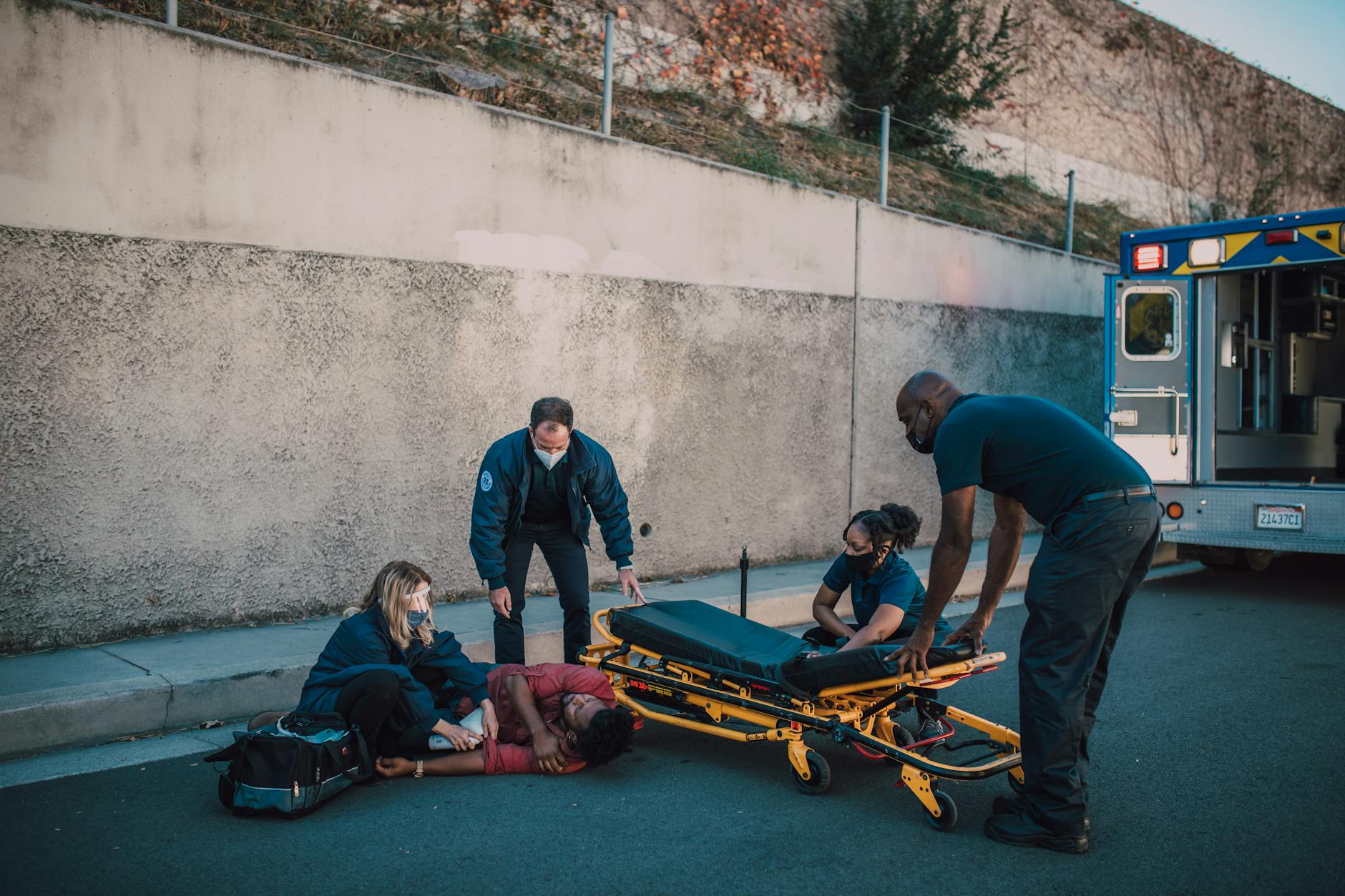
Trauma — from car accidents, falls, or high-impact injuries — can cause vertebral fractures or dislocations that produce acute spinal instability. Unlike the gradual onset of degenerative conditions, traumatic instability often arrives suddenly and involves simultaneous disruption of ligaments, facet joints, and disc structures. For older adults with osteoporotic bone, even a fall from standing height can fracture a vertebra and destabilize the lumbar segment. A 78-year-old man with vascular dementia who falls in the bathroom may sustain a compression fracture that his care team initially attributes to general frailty or a bruise.
If imaging is delayed because the patient cannot describe where it hurts, the instability may worsen before it is identified. Adding to the complexity, surgical intervention for spinal trauma carries the highest surgical site infection rate among spine procedures — 9.4%, compared to just 1.4% for surgeries treating degenerative disease. This makes the decision to operate on an elderly trauma patient a genuinely difficult calculation, weighing the risks of surgery against the consequences of leaving the spine unstable. For caregivers, the practical takeaway is straightforward: any fall in an older adult that results in a change in mobility, posture, or willingness to move warrants spinal imaging. Waiting to see if it gets better is a gamble that rarely pays off in this population.
Facet Joint Degeneration Versus Disc Disease — Which Comes First?
Facet joints — the small, paired joints at the back of each vertebral segment — contribute to approximately 15% to 45% of all low back pain cases, with lumbar involvement prevalent in 18% to 44% of patients across age groups. For years, the clinical assumption was that facet joint degeneration followed disc degeneration, a secondary consequence of altered spinal mechanics. Recent research has overturned that assumption. Evidence now suggests that lumbar facet joint degeneration may actually precede disc degeneration in some patients, making it a primary driver of instability rather than merely a downstream effect. This distinction matters because it changes how clinicians should think about early intervention.
If facet joint disease develops independently of disc disease, then treatments targeting only disc pathology may miss a significant source of instability and pain. Degenerative osteoarthritis remains the most prevalent source of facet-related discomfort, and it responds to different interventions — facet joint injections, medial branch blocks, and radiofrequency ablation — than those used for disc-related problems. The tradeoff for patients, particularly elderly ones, is between diagnostic precision and practical burden. Confirming facet-mediated pain requires diagnostic nerve blocks, which involve needles, imaging guidance, and at least two visits. For a patient with advanced dementia who cannot consent or cooperate with the procedure, clinicians often default to empiric treatment or pain management based on clinical suspicion alone — a reasonable approach, but one that sacrifices the diagnostic certainty needed to optimize outcomes.
Why Post-Surgical Instability Deserves More Attention Than It Gets
Iatrogenic instability — instability that results directly from surgical or medical intervention — represents one of the more frustrating entries on this list because it is, by definition, a complication of treatment meant to help. Laminectomy, one of the most common spinal procedures, can alter normal segment biomechanics enough to produce postoperative spondylolisthesis. Spinal fusion, designed to stabilize one segment, can accelerate degeneration at adjacent levels — a phenomenon known as adjacent segment disease. Additional complications include cervical kyphosis after laminectomies and thoracic instability after facet resections. The infection risk compounds the problem.
The pooled incidence of surgical site infection after spine surgery is 3.1%, splitting into 1.4% for superficial infections and 1.7% for deep surgical site infections. Patients who develop iatrogenic instability face an increased risk of requiring revision surgery, which carries its own elevated complication profile. For older adults, each additional surgery brings greater anesthesia risk, longer recovery, and higher likelihood of deconditioning. A critical warning for families and caregivers: if an older adult undergoes spinal surgery and their pain or mobility worsens rather than improves in the months following, do not assume the surgery simply did not work. Iatrogenic instability is a specific, identifiable condition that may require different treatment than the original problem. Advocating for follow-up imaging and a second opinion is entirely appropriate in that situation.

How Scoliosis and Spinal Deformity Create a Cycle of Worsening Instability
Adult scoliosis is far more common than most people realize. Prevalence exceeds 8% in adults over 25 and climbs to a striking 68% in adults over 60. In the general population, 2.5% have a Cobb angle greater than 10 degrees — the threshold for clinical scoliosis.
Adult degenerative scoliosis develops most frequently in the lumbar spine, and once established, it creates a self-reinforcing cycle: the abnormal curvature produces asymmetric loading on vertebral segments, which accelerates degeneration, which worsens the deformity, which increases instability further. For patients already dealing with cognitive decline, this progressive deformity can be particularly insidious. A person with Lewy body dementia who develops a noticeable lean to one side may be assumed to have a neurological gait disturbance when the actual culprit — or at least a major contributor — is progressive degenerative scoliosis destabilizing their lumbar spine. Congenital scoliosis, caused by anomalous vertebral development during embryological formation, represents the most frequent congenital spinal deformity and may go undiagnosed until adulthood when degenerative changes compound the original structural abnormality.
Tumors, Infections, and the Overlooked Causes of Spinal Instability
Spinal tumors and infections round out the seven most common causes, and while they are less prevalent than degenerative conditions, they tend to be more dangerous when present. Tumors destabilize the vertebral column by destroying bone, ligaments, or disc structures — sometimes before they produce symptoms noticeable enough for a patient to seek care. Spinal infections, including surgical site infections, spinal epidural abscesses, subdural empyema, and vertebral osteomyelitis, can compromise structural integrity while simultaneously creating systemic illness.
Cancer patients undergoing spine surgery are at elevated risk for multiple infection types that compound existing instability. Looking forward, advances in minimally invasive surgical techniques and biologic therapies offer some hope for reducing iatrogenic instability and improving outcomes for tumor and infection cases. But for now, the most important step is recognition — particularly in elderly patients and those with dementia, where the signs of spinal infection (fever, worsening pain, new neurological symptoms) may be attributed to other causes or missed altogether because the patient cannot report them clearly.
Conclusion
Lumbar spine instability in older adults rarely has a single, clean cause. Degenerative disc disease and facet joint degeneration often coexist. Spondylolisthesis may develop on top of pre-existing scoliosis. A surgical procedure meant to address one problem can introduce iatrogenic instability.
For caregivers managing a loved one with dementia, the key insight is that behavioral changes — refusing to walk, increased agitation during transfers, new resistance to standing — may signal spinal instability rather than cognitive decline. Pursuing appropriate imaging and specialist evaluation can uncover treatable conditions that meaningfully improve quality of life. The seven causes outlined here — degenerative disc disease, spondylolisthesis, trauma, facet joint degeneration, iatrogenic instability, spinal deformity, and tumors or infections — represent the conditions clinicians encounter most frequently. Understanding them does not require medical training, but it does require the willingness to advocate for thorough evaluation when something changes. In a population that often cannot speak for itself, that advocacy falls to the people closest to the patient.
Frequently Asked Questions
Can lumbar spine instability make dementia symptoms appear worse than they are?
Yes. Untreated pain from spinal instability can cause agitation, confusion, sleep disruption, and withdrawal from activity — all of which mimic or amplify dementia symptoms. Addressing the spinal condition can sometimes produce noticeable improvements in behavior and engagement.
How is lumbar spine instability diagnosed?
Diagnosis typically involves flexion-extension X-rays, which capture the spine in bent and extended positions to reveal abnormal movement between vertebrae. MRI may be added to evaluate soft tissue structures, nerve compression, and disc integrity.
Is surgery always necessary for lumbar spine instability?
No. Many patients respond well to conservative treatment including physical therapy, bracing, pain management, and activity modification. Surgery — typically spinal fusion — is generally reserved for cases with progressive neurological deficits, severe pain unresponsive to conservative care, or significant functional limitation.
What is the infection risk for spinal surgery in older adults?
The pooled incidence of surgical site infection after spine surgery is approximately 3.1%, with superficial infections at 1.4% and deep infections at 1.7%. However, surgery for spinal trauma carries a much higher infection rate of 9.4%, and cancer patients face additional elevated risks.
At what age does lumbar spine instability become most common?
While it can occur at any age, prevalence increases sharply after 50. Over 90% of older adults show disc and facet degeneration on imaging, adult scoliosis affects up to 68% of those over 60, and spondylolisthesis prevalence rises significantly after age 65.