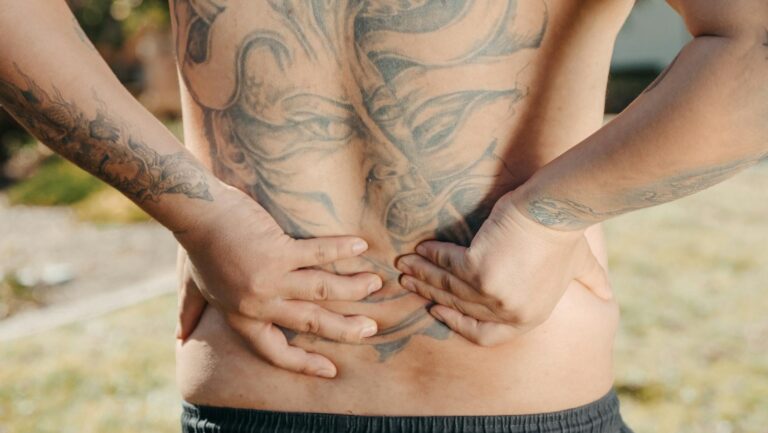
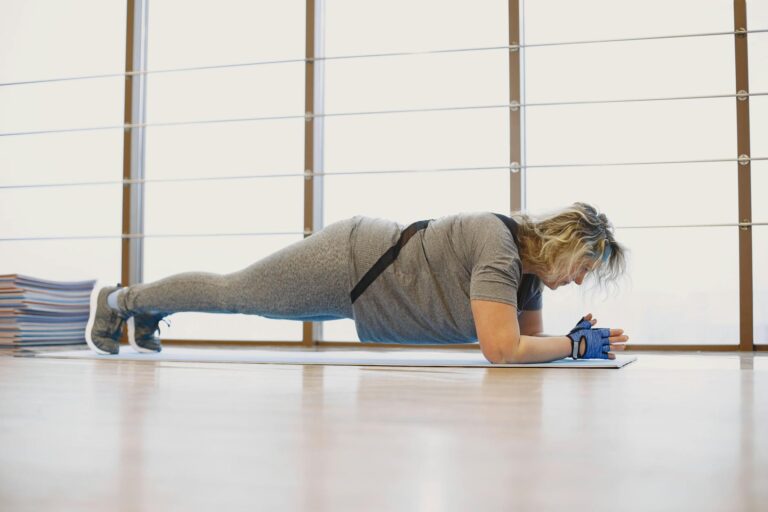
Six exercises that reliably build SI joint strength include the bridge, the clamshell, the bird-dog, isometric hip adduction, the side-lying hip abduction, and the modified dead bug. These movements target the gluteal muscles, deep core stabilizers, and hip rotators that hold the sacroiliac joint in proper alignment. When performed consistently three to four times per week, they can reduce the chronic low-back and buttock pain that often accompanies SI joint dysfunction — a condition that affects an estimated 15 to 30 percent of people with non-specific lower back pain, according to research published in the Journal of Manual & Manipulative Therapy. For older adults and those living with cognitive decline, maintaining this kind of functional stability is not just about pain management; it directly supports the ability to walk safely, transfer from bed to chair, and preserve the independence that dementia so gradually erodes.
What makes SI joint exercises particularly relevant for a brain health audience is the growing body of evidence linking chronic pain to accelerated cognitive decline. A 2019 study in JAMA Internal Medicine found that older adults with persistent musculoskeletal pain showed faster memory deterioration over a ten-year follow-up period. Addressing the physical source of that pain — a loose, inflamed sacroiliac joint — may therefore serve a dual purpose. This article walks through each of the six exercises in detail, explains the anatomy behind them, discusses when to modify or avoid certain movements, and covers the warning signs that mean it is time to see a professional rather than push through at home.
Table of Contents
- Why Does the SI Joint Become Unstable in the First Place?
- The Bridge and the Clamshell — Building a Foundation of Gluteal Support
- Bird-Dog for Core Stability and Balance
- Isometric Hip Adduction — The Overlooked Stabilizer
- When These Exercises Can Make Things Worse
- How to Structure a Weekly SI Joint Routine
- The Connection Between Movement, Pain, and Cognitive Health
- Conclusion
- Frequently Asked Questions
Why Does the SI Joint Become Unstable in the First Place?
The sacroiliac joint sits where the base of the spine meets the pelvis, and unlike the knee or shoulder, it was never designed for large ranges of motion. Its job is to transfer load between the upper body and the legs while absorbing shock. Stability comes almost entirely from the ligaments wrapped around it and the muscles that compress it — primarily the gluteus maximus, the piriformis, and the deep transverse abdominis. When those muscles weaken from prolonged sitting, deconditioning, or the general muscle loss that accelerates after age 65, the joint develops excessive micro-movement. That subtle slipping is what produces the sharp, one-sided pain near the tailbone that many people mistake for a herniated disc. In dementia care settings, the problem compounds.
A person with moderate Alzheimer’s may spend increasing hours seated or in bed, losing the gluteal and core strength that once kept their SI joint stable without any conscious effort. Falls become more frequent, and each fall risks further destabilizing an already vulnerable joint. Physical therapists who work in memory care facilities often note that SI joint pain is underdiagnosed in this population because patients may struggle to describe or localize their discomfort. A resident who becomes agitated during transfers or refuses to walk may actually be experiencing SI joint pain that no one has identified. Compared to spinal stenosis or degenerative disc disease, SI joint dysfunction responds unusually well to targeted exercise. Surgical options exist — including SI joint fusion — but outcomes are mixed, and for older adults with cognitive impairment, surgery introduces anesthesia risks and a recovery period that can worsen confusion. Conservative exercise is almost always the recommended first step, and for many people, it is the only step needed.

The Bridge and the Clamshell — Building a Foundation of Gluteal Support
The glute bridge is probably the single most prescribed exercise for SI joint stabilization, and for good reason. Lying on your back with knees bent and feet flat on the floor, you press your hips toward the ceiling while squeezing the gluteal muscles at the top. This directly activates the gluteus maximus, which is the primary muscular stabilizer of the SI joint. A person with moderate SI joint pain should aim for two sets of ten repetitions, holding each bridge for three to five seconds at the top. The movement is low-impact, requires no equipment, and can be performed on a bed if getting down to the floor is not feasible — a practical consideration for anyone with mobility limitations or for caregivers guiding someone through the exercise in a home setting. The clamshell complements the bridge by targeting the gluteus medius, the muscle on the outer hip that prevents the pelvis from dropping during walking.
You lie on your side with knees bent at roughly 45 degrees, then lift the top knee while keeping your feet together, like opening a clamshell. It looks deceptively easy, which is why people tend to rush through it or add a resistance band too soon. However, if the pelvis rocks backward during the movement — a common compensation — the exercise shifts load away from the gluteus medius and onto the tensor fasciae latae, which actually increases lateral hip tightness and can aggravate SI joint symptoms. A caregiver or physical therapist placing a hand on the top hip to cue stability makes a significant difference in form. One limitation worth noting: neither of these exercises addresses the deep core stabilizers directly. A person who relies exclusively on bridges and clamshells may build strong glutes while still lacking the transverse abdominis engagement needed to compress the SI joint from the front. That is why the next exercises in this sequence matter.
Bird-Dog for Core Stability and Balance
The bird-dog is a staple in rehabilitation programs because it simultaneously trains the deep core, the glutes, and the proprioceptive system — the body’s sense of where it is in space, which deteriorates both with aging and with neurodegenerative disease. Starting on hands and knees, you extend the right arm forward and the left leg back, hold for five seconds, then return to the starting position and switch sides. The challenge is maintaining a neutral spine and level hips throughout the movement, which requires the transverse abdominis and multifidus muscles to fire in coordination. For someone in the early stages of dementia, the bird-dog doubles as a cognitive exercise. Coordinating opposite limbs requires motor planning and bilateral integration, engaging brain regions that benefit from stimulation.
A 2020 pilot study from the University of British Columbia found that older adults who performed dual-task motor exercises — movements requiring coordination and sequencing — showed modest improvements in executive function over a 12-week period compared to those who did single-task exercises like seated leg lifts. The bird-dog fits neatly into that category. A specific adaptation that works well in supervised care environments: rather than performing the full opposite-arm-opposite-leg extension, start with just the leg extension while both hands remain on the ground. This reduces the balance demand and makes the exercise accessible for individuals who would otherwise be at risk of falling from the quadruped position. A folded towel under the knees and a yoga mat or carpet beneath provides enough cushioning to make the position tolerable.
Isometric Hip Adduction — The Overlooked Stabilizer
Most SI joint exercise lists focus on the glutes and core, but the adductor muscles along the inner thigh play a critical and frequently underestimated role. Isometric hip adduction — squeezing a ball, pillow, or folded towel between the knees while lying on your back with knees bent — activates the adductor group and the pelvic floor simultaneously. Research from the Spine Journal has shown that adductor activation increases compressive force across the SI joint, which is exactly the mechanism that reduces the painful micro-movement causing symptoms. The tradeoff with this exercise is subtlety versus impact. It does not feel dramatic.
There is no visible movement, and the effort is internal. Many people dismiss it as too easy, but when held for ten seconds per squeeze with eight to ten repetitions, the cumulative muscle fatigue is substantial. Compared to the bridge, which produces an obvious physical movement and a clear sense of “working hard,” the isometric squeeze recruits stabilizing muscles in a way that is less satisfying but arguably more directly targeted at the SI joint’s mechanical problem. For caregivers working with dementia patients, this exercise has a practical advantage: it can be performed in bed, in a wheelchair, or in a recliner with minimal setup. A small rubber ball between the knees and a simple verbal cue — “squeeze the ball, hold, let go” — is often enough. It does not require the spatial awareness or coordination that the bird-dog demands, making it suitable for individuals at more advanced stages of cognitive impairment.
When These Exercises Can Make Things Worse
Not every SI joint problem responds to strengthening. If the joint is acutely inflamed — typically marked by sharp, stabbing pain with any movement, warmth over the joint, or pain that wakes a person from sleep — loading it with exercise can intensify the inflammation. The general guideline among physical therapists is that if pain increases during or after exercise and does not return to baseline within two hours, the exercise was too aggressive or the joint is not ready for that level of load. This is a meaningful distinction for caregivers who may not receive clear pain reports from individuals with communication difficulties. Watching for guarding behaviors, facial grimacing during movement, or increased agitation in the hours following exercise provides proxy information.
Side-lying hip abduction, the fifth exercise in this sequence, is a good example of a movement that helps most people but harms some. Lying on the unaffected side and lifting the top leg strengthens the gluteus medius, but if the person has a labral tear in the hip — which can coexist with SI joint dysfunction and is common in older adults — the movement may provoke a catching or clicking sensation and worsen hip pain. A pre-exercise screening by a physical therapist, even a single evaluation visit, can identify these complicating factors and prevent a well-intentioned exercise program from doing damage. Another situation where caution is warranted: osteoporosis. The bird-dog and bridge are generally safe for osteoporotic spines because they do not involve flexion under load, but a person with severe osteoporosis should avoid any exercise that places significant compressive force through the pelvis without professional guidance. The modified dead bug — lying on the back and slowly lowering one leg at a time toward the floor while maintaining a braced core — is a safer alternative in these cases, but even this requires that the lower back remain flat against the ground throughout the movement, which takes a level of body awareness that may need to be coached.

How to Structure a Weekly SI Joint Routine
A practical weekly structure for someone beginning these exercises would look like three sessions per week on nonconsecutive days — for example, Monday, Wednesday, and Friday. Each session takes roughly 15 to 20 minutes. Start with the isometric adductor squeeze as a warm-up activation exercise, move to bridges, then clamshells, then the bird-dog, followed by side-lying abduction, and finish with the dead bug.
Two sets of ten repetitions per exercise is a reasonable starting point, progressing to three sets after two to three weeks if pain does not increase. A real-world example of this approach working in a care setting: a memory care facility in Portland, Oregon, integrated a simplified version of this routine into their morning activity programming. Residents who participated three times weekly for eight weeks showed measurable improvements in Timed Up and Go scores — a standard measure of functional mobility and fall risk — compared to residents who continued their usual seated activity programming. The staff reported that the routine also seemed to reduce behavioral agitation in the late afternoon, possibly because the physical exertion provided a regulatory effect, though they acknowledged this observation was anecdotal rather than controlled.
The Connection Between Movement, Pain, and Cognitive Health
The relationship between chronic pain and dementia progression deserves more attention than it currently receives. Pain consumes cognitive resources. It narrows attention, disrupts sleep, increases cortisol, and drives social withdrawal — all of which accelerate the trajectory of neurodegenerative disease.
Treating SI joint dysfunction with targeted exercise addresses a modifiable source of chronic pain in a population that often cannot advocate for its own comfort. Looking ahead, the integration of movement-based therapies into standard dementia care protocols is gaining momentum. The World Health Organization’s 2023 guidelines on optimizing brain health across the life course specifically recommend strength and balance training for older adults at risk of cognitive decline, and several ongoing clinical trials are examining whether structured physical therapy programs can slow the rate of functional decline in people with mild cognitive impairment. Strengthening the SI joint is a small piece of that puzzle, but it is one of the more immediately actionable pieces — requiring no medication, no specialized equipment, and no waiting list.
Conclusion
The six exercises outlined here — bridges, clamshells, bird-dogs, isometric adductor squeezes, side-lying hip abductions, and modified dead bugs — form a practical, evidence-supported approach to stabilizing the sacroiliac joint. For older adults and especially for those navigating cognitive decline, the benefits extend well beyond the joint itself. Reduced pain means better sleep, more willingness to move, fewer falls, and a higher quality of daily life. These are not small things when the trajectory of a disease already narrows the world.
The next step is straightforward: begin with two or three of these exercises at a comfortable intensity, ideally after a single consultation with a physical therapist who can screen for complicating conditions like hip labral tears or significant osteoporosis. Progress gradually. Consistency matters far more than intensity. Three sessions per week, maintained over months, will accomplish more than an ambitious daily program abandoned after two weeks. For caregivers, learning these exercises well enough to guide someone through them is one of the most tangible contributions you can make to a loved one’s physical comfort and functional independence.
Frequently Asked Questions
How long does it take to see improvement in SI joint pain from these exercises?
Most people notice reduced pain intensity within three to four weeks of consistent training, three times per week. Meaningful strength gains in the stabilizing muscles typically take six to eight weeks. However, if pain worsens during the first two weeks rather than staying the same or improving, the exercise selection or intensity likely needs adjustment.
Can SI joint exercises be done in a wheelchair?
The isometric adductor squeeze can be performed seated with a ball or towel between the knees. Seated bridges are possible by pressing the feet into the floor and lifting the hips slightly from the chair, though the range of motion is limited. The bird-dog and side-lying exercises require a bed or floor surface and at least the ability to transition into those positions with assistance.
Is it safe to do these exercises without a physical therapist?
For most people with mild to moderate SI joint discomfort, these exercises are safe to begin independently. The main exceptions are individuals with acute inflammation, severe osteoporosis, known hip labral tears, or those who cannot reliably report whether an exercise is causing increased pain. In a dementia care context, at least one professional evaluation is strongly recommended before starting.
What is the difference between SI joint pain and sciatica?
SI joint pain typically presents as a deep ache localized to one side of the lower back or buttock, often worsening with prolonged sitting or transitions like standing up from a chair. Sciatica involves nerve compression and usually sends shooting or burning pain down the back of the leg, sometimes as far as the foot. They can coexist, and SI joint inflammation can irritate the nearby sciatic nerve, blurring the distinction.
Should I use heat or ice on the SI joint before exercising?
Moist heat for 10 to 15 minutes before exercise can increase blood flow and reduce stiffness, making the exercises more comfortable. Ice is more appropriate after exercise if the area feels sore or inflamed. Avoid icing before exercise, as numbing the area may mask pain signals that serve as important feedback during movement.