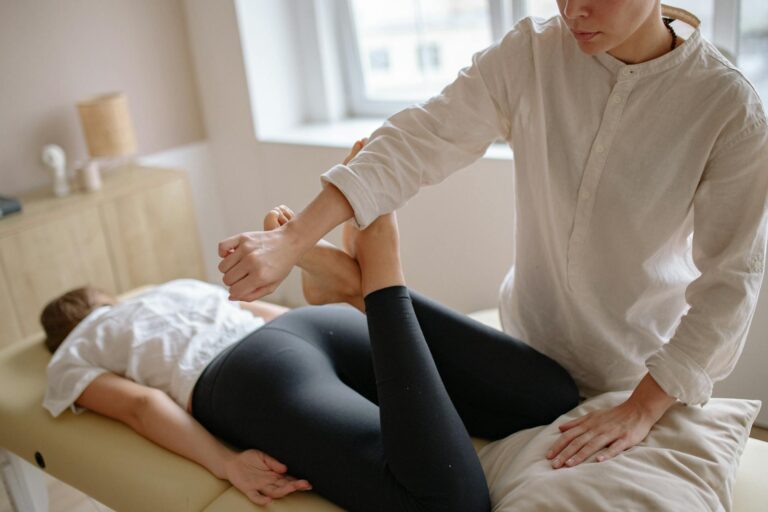
The five core muscles doctors and biomechanics researchers consistently identify as essential for supporting the sacroiliac joint are the gluteus maximus, transversus abdominis, multifidus, piriformis, and erector spinae. These muscles work together to create what clinicians call a “self-bracing” mechanism, generating compressive force across the SI joint that counteracts the shear loads responsible for pain and instability. When even one of these muscles weakens or fails to activate properly, the joint loses its ability to lock into position during movement, and the result is often a grinding, sometimes debilitating pain that accounts for 15 to 30 percent of all lower back pain cases. Consider a 58-year-old woman who has spent years managing mild cognitive decline in a spouse while neglecting her own physical health. She bends awkwardly to help with a transfer from bed to wheelchair and feels a deep, one-sided ache near the base of her spine that never quite goes away.
Her doctor tells her it is SI joint dysfunction, and the prescription is not surgery or medication alone but targeted strengthening of these five muscle groups. A 2024 study published in Frontiers in Physiology found that core stability exercises produced clinically significant improvement in both pain and disability scores for SI joint dysfunction in a group of 39 patients. The science is clear: these muscles matter, and training them works. This article breaks down each of the five muscles, explains the biomechanical research behind their role in SI joint stability, identifies the warning signs that one or more may be underperforming, and offers practical guidance on how strengthening programs are structured. It also addresses the particular relevance of SI joint health for older adults, caregivers, and anyone managing the physical demands that come with supporting a loved one through cognitive decline.
Table of Contents
- Why Do Doctors Focus on These 5 Core Muscles for Sacroiliac Joint Stability?
- How the Gluteus Maximus and Transversus Abdominis Work as Primary SI Joint Stabilizers
- The Deep Stabilizers Most People Overlook — Multifidus and Piriformis
- How Strengthening Programs Are Structured for SI Joint Recovery
- When SI Joint Exercises Can Backfire — Warnings for Older Adults and Caregivers
- The Connection Between SI Joint Health and Mobility in Aging
- What Ongoing Research Suggests About SI Joint Rehabilitation
- Conclusion
- Frequently Asked Questions
Why Do Doctors Focus on These 5 Core Muscles for Sacroiliac Joint Stability?
The sacroiliac joint sits at the junction of the spine and pelvis, and unlike a ball-and-socket joint or a simple hinge, it relies heavily on the muscles and ligaments surrounding it for stability rather than on its own bony architecture. Biomechanical analysis published in PMC has shown that SI joint interlocking, or “self-bracing,” is promoted specifically by transversely oriented muscles, including the transversus abdominis, piriformis, gluteus maximus, and obliques. These muscles generate horizontal compressive forces that press the joint surfaces together, preventing the shearing motion that causes pain. Without adequate muscle support, the SI joint essentially becomes a weak link in the chain that transfers force between the upper body and the legs. What distinguishes these five muscles from the dozens of others in the core and pelvic region is their direct mechanical relationship to the joint. The gluteus maximus, for example, has muscle fibers that run perpendicular to the SI joint surfaces, meaning its contraction directly increases compressive force across the joint.
The transversus abdominis works as a natural corset, pressing inward to stabilize both the spine and the pelvis simultaneously. The multifidus, piriformis, and erector spinae each contribute stabilizing forces from different angles, creating a three-dimensional support system. Research from the Brookbush Institute identifies only four muscles that directly impact sacral motion, and three of them, the piriformis, transversus abdominis, and gluteus maximus, appear on this list. By comparison, muscles like the rectus abdominis, the “six-pack” muscle people tend to focus on in general fitness, contribute relatively little to SI joint stability. Someone can have visible abdominal definition and still suffer from SI joint dysfunction because the deeper stabilizers have been neglected. This is a common misconception that leads people to pursue the wrong exercises and wonder why their lower back and pelvic pain persists.
How the Gluteus Maximus and Transversus Abdominis Work as Primary SI Joint Stabilizers
The gluteus maximus is the largest muscle in the body, and its role in SI joint support goes well beyond powering hip extension during walking or climbing stairs. A study published in PMC examining strengthening of the gluteus maximus in subjects with sacroiliac dysfunction confirmed it is one of the most critical stabilizers of the joint. Its fibers cross the SI joint at a perpendicular angle, which means every time the muscle contracts, it pulls the ilium and sacrum more tightly together. For caregivers who spend significant time bending, lifting, and assisting with mobility, gluteal weakness is both common and consequential. Prolonged sitting, which often accompanies the emotional and logistical demands of caregiving, further inhibits gluteal activation through a phenomenon sometimes called “gluteal amnesia.” The transversus abdominis operates on a different plane but toward the same end.
As the deepest layer of the abdominal wall, it wraps around the torso like a corset and, together with the pelvic floor muscles, increases compression load across the SI joint to resist shear forces, the primary destabilizing force acting on the joint. Research from Serola Biomechanics has detailed how the transversus abdominis functions in concert with the pelvic floor to create an internal pressure system that holds the pelvis rigid during movement. When this muscle fails to activate, commonly after abdominal surgery, pregnancy, or extended periods of inactivity, the SI joint loses a major layer of protection. However, if someone has diastasis recti, significant abdominal scarring, or a pelvic floor disorder, standard transversus abdominis exercises may not be appropriate without modification. In these cases, a physical therapist who specializes in pelvic health should guide the rehabilitation process, because incorrect activation patterns can actually increase SI joint instability rather than reduce it.
The Deep Stabilizers Most People Overlook — Multifidus and Piriformis
The multifidus is a small, segmental muscle that runs along the spine, with attachments at each vertebral level down to the sacrum. Together with the transversus abdominis and pelvic floor muscles, it forms what researchers describe as the “anatomical girdle” critical for maintaining spinal and pelvic stability. A 2024 cross-sectional study published in Scientific Reports by Nature found altered contraction ratios of the multifidus in patients with unilateral SI joint pain, meaning the muscle was not activating symmetrically on both sides. This asymmetry is significant because it suggests that in many cases of SI joint dysfunction, the multifidus is not just weak but is actively malfunctioning, contracting differently on the painful side compared to the healthy side. The piriformis, a deep external rotator of the hip buried beneath the gluteus maximus, is one of only four muscles identified as directly impacting sacral motion and SI joint stabilization. It provides a transverse stabilizing force across the joint, working in synergy with the transversus abdominis, gluteus maximus, and coccygeus.
Most people encounter the piriformis only when it causes problems, as in piriformis syndrome, where the muscle compresses the sciatic nerve. But its stabilizing role at the SI joint is equally important and far less discussed. A specific example illustrates how these muscles interact in daily life. When an older adult reaches forward to catch themselves during a stumble, the multifidus and piriformis should fire reflexively to brace the pelvis and lower spine before the larger muscles take over. In someone with SI joint dysfunction, this anticipatory bracing is often delayed or absent, which is why seemingly minor movements can trigger disproportionate pain. Retraining these muscles requires targeted, low-load exercises that emphasize control and timing rather than brute strength.

How Strengthening Programs Are Structured for SI Joint Recovery
Clinical evidence supports a progressive approach to SI joint rehabilitation that prioritizes the deep stabilizers before layering on exercises for the larger muscles. An eight-week exercise program targeting the five stabilizing muscles resulted in patients showing no signs of disability and being free of pain, with all positive diagnostic signs becoming negative at discharge, according to a PMC systematic review. This is a remarkable outcome that underscores how responsive the SI joint is to properly targeted exercise. The typical progression begins with isolated activation of the transversus abdominis and multifidus, often through gentle drawing-in maneuvers and prone exercises performed with minimal load. Once a patient can reliably activate these deep muscles, the program adds gluteal bridges and clamshell exercises to strengthen the gluteus maximus and piriformis.
Erector spinae work, such as prone back extensions, is usually introduced in the middle to later stages. A case study published in PMC demonstrated that after just three weeks of individual strengthening exercises targeting the erector spinae, rectus abdominis, and biceps femoris, a patient’s SI joint pain dropped to 2 out of 10 on the visual analog scale and showed no pain on provocation tests. The tradeoff worth understanding is between exercise-only approaches and combined programs. A randomized clinical trial found that a combined manipulation plus exercise program reduced pain scores from 5.83 to 1.29 on a standard pain scale, which is a steeper improvement than exercise alone typically achieves in the same timeframe. However, manipulation carries its own risks, particularly in older adults with osteoporosis or osteopenia, and is not always accessible or affordable. For most people, a consistent home exercise program targeting these five muscles delivers meaningful results, even if the initial improvements are more gradual.
When SI Joint Exercises Can Backfire — Warnings for Older Adults and Caregivers
Not every exercise that targets the right muscles is appropriate for every person. Older adults with osteoporosis, spinal stenosis, or significant joint degeneration need modified programs that avoid excessive spinal extension or heavy loading. The erector spinae, while important for posterior stabilization of the pelvis and lumbar spine, can be overtrained relative to the anterior core muscles, creating an imbalance that actually increases shear force on the SI joint rather than reducing it. Another limitation involves the diagnostic challenge. SI joint dysfunction shares symptoms with lumbar disc herniation, hip osteoarthritis, and piriformis syndrome, among other conditions.
If someone begins a stabilization exercise program based on an incorrect diagnosis, they may aggravate the actual underlying condition. Provocation tests performed by a trained clinician remain the standard for confirming SI joint involvement, and imaging alone is often insufficient because SI joint abnormalities appear on scans in a significant percentage of people who have no pain at all. For caregivers specifically, the physical demands of assisting someone with dementia or significant cognitive decline create a pattern of repetitive asymmetric loading, reaching, twisting, and lifting on one side more than the other, that is particularly harmful to SI joint stability. The 2024 Scientific Reports study’s finding of altered multifidus contraction ratios on the painful side suggests that asymmetric use patterns may directly contribute to muscle dysfunction. Anyone in a caregiving role who develops one-sided lower back or pelvic pain should consider SI joint involvement and seek evaluation before the compensatory patterns become entrenched.
The Connection Between SI Joint Health and Mobility in Aging
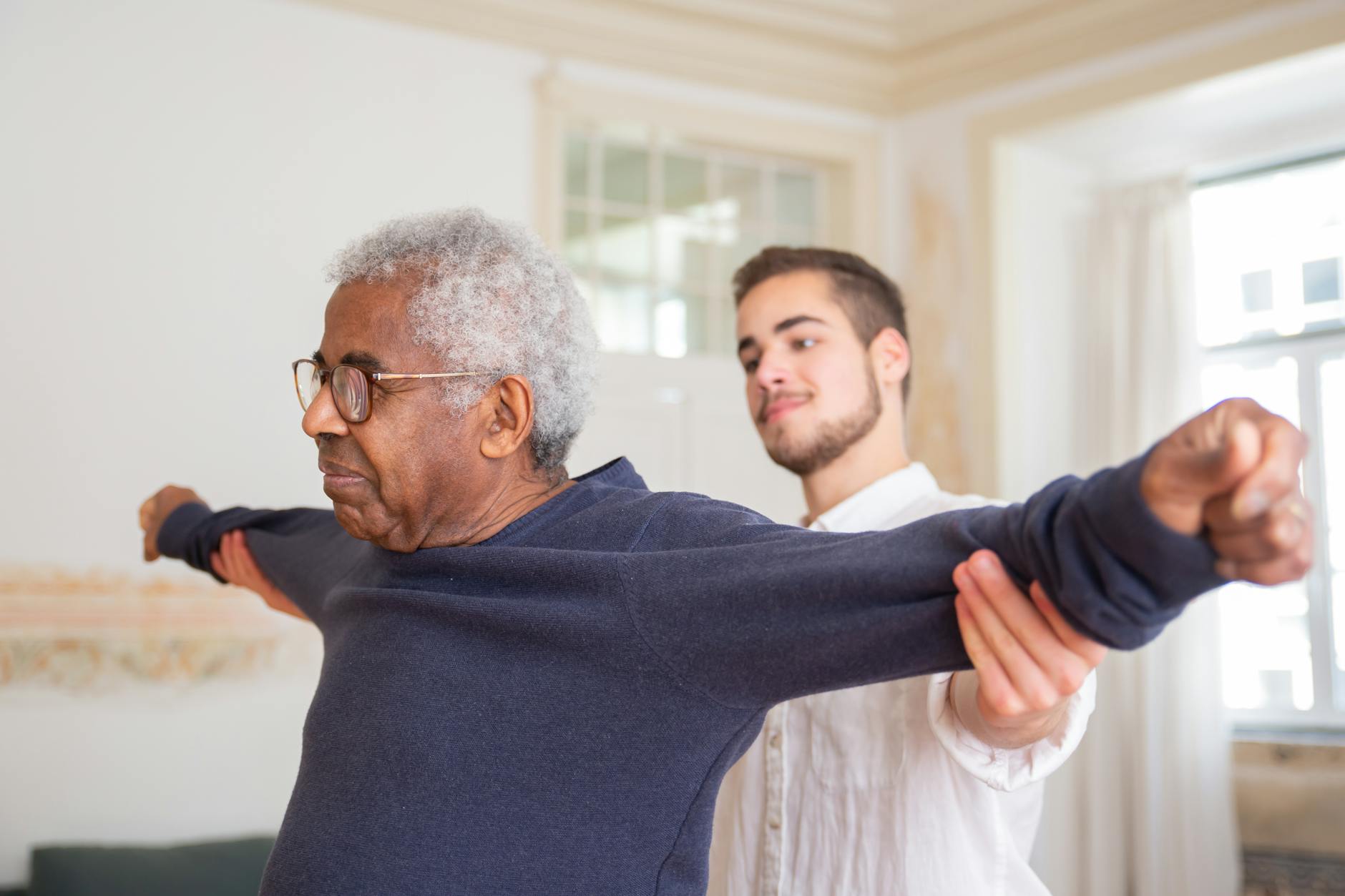
Maintaining SI joint stability has implications that extend well beyond pain management. The SI joint is a critical link in the kinetic chain that governs walking, balance, and the ability to rise from a seated position. When the joint becomes unstable and painful, people unconsciously alter their gait and movement patterns to avoid provoking symptoms. Over months and years, these compensations lead to muscle atrophy in the legs, reduced balance confidence, and increased fall risk, a cascade that is especially dangerous for older adults.
A practical example: a 72-year-old man with untreated SI joint dysfunction begins taking shorter steps and leaning slightly to one side when walking. Within six months, he has measurably weaker quadriceps on the affected side, reports feeling unsteady on uneven surfaces, and has started declining invitations to walk with friends. His world shrinks, his physical conditioning deteriorates, and his risk for a fall-related injury climbs. Targeted strengthening of the five key stabilizing muscles can interrupt this cycle, not by eliminating aging but by preserving the functional foundation that makes independent movement possible.
What Ongoing Research Suggests About SI Joint Rehabilitation
The 2024 studies published in Frontiers in Physiology and Scientific Reports represent a growing body of evidence that core stability exercises are not just helpful but produce clinically significant outcomes for SI joint dysfunction. What is changing in the research landscape is the specificity of the recommendations. Rather than generic “core strengthening” advice, clinicians are increasingly able to identify which muscles are underperforming in a given patient and tailor programs accordingly. Ultrasound imaging of the multifidus and transversus abdominis during contraction is one emerging tool that allows therapists to assess activation quality in real time.
For the dementia care community, this specificity matters. Caregivers and older adults managing cognitive decline often cannot commit to lengthy, complex exercise programs. Knowing exactly which five muscles to target and understanding why each one matters allows for focused, time-efficient interventions that fit within the constraints of a demanding daily routine. The evidence suggests that consistency with even brief, targeted exercise sessions can yield measurable reductions in pain and improvements in function within three to eight weeks.
Conclusion
The gluteus maximus, transversus abdominis, multifidus, piriformis, and erector spinae form the muscular architecture that keeps the sacroiliac joint stable and functional. Research consistently demonstrates that weakness or dysfunction in these muscles is a primary driver of SI joint pain, which accounts for 15 to 30 percent of all lower back pain cases. The clinical evidence, from three-week case studies showing pain scores dropping to 2 out of 10, to eight-week programs achieving complete symptom resolution, confirms that targeted strengthening works and works meaningfully.
For anyone managing the physical demands of caregiving, aging, or both, prioritizing these five muscles is not optional wellness advice but a practical strategy for preserving mobility, preventing falls, and reducing chronic pain. Start with a clinical evaluation to confirm SI joint involvement, work with a physical therapist to establish proper activation patterns in the deep stabilizers, and build progressively toward a sustainable home exercise routine. The muscles that support the SI joint respond to consistent, targeted work, and the research shows that meaningful improvement is achievable in weeks, not years.
Frequently Asked Questions
What is the sacroiliac joint and why does it cause so much pain?
The sacroiliac joint connects the sacrum at the base of the spine to the ilium of the pelvis. Unlike more mobile joints, it relies heavily on surrounding muscles and ligaments for stability. When these support structures weaken, the joint surfaces experience shearing forces that produce deep, often one-sided pain in the lower back, buttock, or upper leg. SI joint dysfunction accounts for 15 to 30 percent of all lower back pain cases.
How long does it take to see improvement from SI joint stabilization exercises?
Clinical evidence shows a range of timelines. A case study published in PMC documented significant pain reduction after just three weeks of targeted strengthening, while an eight-week program achieved complete symptom resolution with all diagnostic signs becoming negative. Most patients can expect noticeable improvement within three to eight weeks of consistent, properly targeted exercise.
Can I do these exercises at home or do I need a physical therapist?
Initial evaluation and instruction from a physical therapist is strongly recommended, particularly to confirm the diagnosis and learn correct activation of the deep stabilizers like the transversus abdominis and multifidus. These muscles require precise, low-load contractions that are easy to perform incorrectly. Once proper form is established, most of the exercises can be performed at home with no equipment.
Is SI joint pain different from sciatica or a herniated disc?
The symptoms can overlap significantly, which is why accurate diagnosis matters. SI joint pain typically presents as one-sided pain near the base of the spine that may radiate into the buttock or upper thigh, while sciatica usually travels further down the leg. A herniated disc often produces pain that worsens with forward bending, whereas SI joint pain may worsen with prolonged standing or transitional movements. Provocation tests performed by a clinician are the most reliable way to distinguish between these conditions.
Are these exercises safe for someone with osteoporosis?
The exercises can generally be modified for people with osteoporosis, but caution is warranted. Erector spinae exercises involving significant spinal extension should be approached carefully, and any program should be designed by a clinician who is aware of the patient’s bone density status. The deep stabilizer exercises for the transversus abdominis and multifidus are typically low-risk and well-tolerated even in older adults with reduced bone density.
Why is the piriformis important if it is usually associated with sciatic nerve problems?
The piriformis is one of only four muscles that directly impacts sacral motion and SI joint stabilization, providing a transverse stabilizing force across the joint. Its association with sciatic nerve compression, known as piriformis syndrome, is a separate issue that occurs when the muscle becomes excessively tight or inflamed. Proper piriformis conditioning involves maintaining both strength and flexibility to support the SI joint without compressing the nerve.